Initiated in memory of three the kidnapped and murdered teenagers,
Eyal Yifrach, Gilad Shaar, and Naftali Fraenkel z”l
the prizes celebrate the unity the families felt in those difficult days.
Instead of one photo for Shabbat shalom greeting, three short video clips from Beit Hanasi, the Israeli President’s residence, where the ceremony took place in the main hall.
“The Spark of Love” Hebrew lyrics Ehud Banal was sung by Shuli Rand and Guri Alfi.
Birthright participants entered to sing “One Day.”
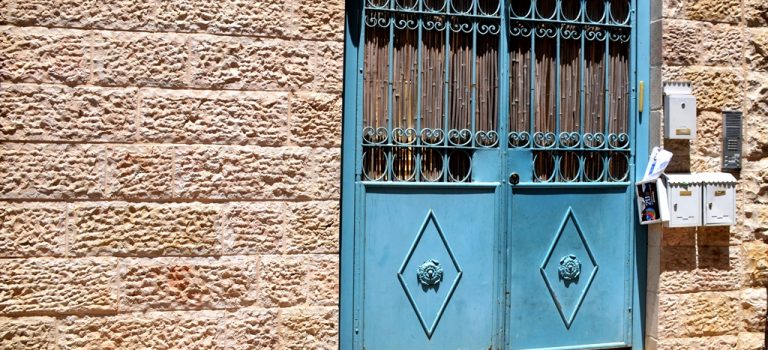
Blue is the color for good luck, and many doors and windows in Jerusalem, Israel, are painted blue.
Crayola announced it is looking to name its new special blue crayon.
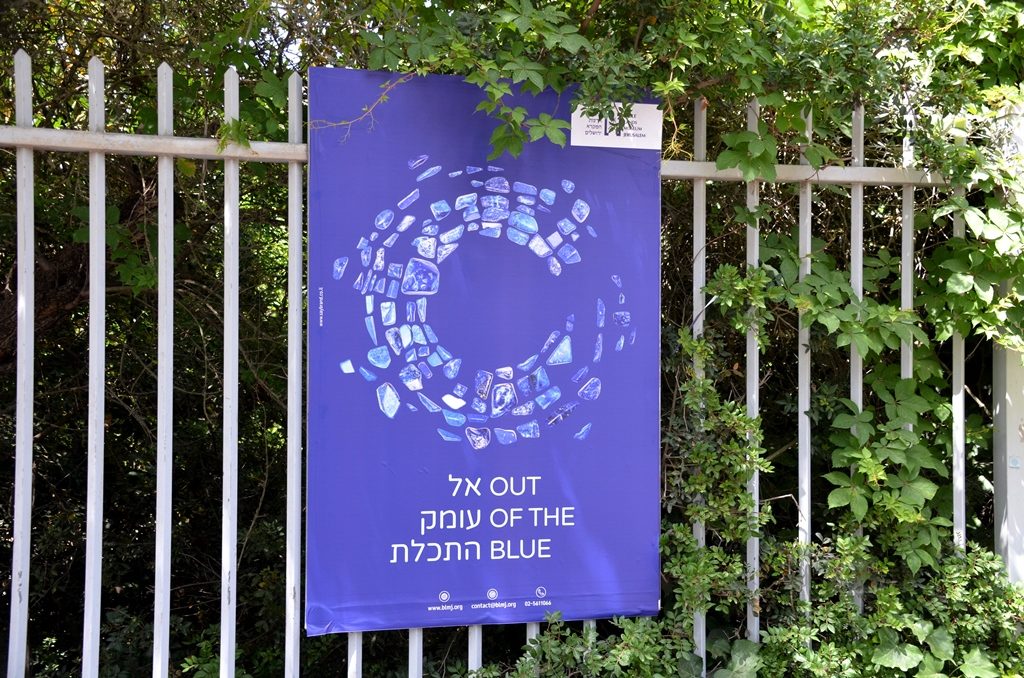
The Bible Lands Museum Jerusalem (BLMJ) opened a new exhibit called “Out of the Blue.”
The Hebrew word for blue is not mentioned in the Bible. However, tekhelet, ismentioned in Biblical literature dozens of times.
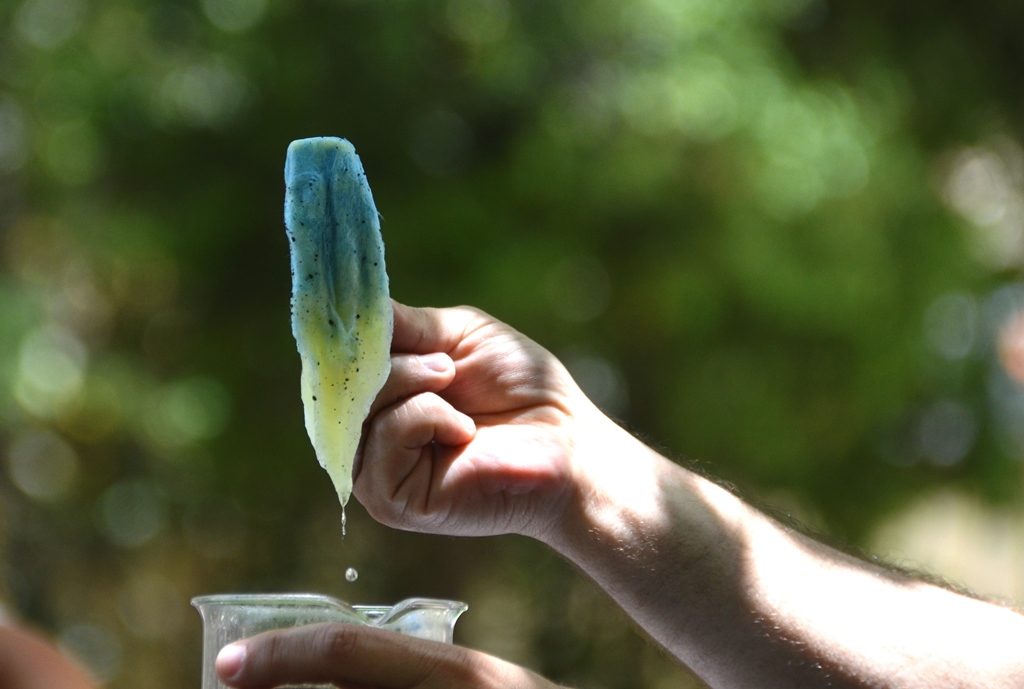
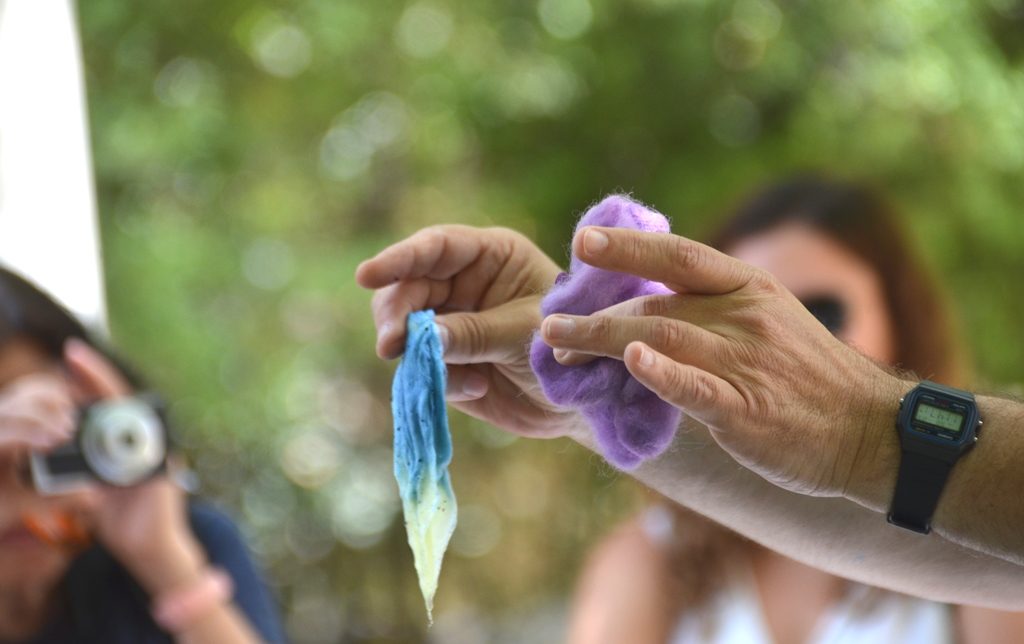
At a special press event before the exhibit officially opened at BLMJ, there was a demonstration of dyeing tekhelet wool.
Exposure to sunlight and oxidation causes the wool which was dipped into the dye (which is made from the secretions of a gland in one particular snail, the murex trunculus) to become tekhelet.
This permanent blue dye and the royal purple, are the basics of a new exhibit in honor of Israeli 70th year. A variety of ancient pieces are on display.
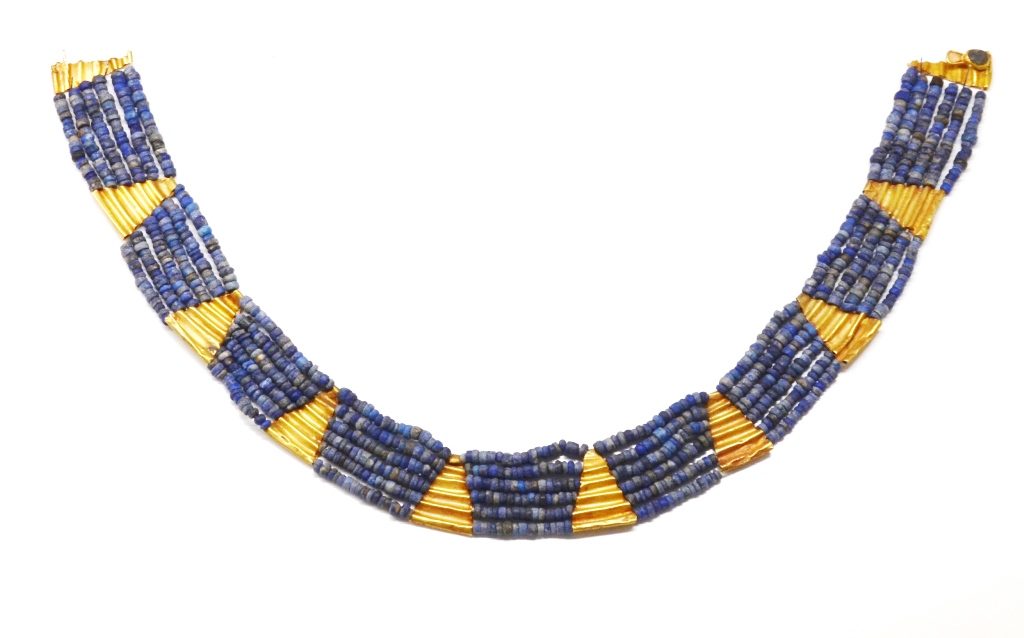
Not bad looking, this blue necklace from South Mesopotamia, dated 2700- 2600 BCE, made of gold and lapis lazuli, a semi-precious blue stone used by ancient royalty.
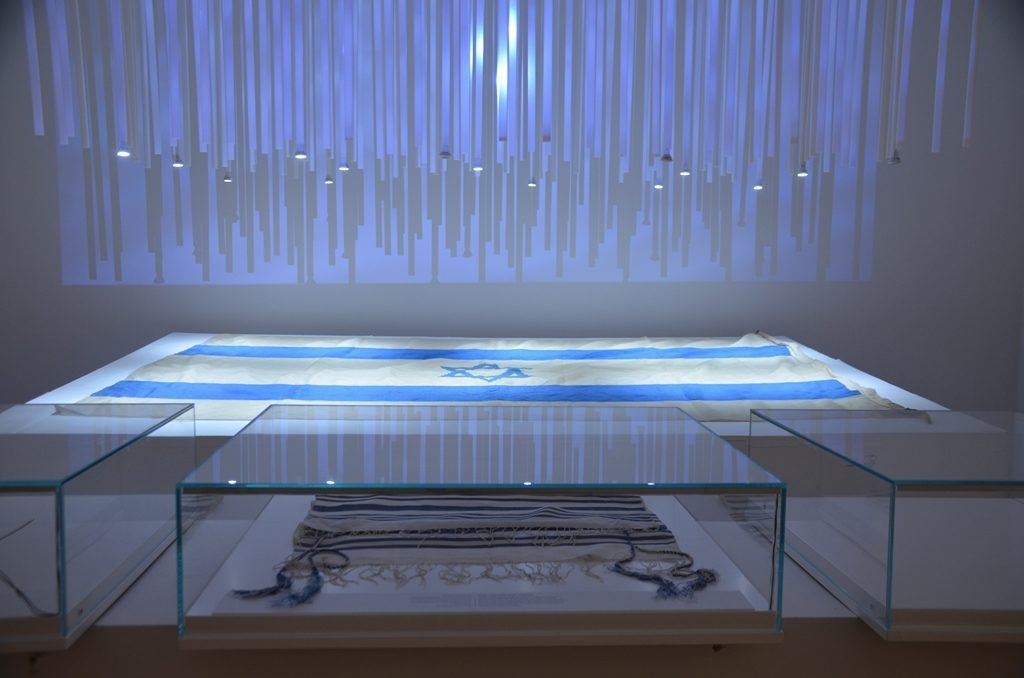
Rounding out the exhibition is the Israeli flag, modeled on the blue stripes of the talit.
Yad Vashem also opened a new exhibit this week on theme of Israel 70 years. Not blue, but showing the longing for Zion and Jerusalem in letters and memorabilia from the 1930’s of Euroepean Jews yearning to go to Palestine.
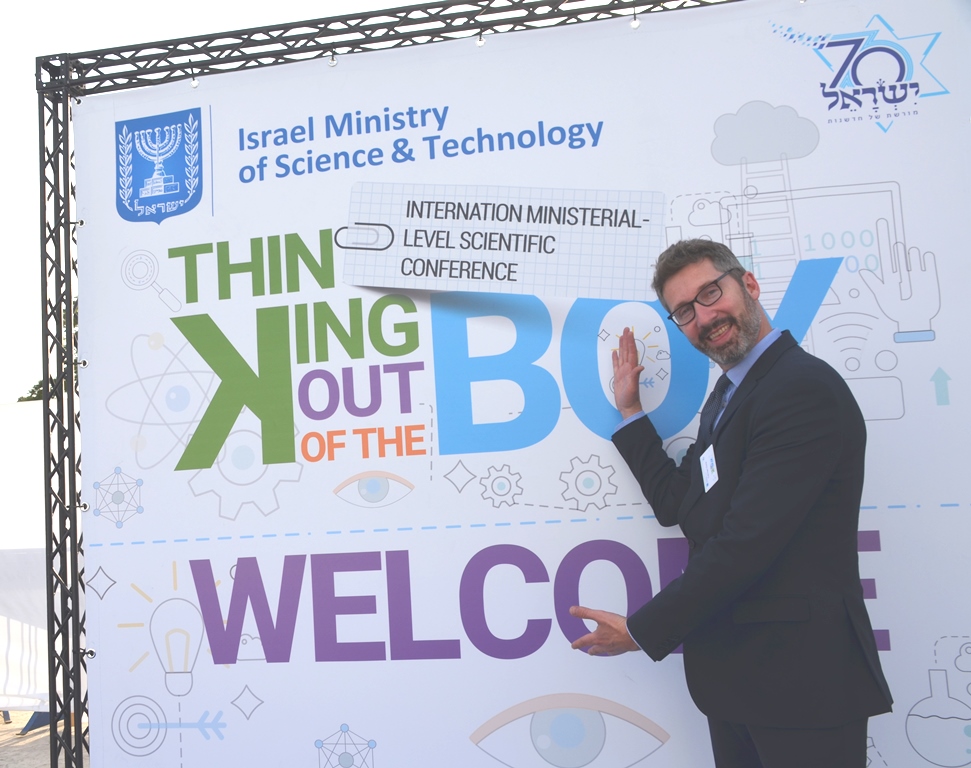
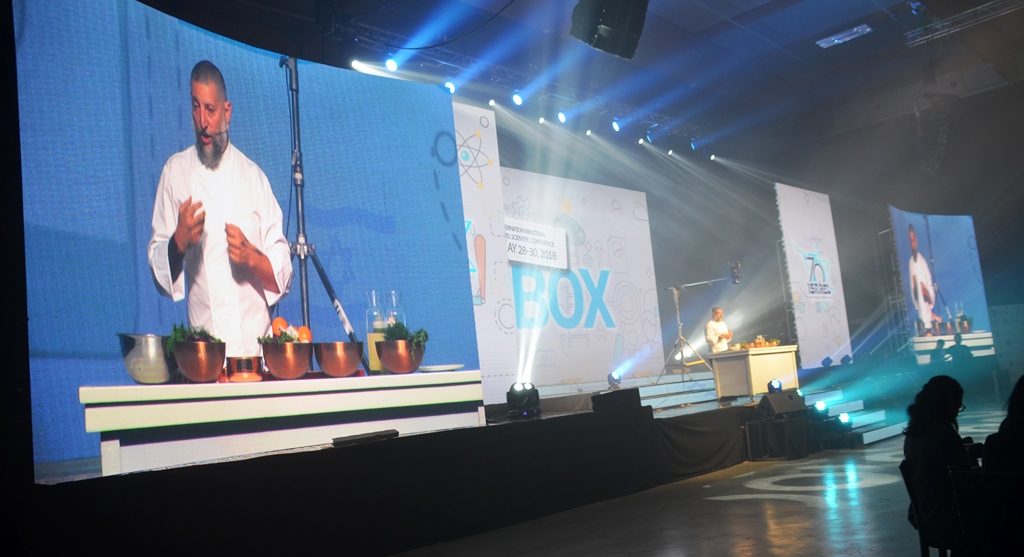
“Thinking Out of the Box” was the theme of a special Science and Technology conference held in Jerusalem. Australian Ambassador Chris Cannan and I walked in at same time. For a photo to post on Twitter I told him not to pose so stiffly. Only later did we realize, that above the big, blue word BOX he was pointing to there was a typo which ran through the printed materials.
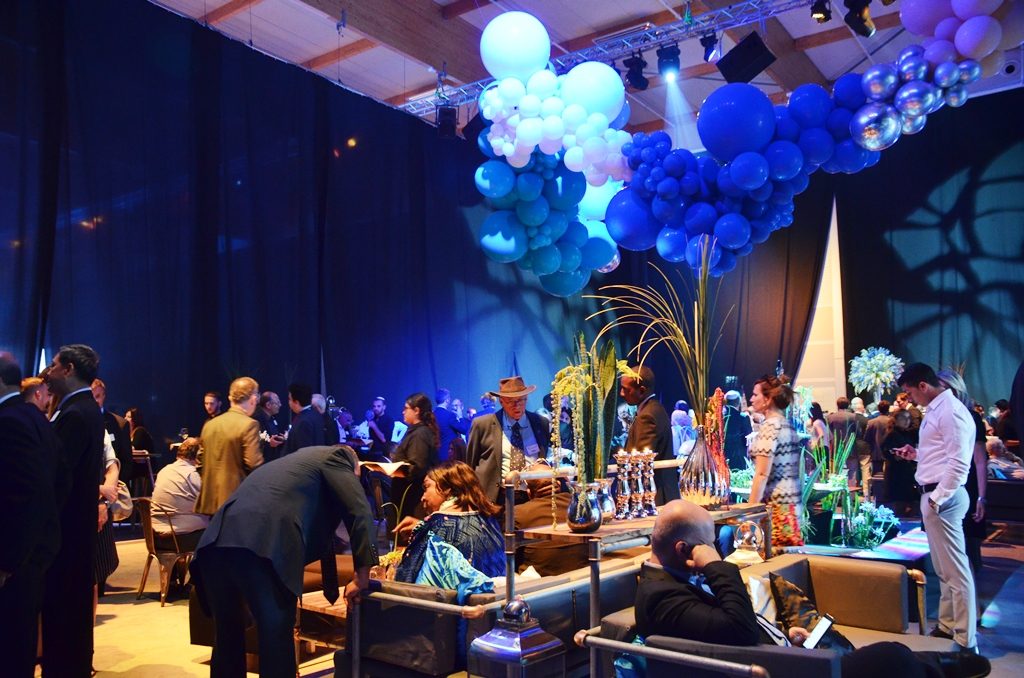
Inside the First Station hangar, once your eyes got used to the dark, was the entrance to a cocktail reception.
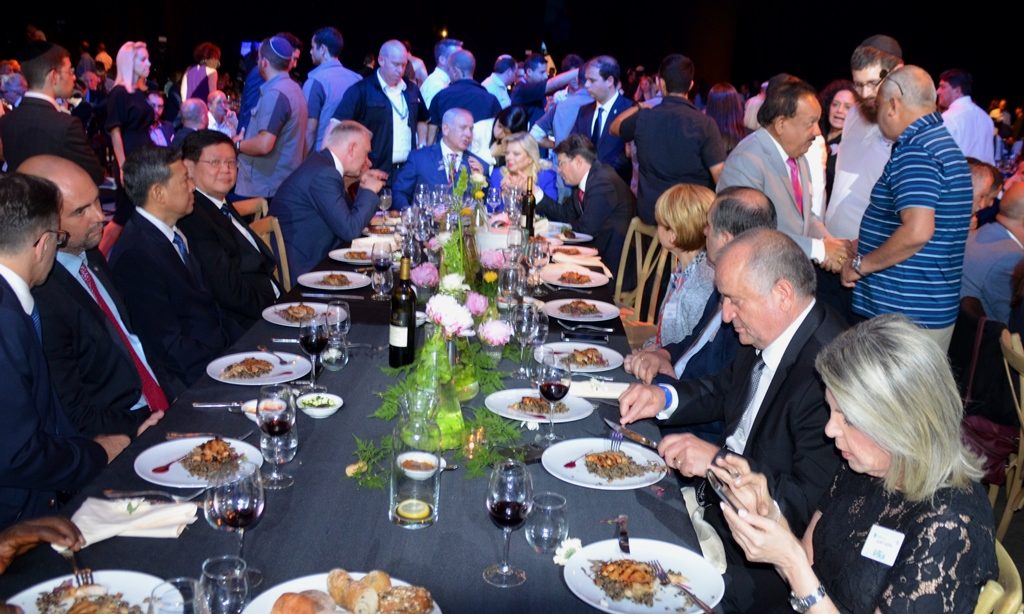
At the sit down dinner for hundreds of international guests, the first course was demonstrated and explained by its celebrity chef. No printed menus, so no typos.
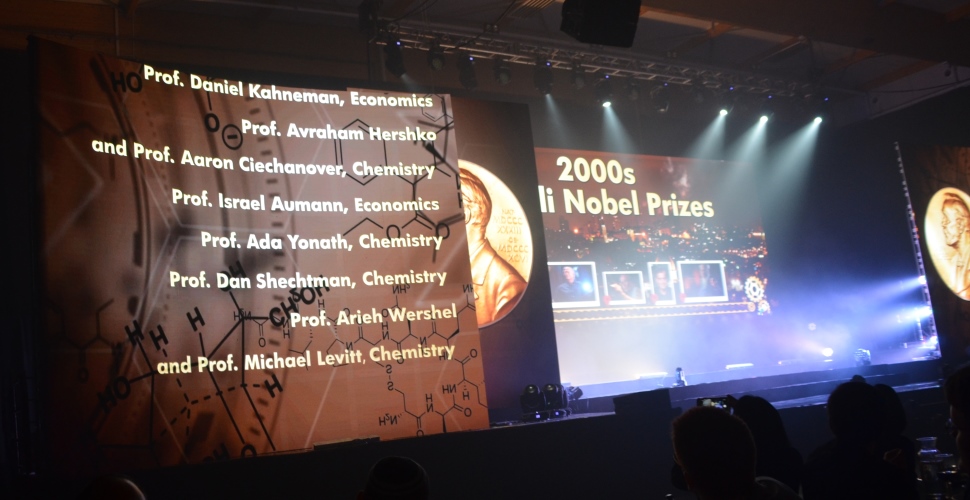
The Ministerial level conference featured Israeli Nobel Prize winners, many who attended the gala opening.
This is table #1 as dinner was served.
It was fascinating speaking with science and technology officials from Belarus, Tokyo, and India.
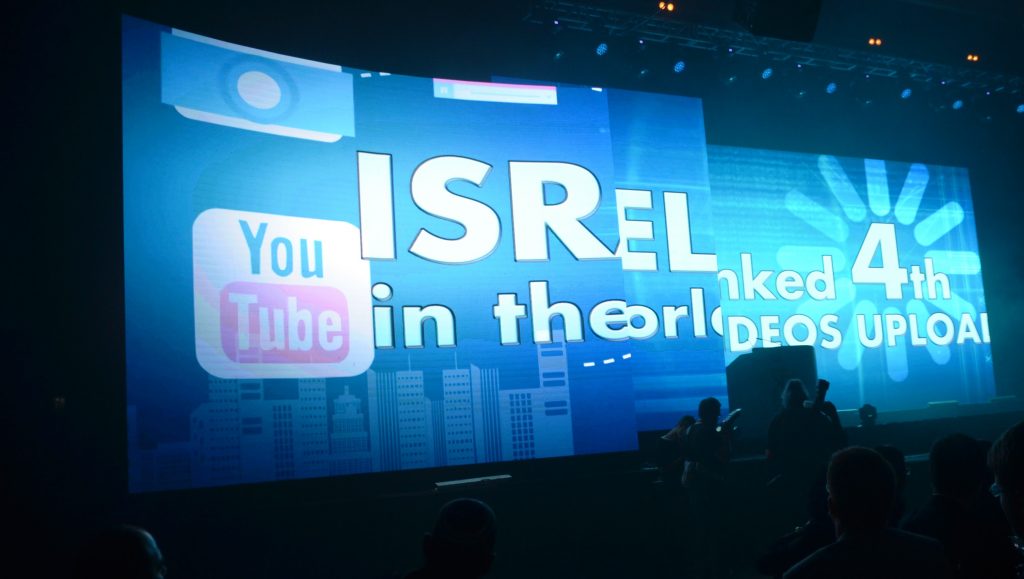
In one of the video segments, I learned that Israel is ranked number four in world in uploading of videos on to YouTube.
Ovadiah Hamama, sang Ana BeKoach, so of course, I uploaded a video to YouTube.
The “Out of the Box” conference was held at the Orient Hotel and was very exclusive.
The Wolf Prize ceremony at the Knesset, without Sir Paul McCartney, was hardly noticed, photos HERE.
But out on the Jerusalem streets the annual Israel Festival was well under way for all.
Multiple dance, music and drama performances were held in Jerusalem venues for this cultural festival which is in its 57th year.
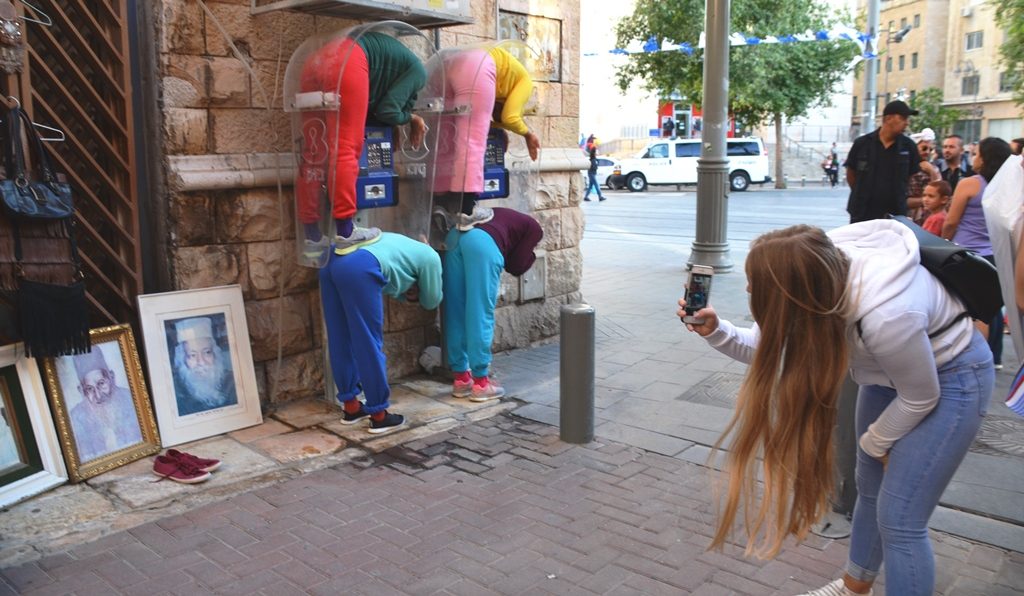
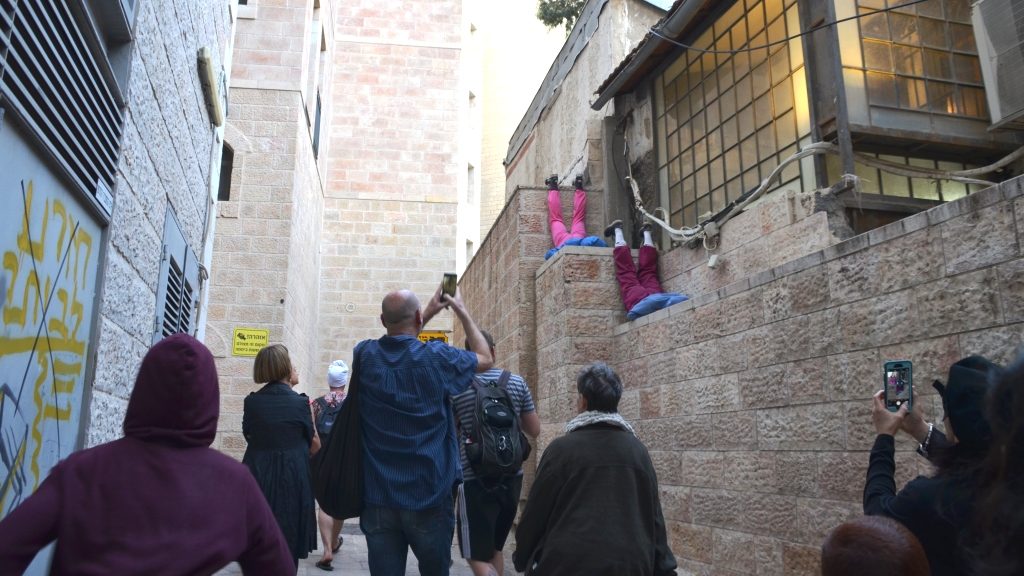
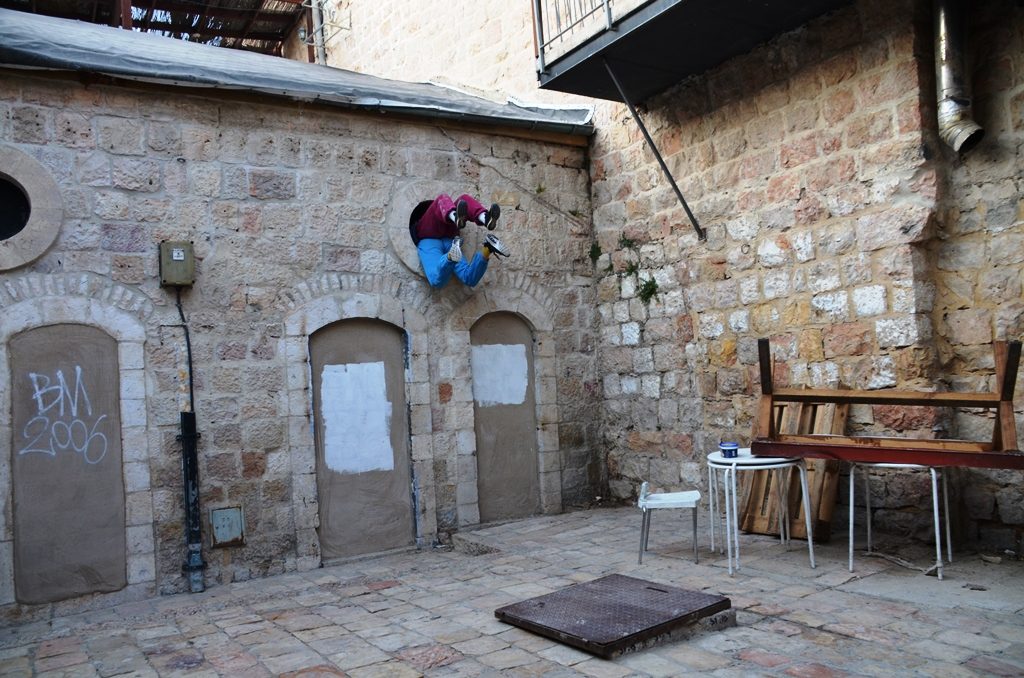
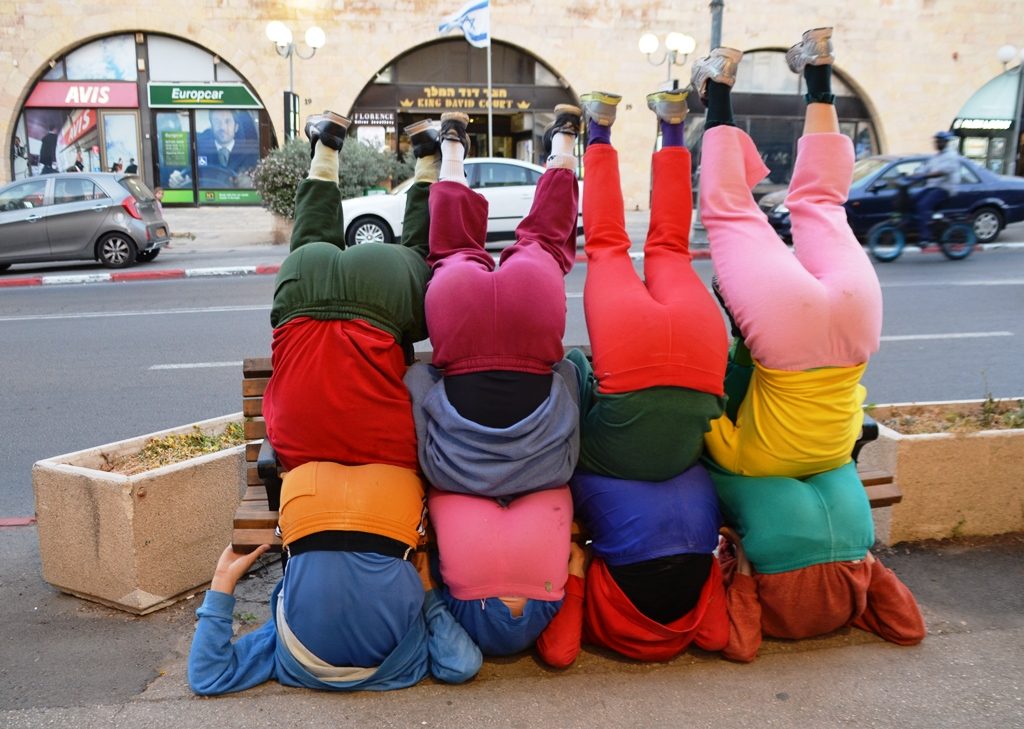
But one dance performance by Willi Domer, “Bodies in Urban Spaces” was not only out of the box, but out on the Jerusalem streets, and in phone booths,
and multiple unusual spaces for photo op stops along the way from the Ticho House to the YMCA.
Not all appreciated the creativity and uniqueness of the young Israeli dance troupe from Tel Aviv.
The choreographer has done performances in 100 other locations, but this was the first time in Jerusalem, Israel, on King David Street, for this pose.
More unbelievable poses and photos from “Bodies in Urban Spaces” HERE
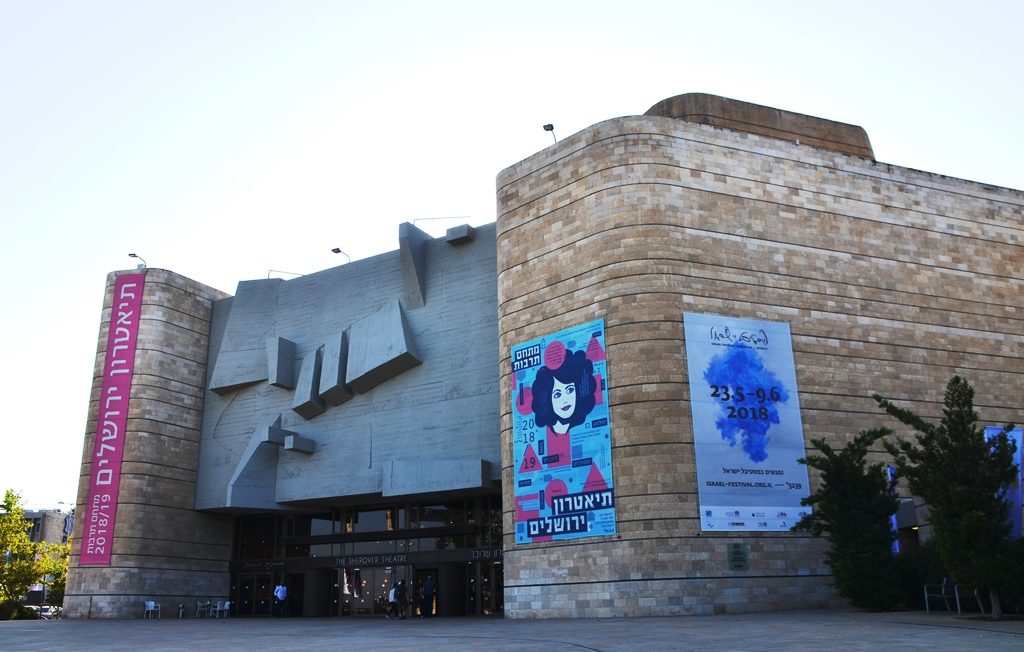
The Jerusalem Theater, with a large blue poster for the Israel Festival, held multiple music and dance events as usual, which ran from May 23 to June 9.
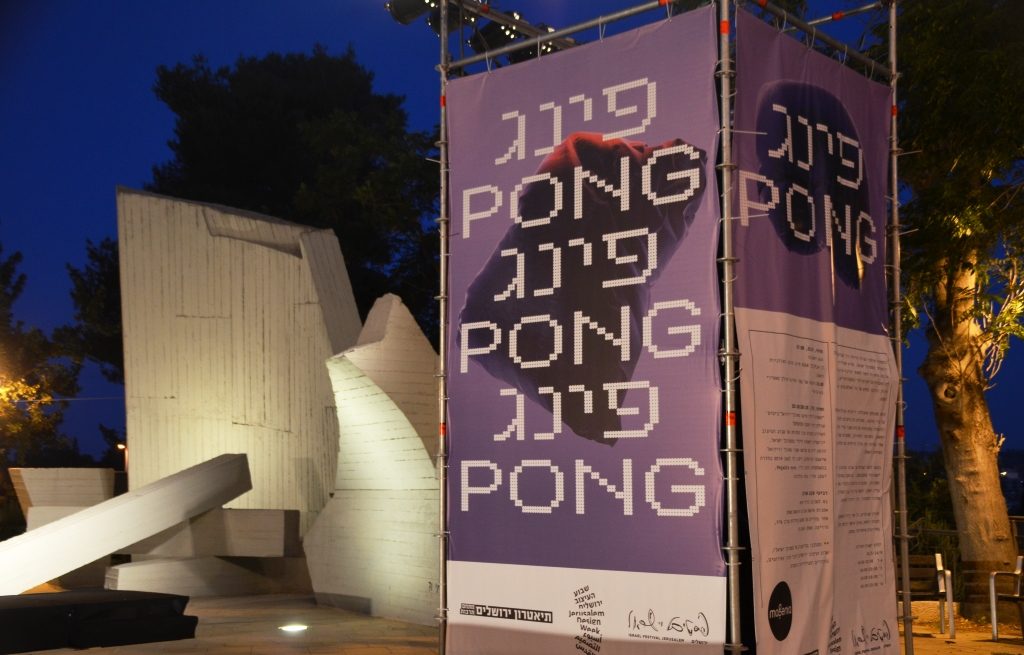
Out of the box? Ping Pong was in the plaza in front of the theater.
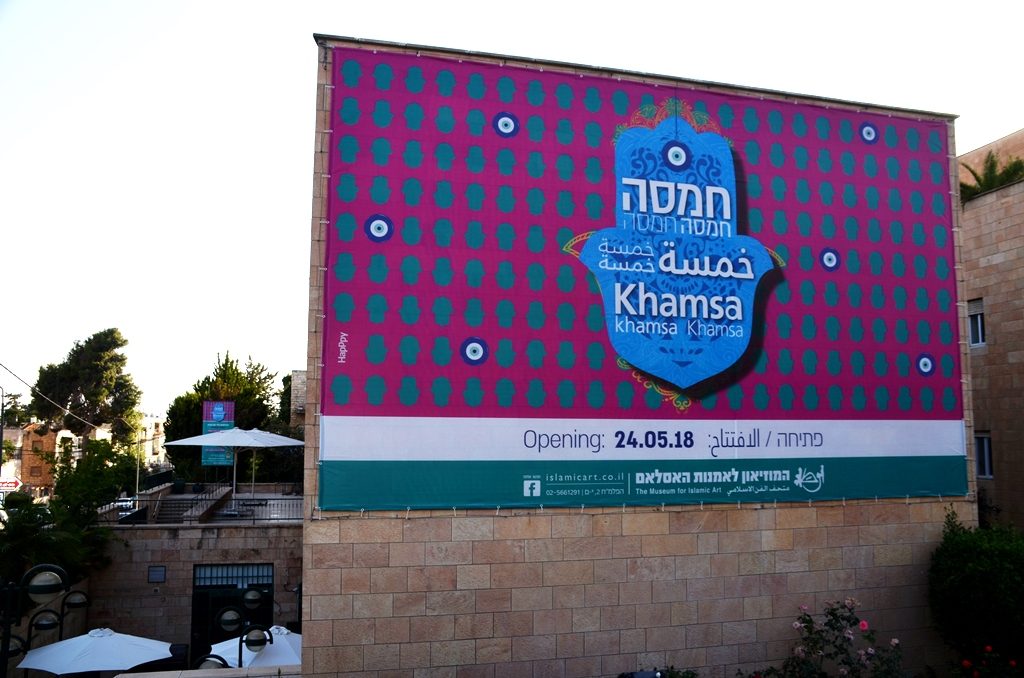
Across the street, at the Islamic Museum a new exhibit opened. A big blue Khamsa or Hamsa, was outside on the wall, while hundreds are on display inside.
For the Muslim holiday month of Ramadan at the National Library, on display were rare copies of the Qu’ran and rare Islamic treasures.
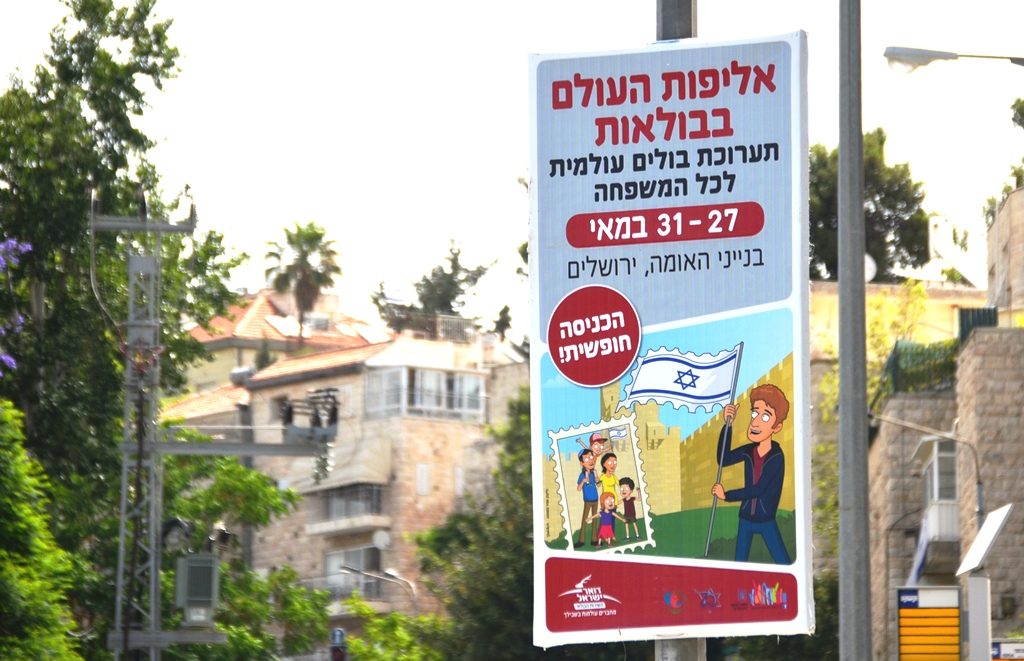
Phew. Not enough yet? There was the international stamp exhibition last week too, and admission was free.
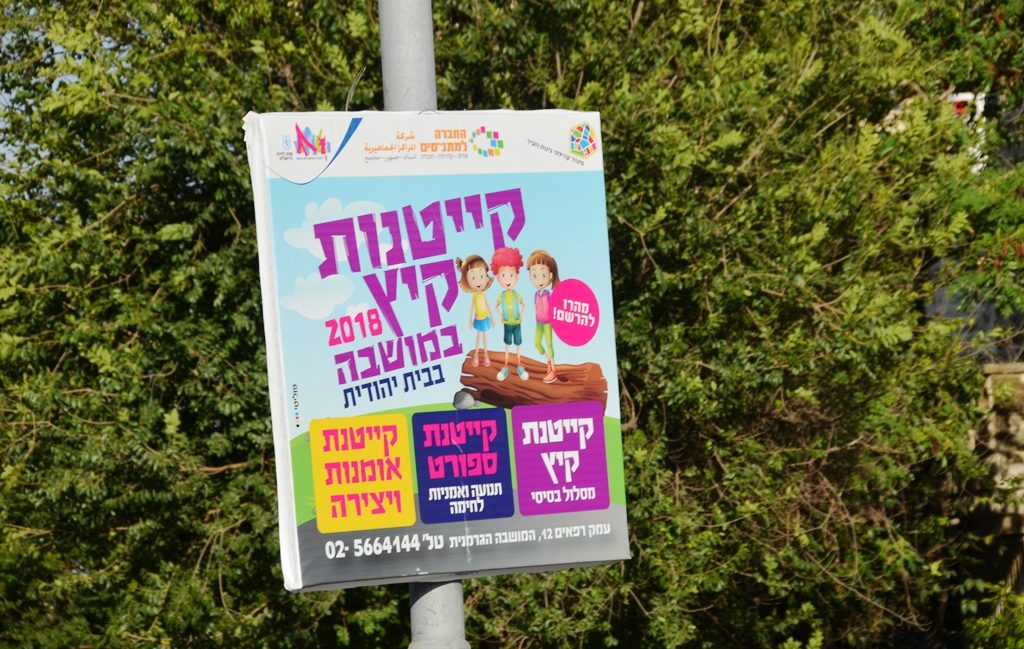
In Jerusalem, as soon as June comes around, it is time to worry about summer programs for children who will be out of school soon.
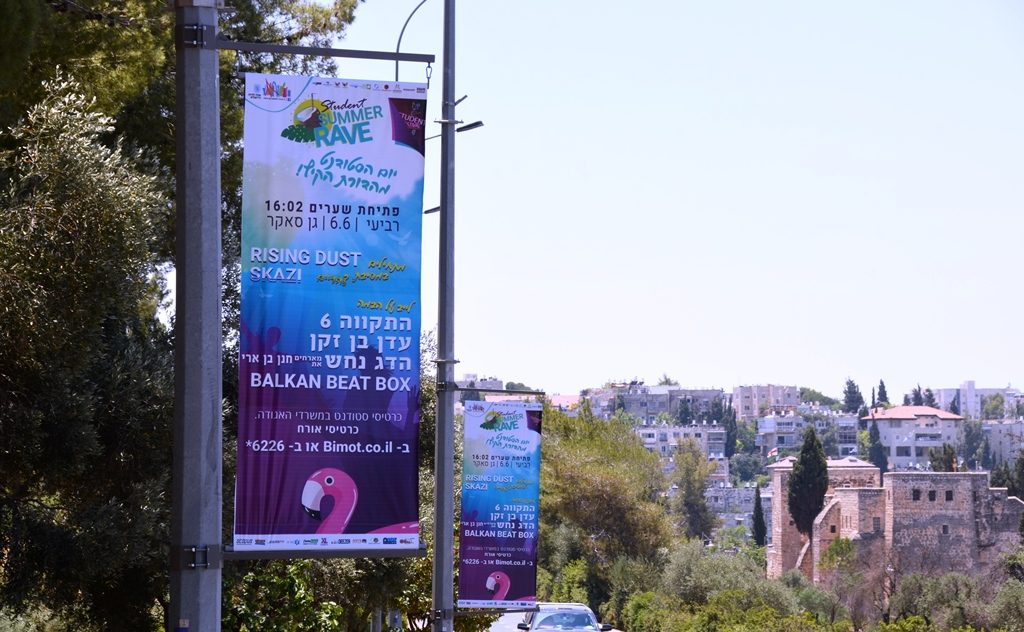
For older students, there is an all night end-of-school year Summer Rave party in Gan Sacher, Sacher Park, with a huge stage, several bands and lots of beer. It means less sleep for many tonight.
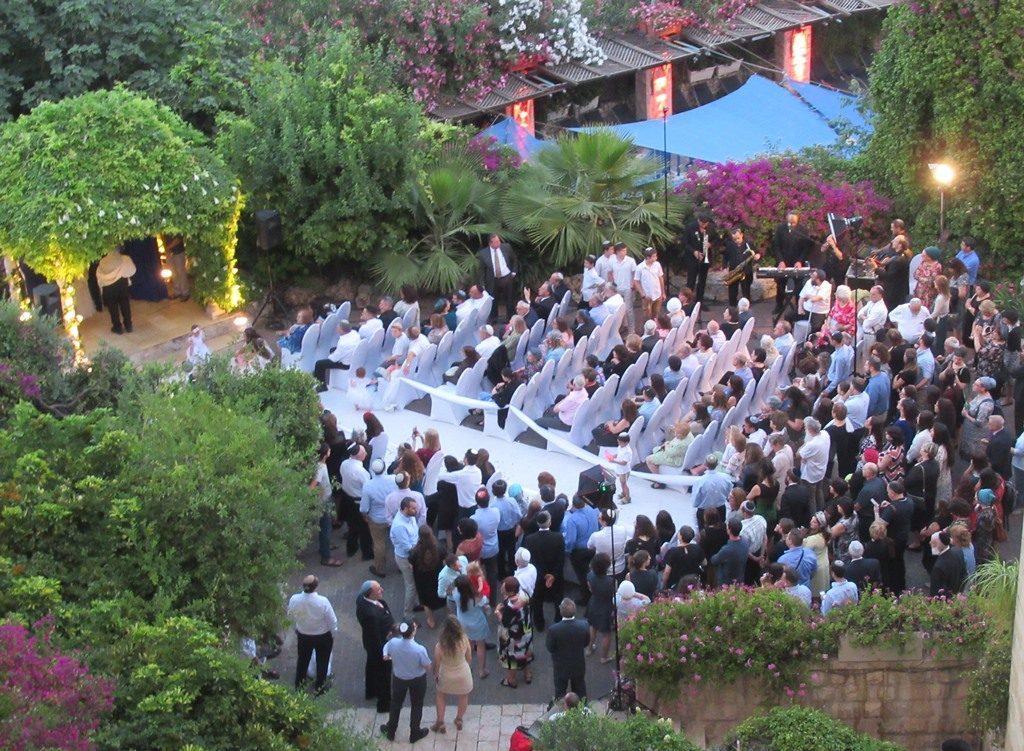
However, after a busy day there is nothing more pleasant than to attend a beautiful June wedding in Jerusalem as the sun sets.
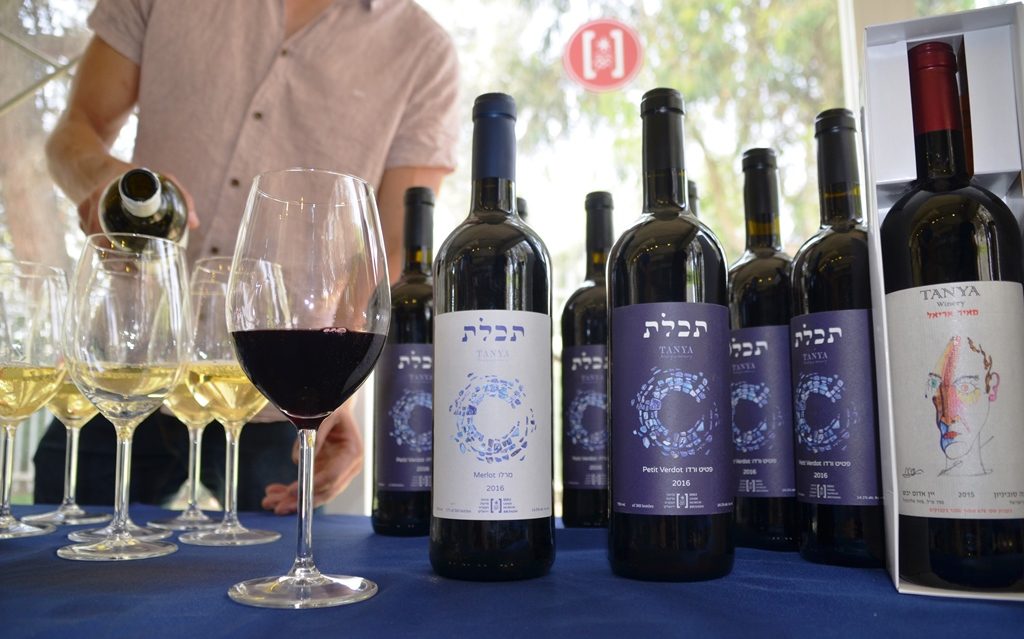
Unless it is with a bottle of special blue label wine.
Once in while it is good to leave Jerusalem, Israel, and see what is happening in other parts of the country.
An opportunity for a trip to the Shomron was hard to pass up. Three times previously, I joined various groups going over the green line to Judea and Samaria, to the Shomron. I was interested to see how things have changed. Often those who travel a regular route do not notice change as much as one who only goes by occasionally.
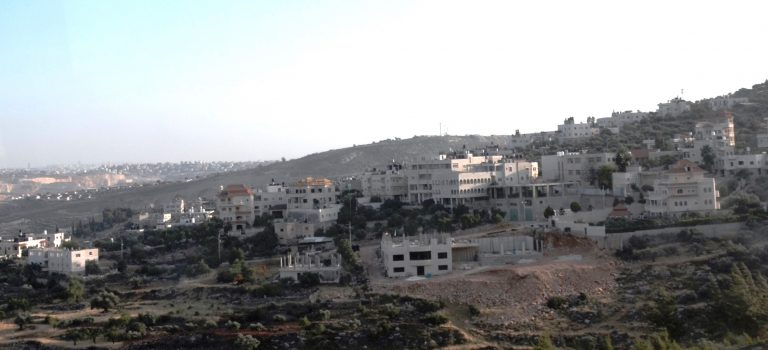
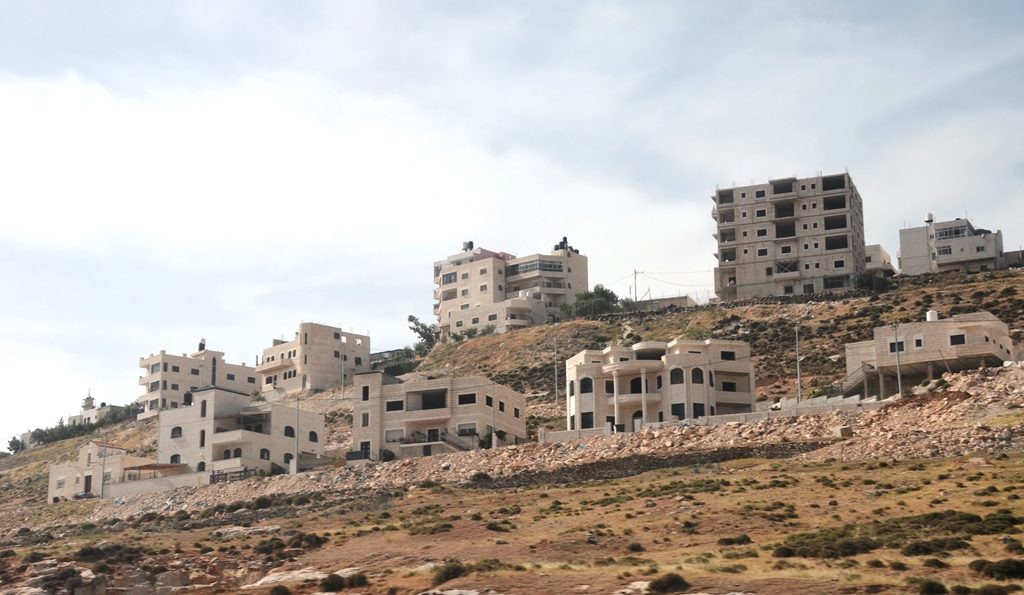
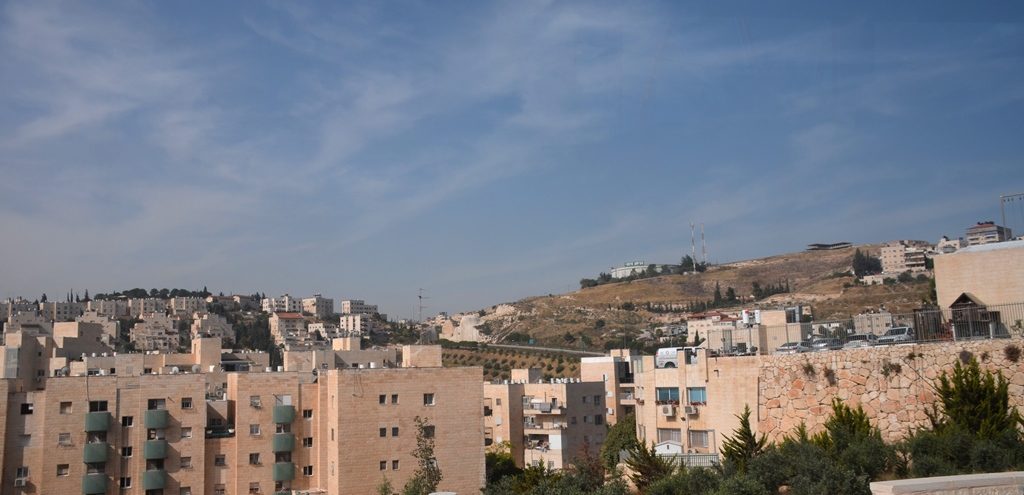
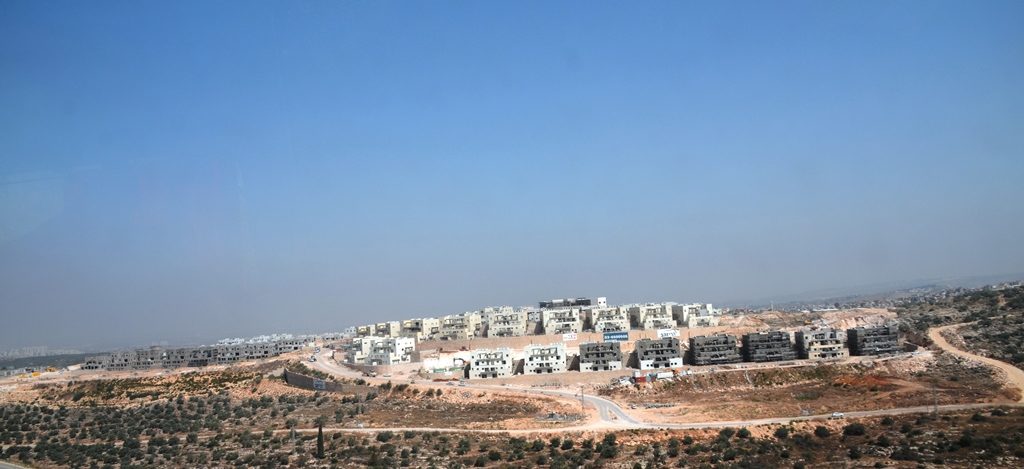
Leaving Jerusalem, one sees how much construction is happening, how built up some areas are today. Above are a few of new Arab houses along the road.
Neighborhoods stretch out with new dwellings. In the distance, however, is one undeveloped area.
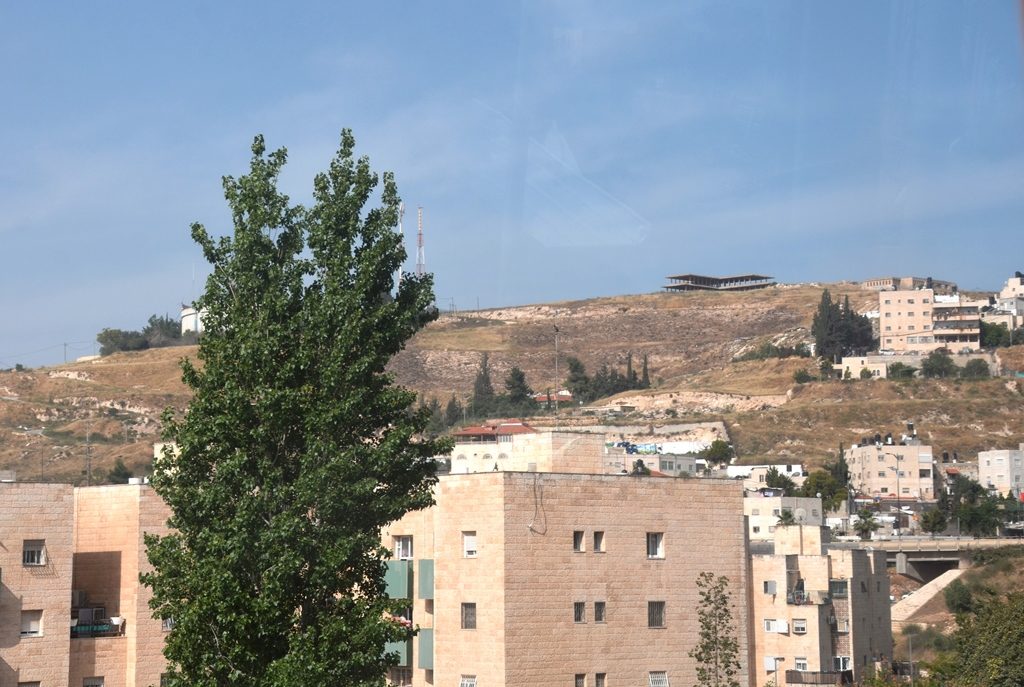
There it is up on the hill, still the same as it was decades ago. The shell of the King of Jordan’s planned summer palace. No one seems to want to touch those dunams of land.
But new Jewish neighborhoods are also under construction, Leshem is a planned and growing community.
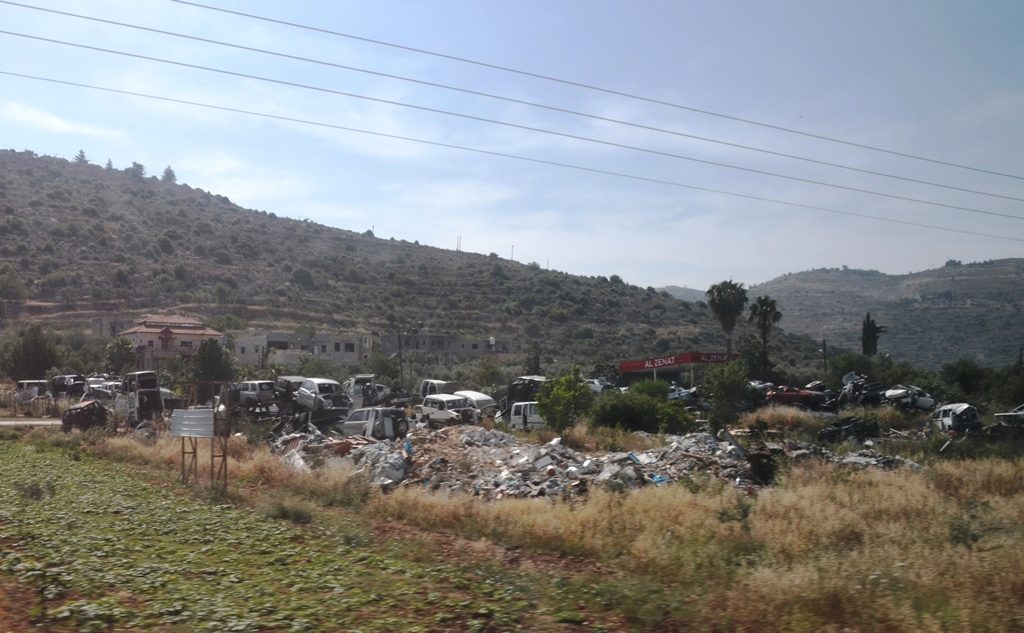
One thing has not changed, along the road one still see piles of junked cars in Arab neighborhoods.
By the Oslo Accords, Judea and Samaria was divided into three areas: Area A, B and C.
To make something extremely complicated simplified:
Area A is under PA control. B is under PA governance with Israeli security. C is under Israeli control.
First stop was Pedu’el. From המרפסת של המדינה, HaMirpeset Shel HaMedina, loosely translated as Israel’s Lookout, on a clear day one can see, well almost forever, to the sea. It is one of those spots where one realizes just how small Israel really is.
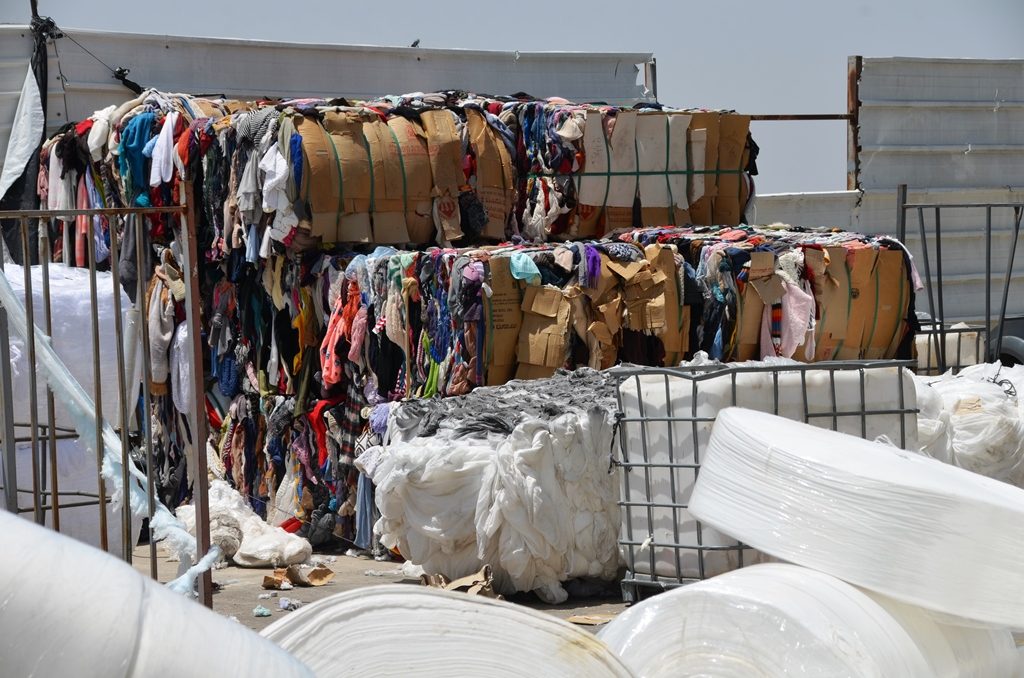
Ever wonder where those old stained clothes and seconds of wipes end up?
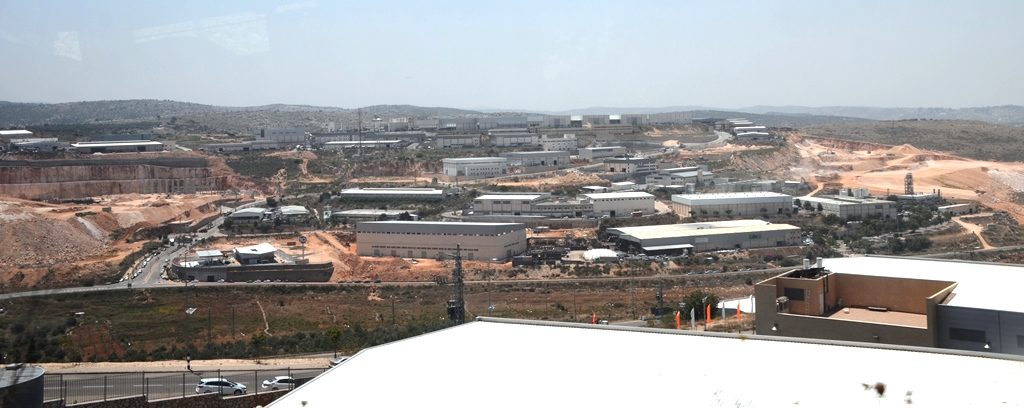
Second stop was at Ofertex manufacturing plant in Barkan Industrial Park.
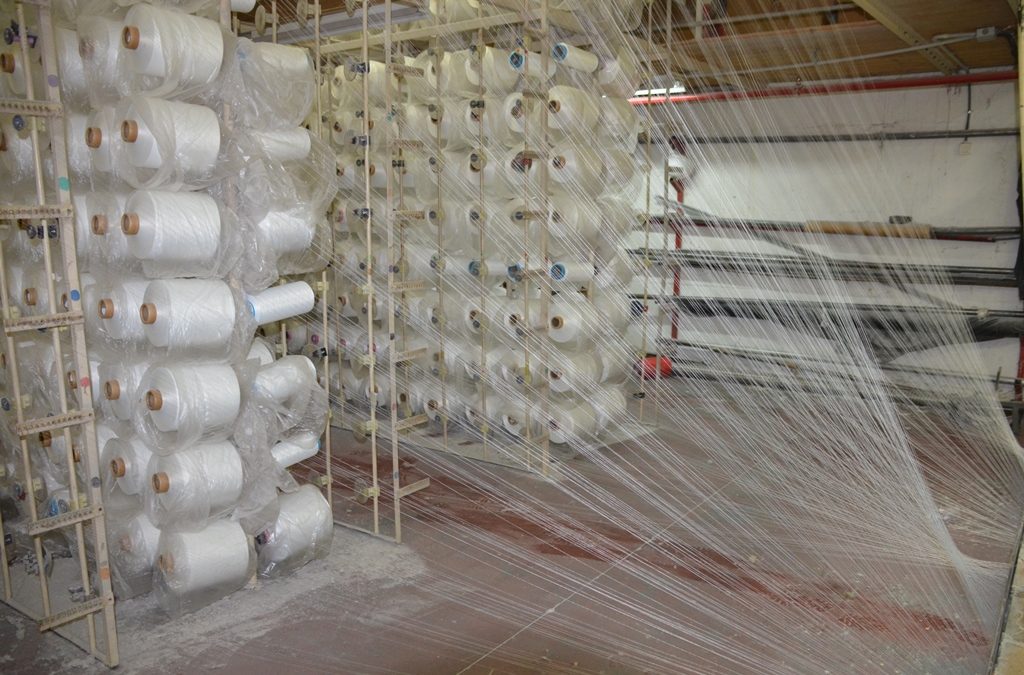
I wrote about a visit to Barkan Industrial Park two years ago. While SodaStream got the media attention, dozens of companies are based in the region. This one recycles fabrics to make cleaning cloths, repackaged under private labels for Walmart, Dollar Stores and European clients too. Oftertex was started by Polish survivors who came to Israel in 1950. Fourth generation owners of this private company employ 120 people. Of the 100 Arab workers, some are third generation employees. Israeli companies pay over three times average PA salaries, plus have better working conditions and benefits.
Thousands of Arab workers are hurt if BDS boycott’s are effective, if production slows or a business is forced to close or relocate.
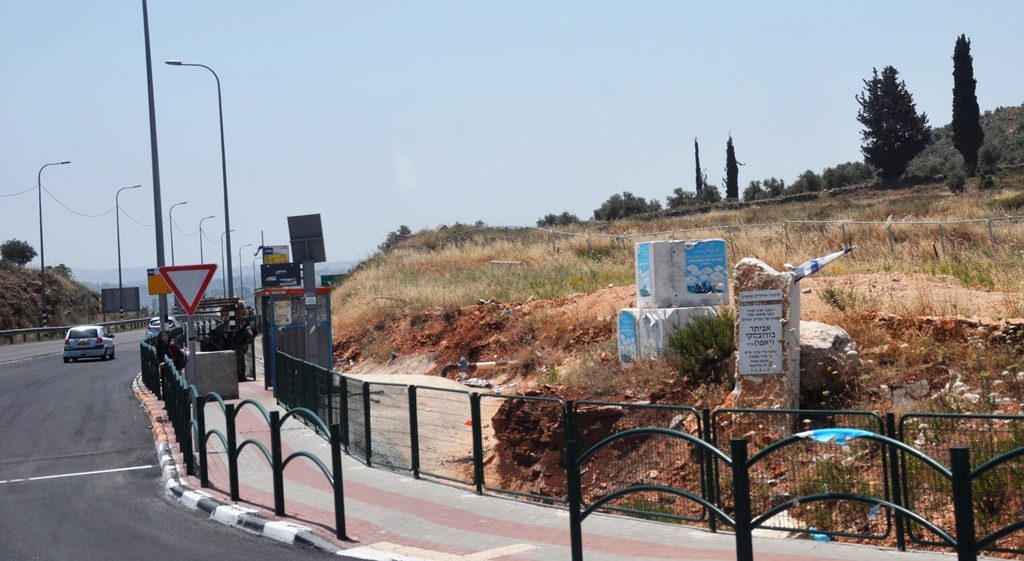
Back on the road, we passed a memorial to one of too many Israelis who were murdered by terrorists at this bus stop.
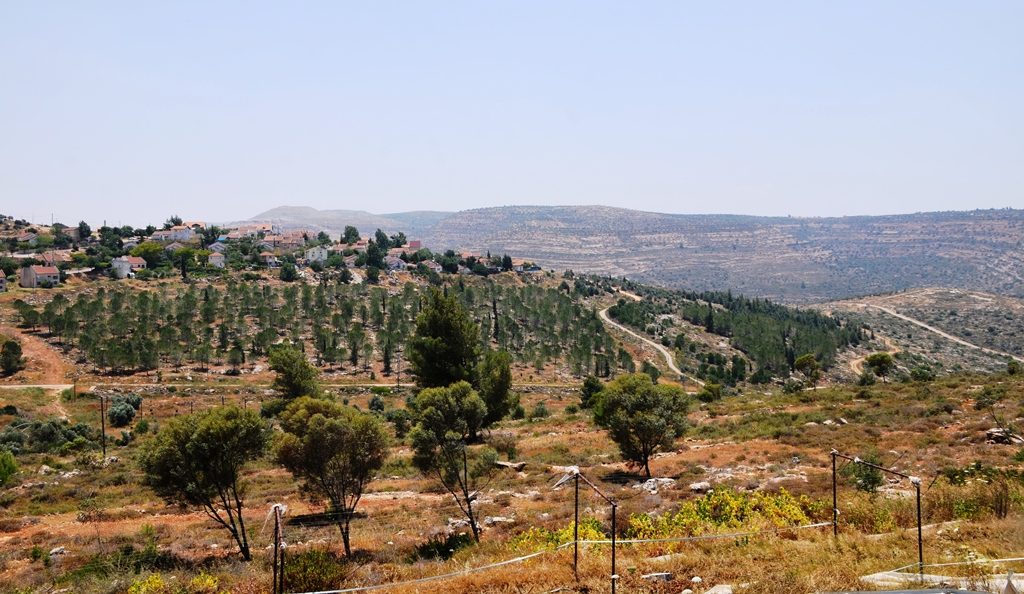
Third Stop was in Itamar, which I had passed on previous trips, but never entered. I had not realized how large and spread out it was.
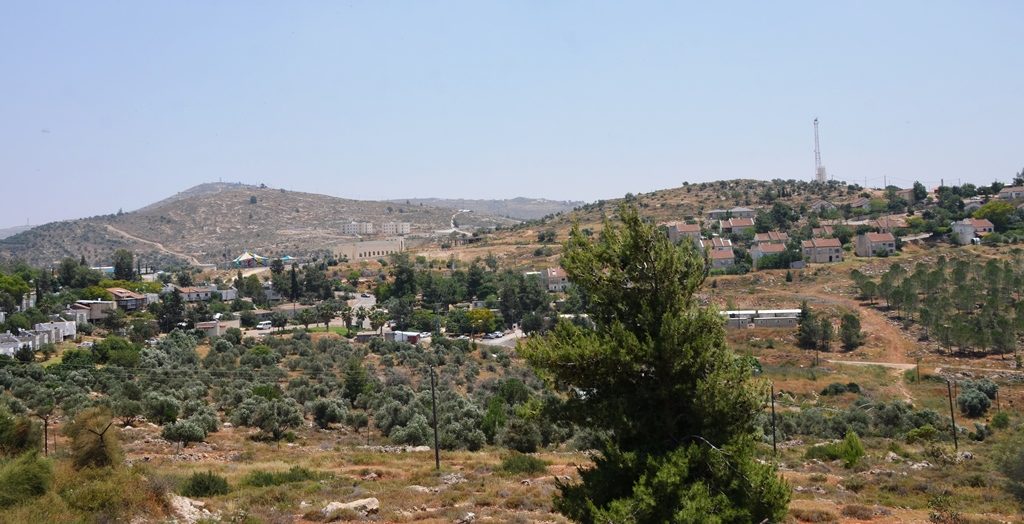
A few of Itamar homes in the distance, as seen from Zimerman Farm where we heard the story of Zimerman Family’s pioneering in organic farming.
Looking out, one sees how getting into Itamar is not so easy, and requires planning. I could not help thinking of the Fogel family as I stood and stared out.
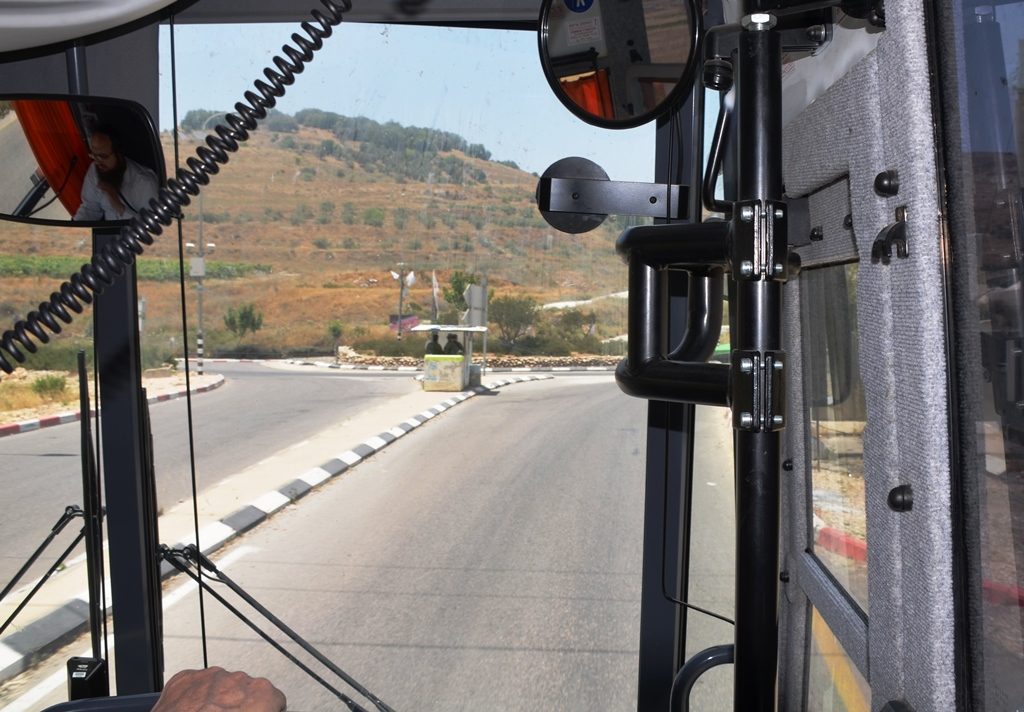
We passed Israeli soldiers standing guard on the road in a cement shelter for protection.
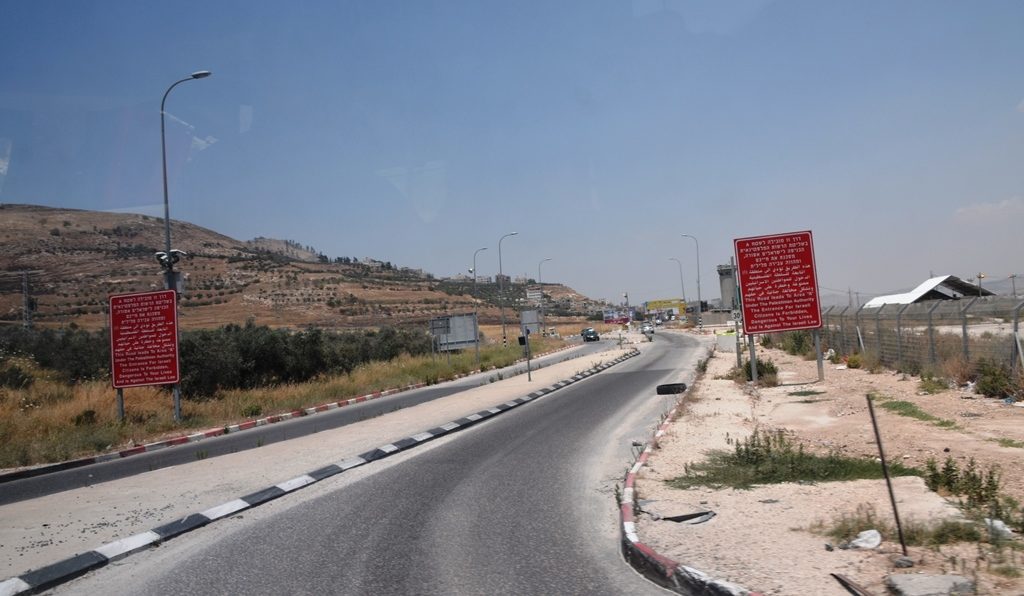
And those red warning signs, telling Israelis not to enter PA territory, were posted at the Arab villages of Area A.
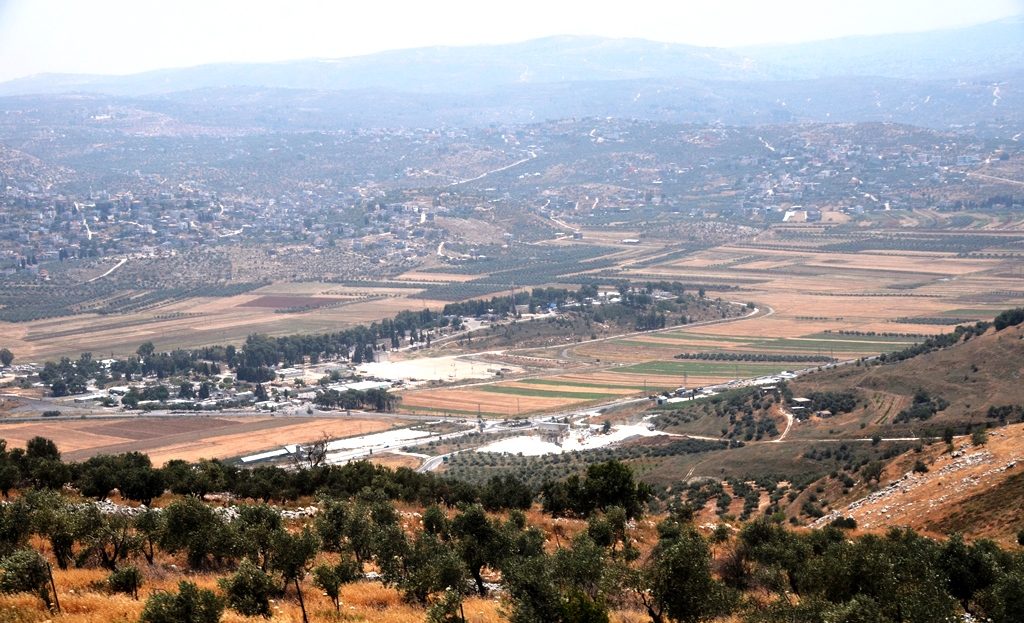
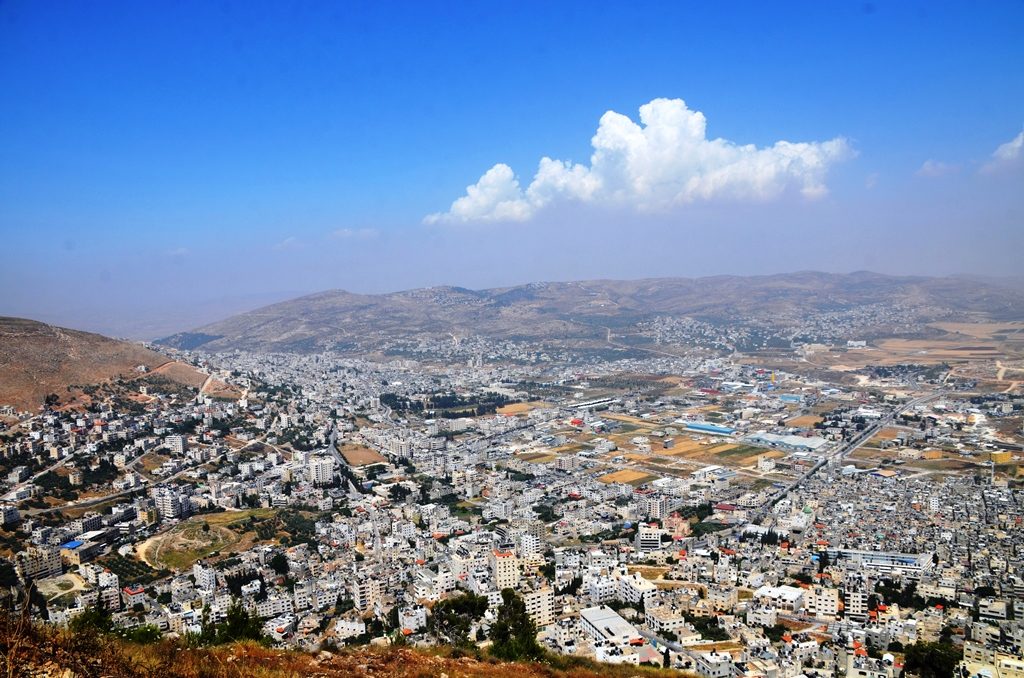
The view on the way toStop Four on Har Bracha, Blessed Mountain, is worth sharing, even if it was hazy that day.
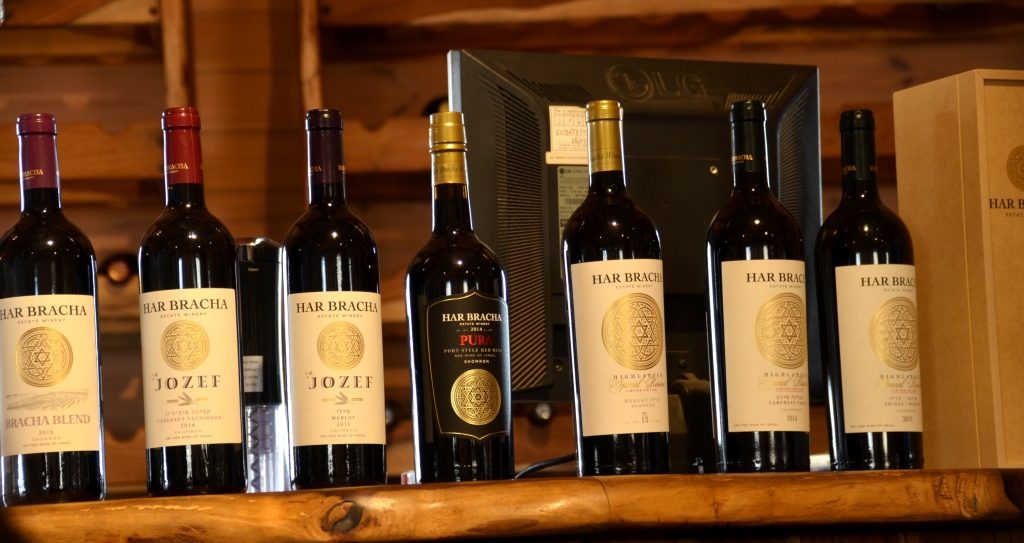
Wine tasting with lunch at Har Bracha, demonstrated the quality wines coming from vineyards planted in the once barren land, now producing 50,000 bottles a year.
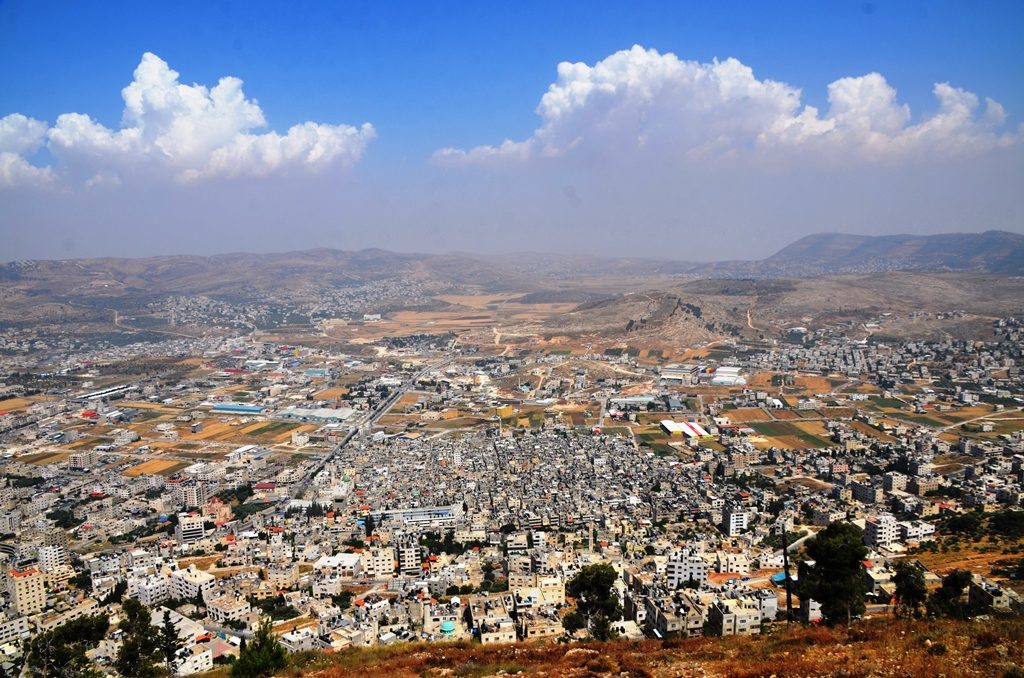
My first visit to Shehem, Nablus, inspired an Israellycool post. Finding Yosef’s Tomb from the safety of the lookout on Mount Gerizim was harder this time.
Stop Five showed “the refugee camp” which is still the same cramped, pathetic photo op, as the areas around have grown and sprawled outward in all directions.
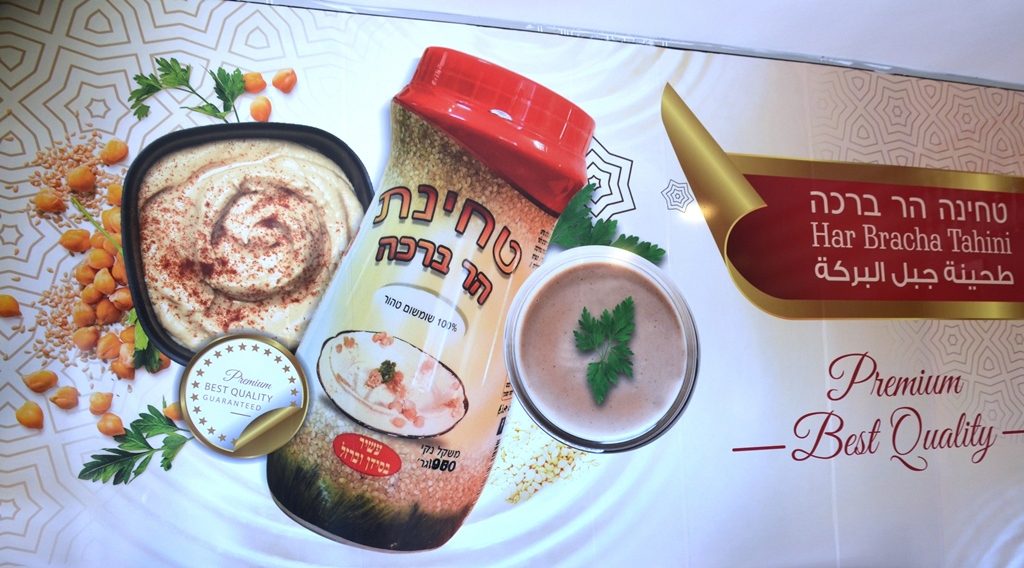
A Tahini Factory near the overlook was Stop Six. The owner Yosef HaCohen shared his story of being a Samaritan businessman. Not Jewish. not Muslim. His children are in the school system under PA, and Har Bracha Tahini is trying to do business in Europe, not so easy for a company located in the “West Bank.”
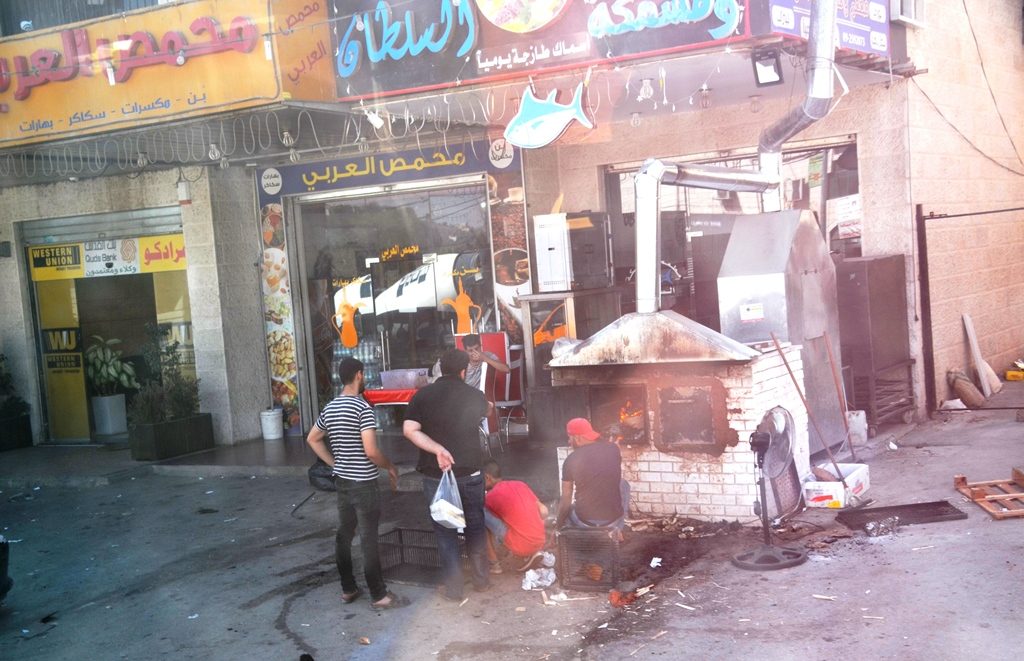
A trip through the Shomron on Ramadan, when Muslims fast all day, and eat after dark, means food places are shut in the morning, but fires get going in late afternoon.
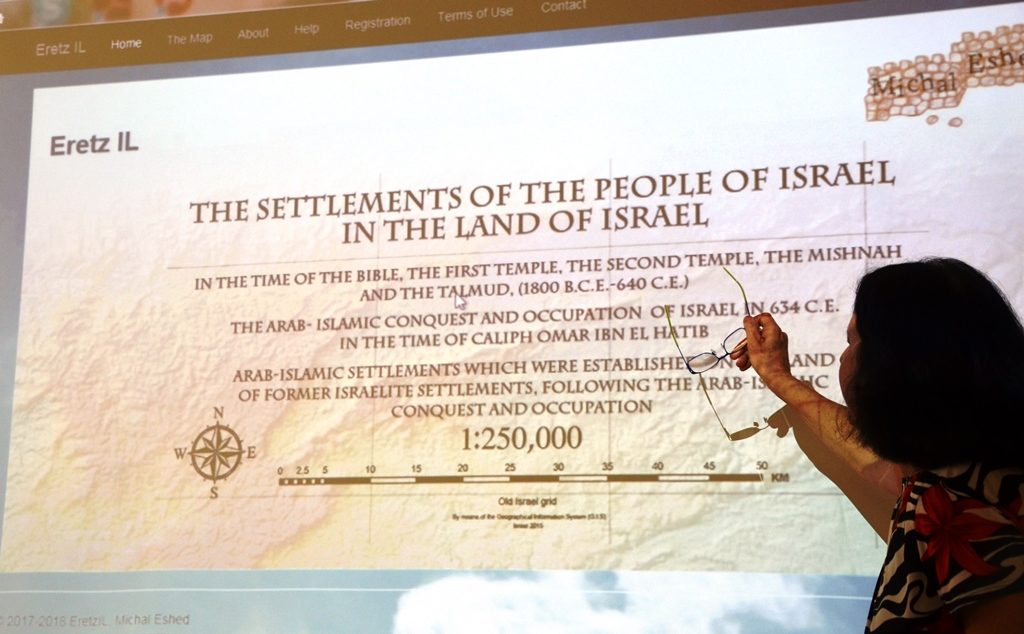
On our last stop before returning to Jerusalem, Michal Eshed shared her Eretz IL research. She has found sources for hundreds of locations with Arab names that were built on top of Jewish sites, where the Hebrew source names were used and translated to Arabic.
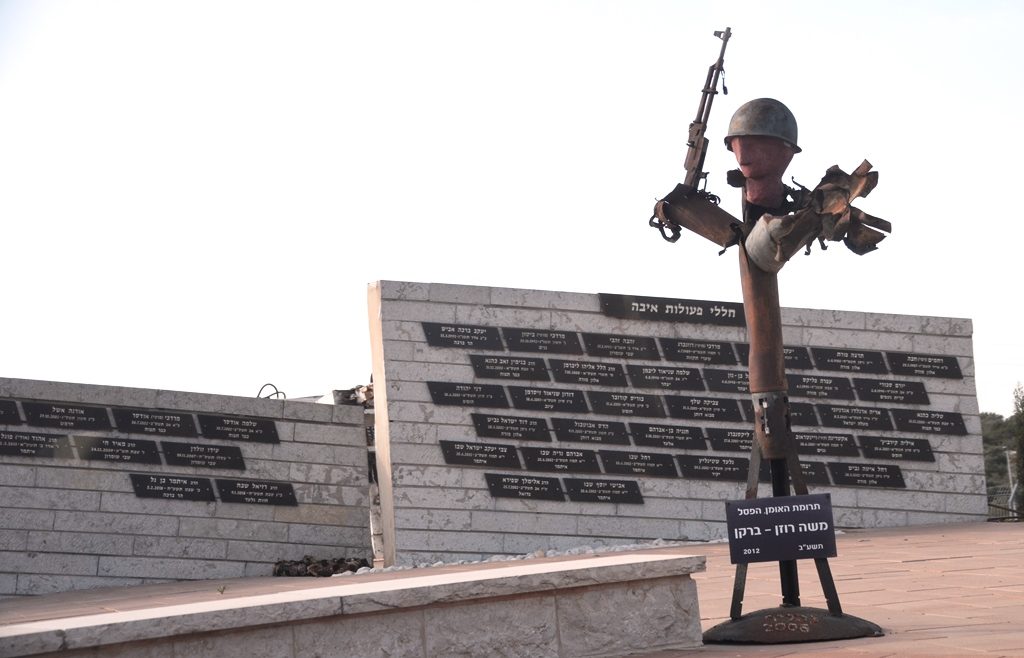
Near the Shomron Community Council building where Eshel shared her power point presentation, is this memorial plaza.
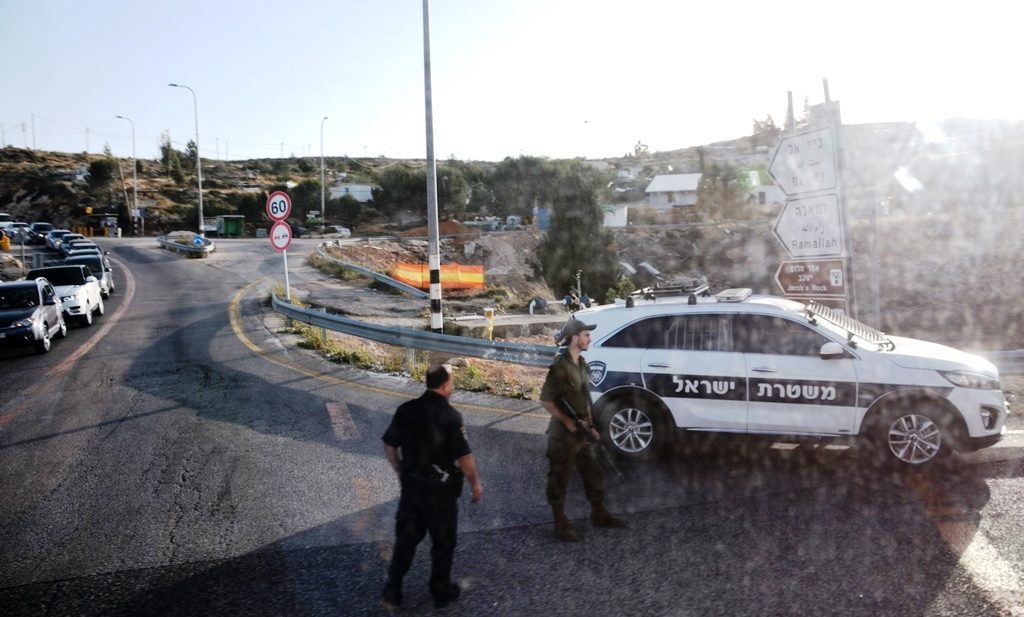
Our bus was stopped by police not far from Ramallah on our return to Jerusalem. Traffic was backed up the other way. We had heard a soldier had been critically wounded. The police were checking cars, looking for someone. Sadly the young soldier died from his head wound.
The Shomron’s “checkerboard of governance” is complicated. Seven stops on a day trip are like a drop in the bucket. One blog post only provides a small piece of the picture..
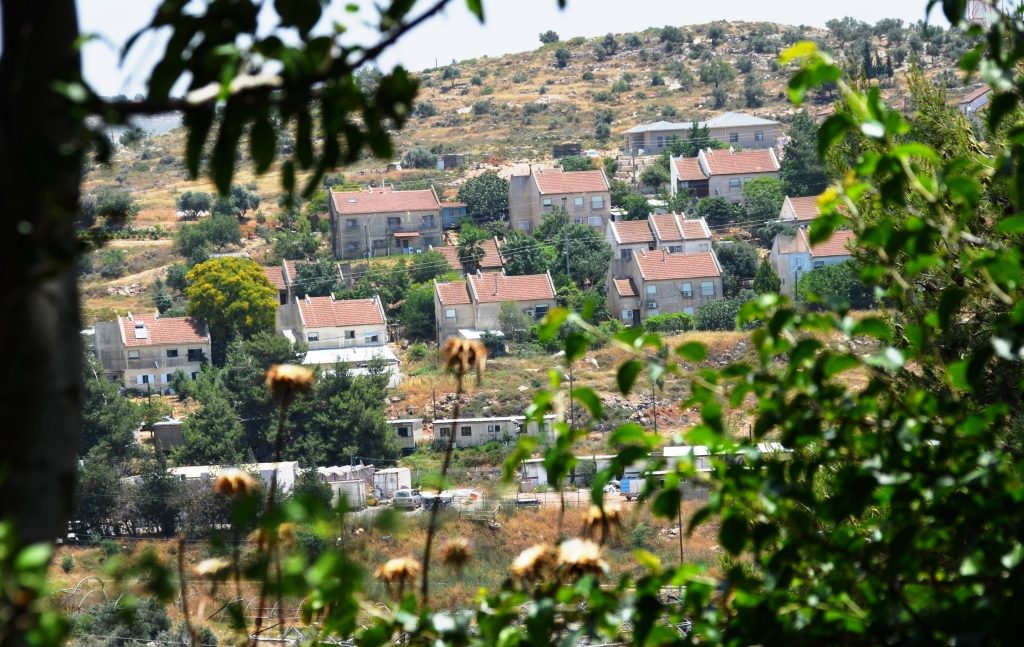
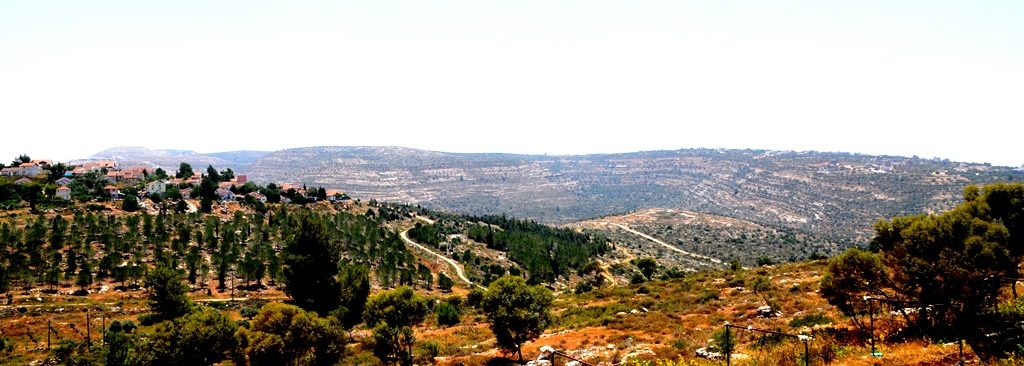
I thought to close with a bit of the view overlooking Itamar in the Shomron.