Shomron Tour: 7 Stops Over Green Line

Shomron Tour: 7 Stops Over Green Line

Once in while it is good to leave Jerusalem, Israel, and see what is happening in other parts of the country.

An opportunity for a trip to the Shomron was hard to pass up. Three times previously, I joined various groups going over the green line to Judea and Samaria, to the Shomron. I was interested to see how things have changed. Often those who travel a regular route do not notice change as much as one who only goes by occasionally.
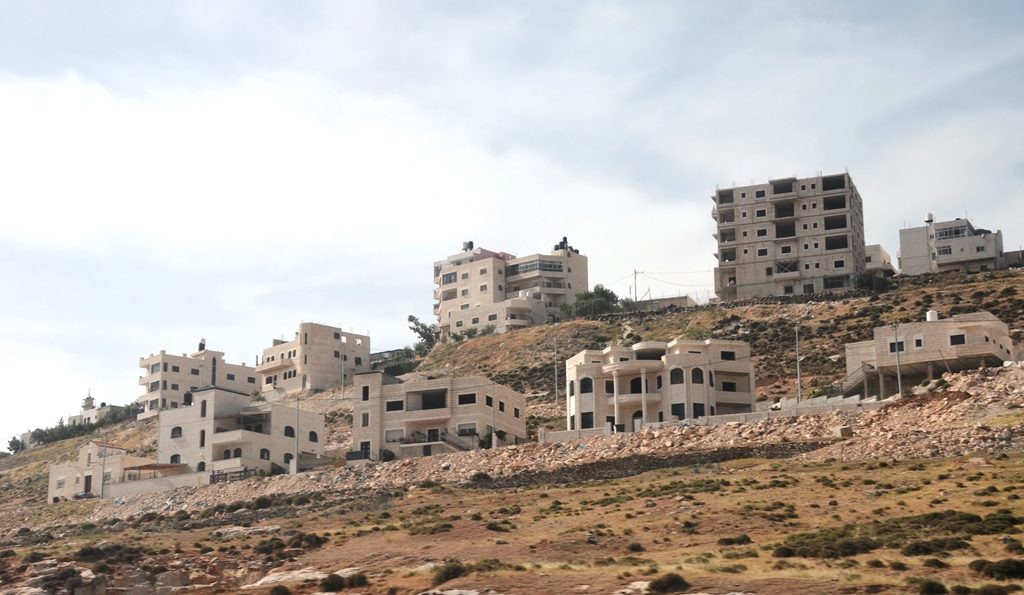
Arab houses being built along road outside of Jerusalem Israel

Leaving Jerusalem, one sees how much construction is happening, how built up some areas are today. Above are a few of new Arab houses along the road.
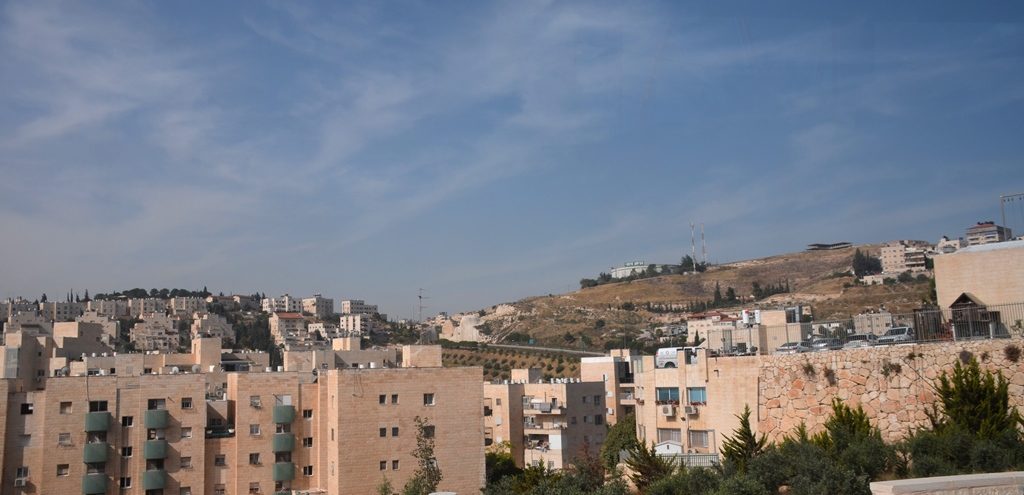
King of Jordan Palace on top of hill near Jerusalem Israel

Neighborhoods stretch out with new dwellings. In the distance, however, is one undeveloped area.
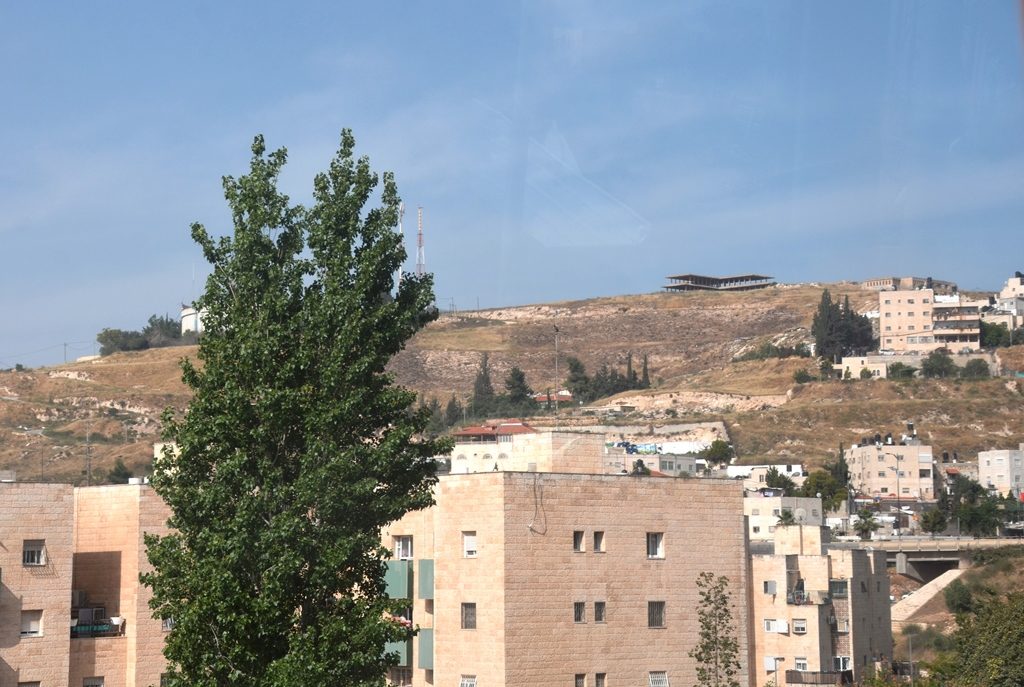
View outside of Jerusalem, Israel unfinished palace King of Jordan

There it is up on the hill, still the same as it was decades ago. The shell of the King of Jordan’s planned summer palace. No one seems to want to touch those dunams of land.
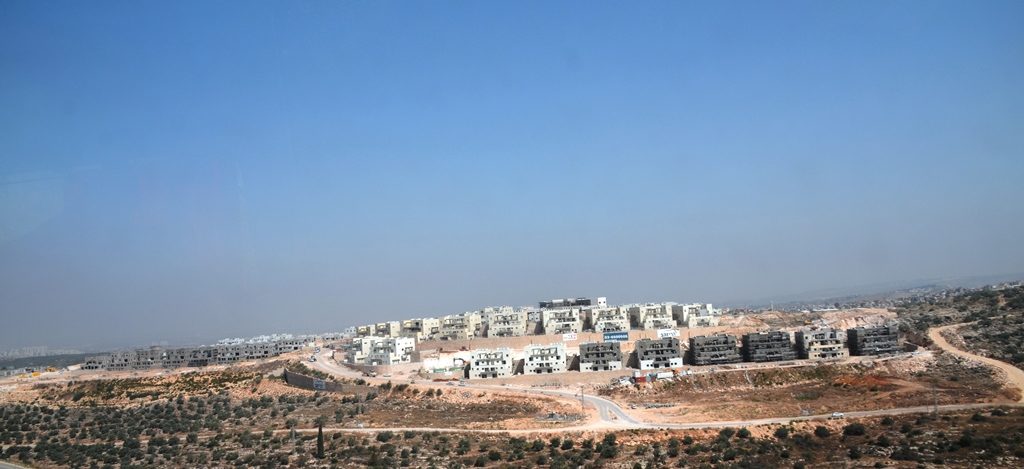
Shomron trip new construction of Leshem

But new Jewish neighborhoods are also under construction, Leshem is a planned and growing community.
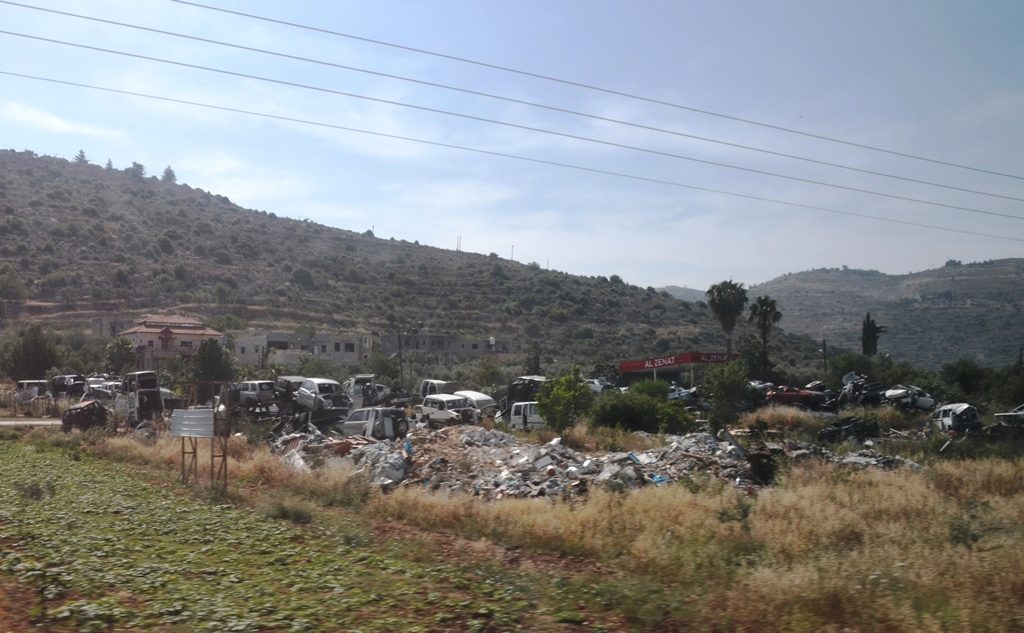
Outside of Jerusalem, Israel cattle grazing along side of road

One thing has not changed, along the road one still see piles of junked cars in Arab neighborhoods.

By the Oslo Accords, Judea and Samaria was divided into three areas: Area A, B and C.

To make something extremely complicated  simplified:

Area A is under PA control. B is under PA governance with Israeli security. C is under Israeli control.

Israel Lookout from high elevation can see in all directions

First stop was Pedu’el. From המרפסת של המדינה, HaMirpeset Shel HaMedina, loosely translated as Israel’s Lookout, on a clear day one can see, well almost forever, to the sea. It is one of those spots where one realizes just how small Israel really is.
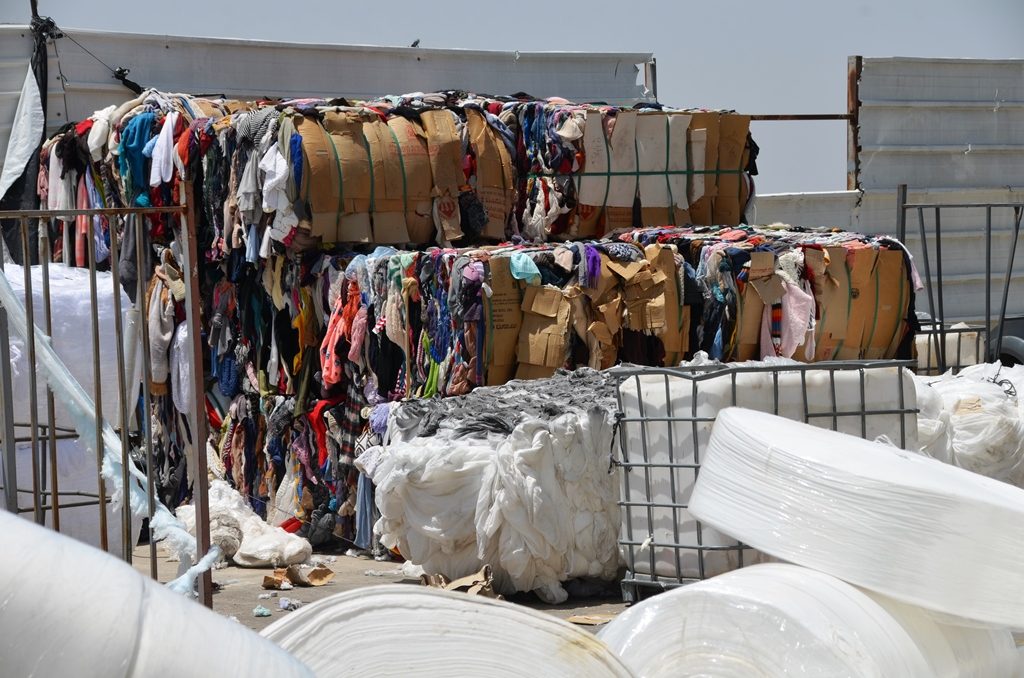
Fabrics to be recycled in Ofertex factory in Shomron Barkan Industrial park

Ever wonder where those old stained clothes and seconds of wipes end up?

Second stop was at Ofertex manufacturing plant in Barkan Industrial Park.
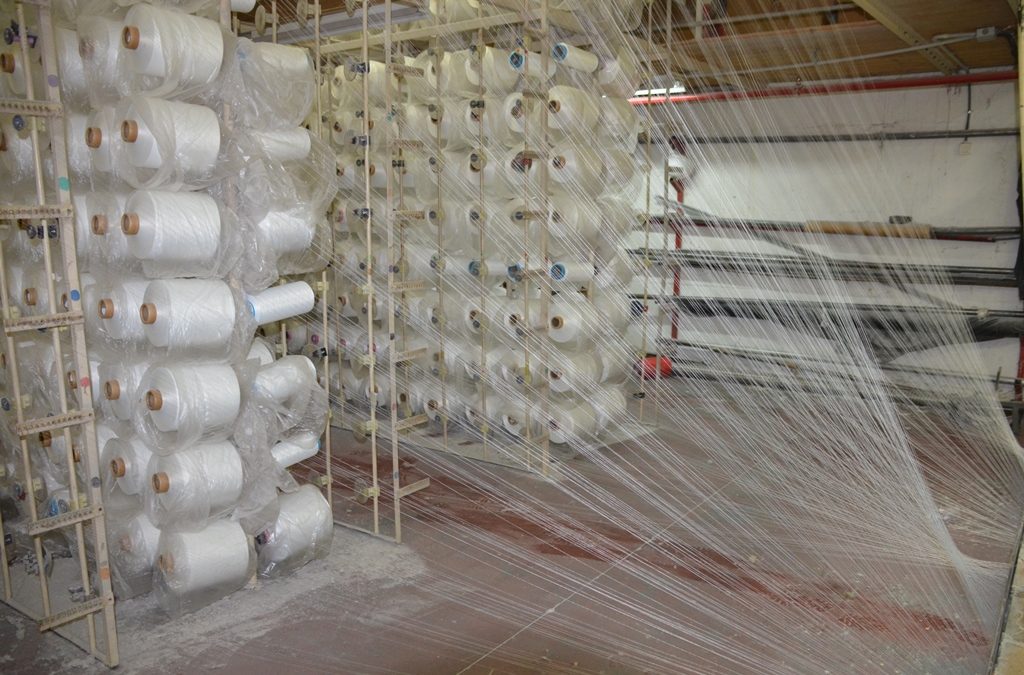
Spinning threads into recycled fabrics in Barkan Industrial Park factory

I wrote about a visit to Barkan Industrial Park  two years ago. While SodaStream got the media attention, dozens of companies are based in the region. This one recycles fabrics to make cleaning cloths, repackaged under private labels for Walmart, Dollar Stores and European clients too. Oftertex was started by Polish survivors who came to Israel in 1950. Fourth generation owners of this private company employ 120 people. Of the 100 Arab workers, some are third generation employees. Israeli companies pay over three times average PA salaries, plus have better working conditions and benefits.
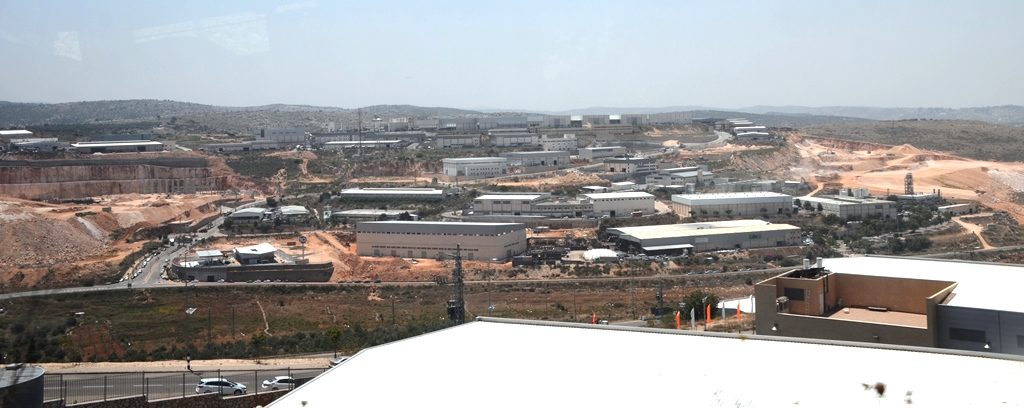
Industrial park in Shomron, Israel over green line

Thousands of Arab workers are hurt if BDS boycott’s are effective, if production slows or a business is forced to close or relocate.
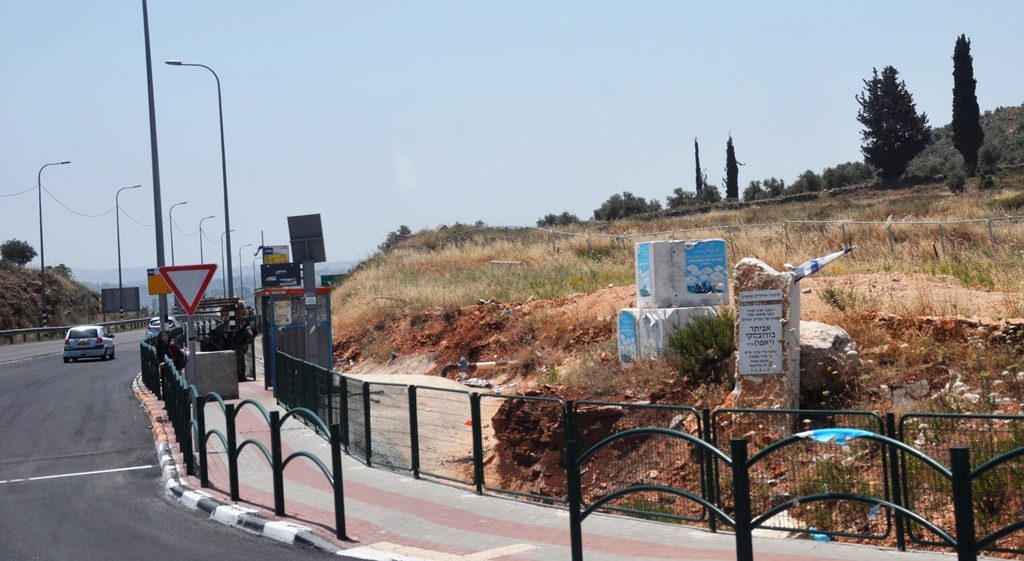
Security barriers to protect those waiting for bus in Shomron

Back on the road, we passed a memorial to one of too many Israelis who were murdered by terrorists at this bus stop.
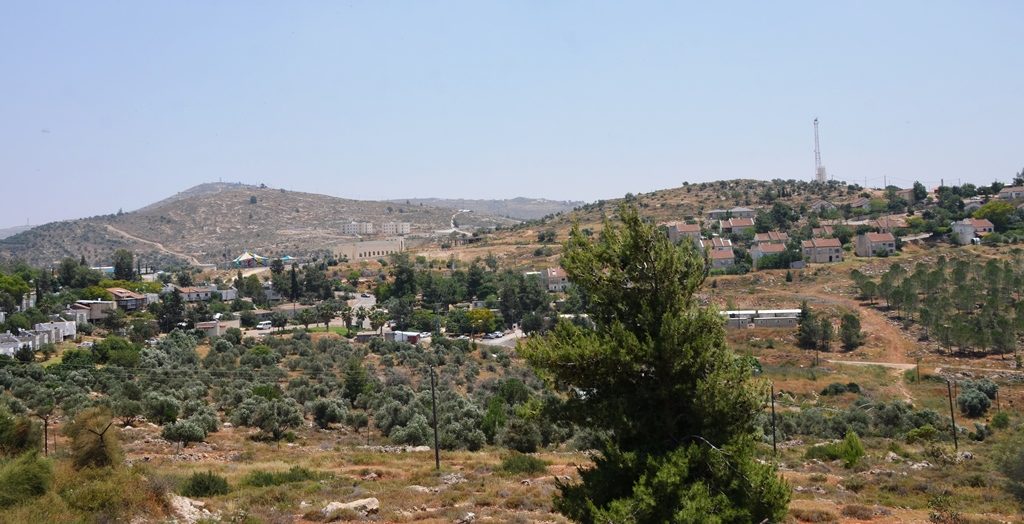
Itamar view of part of town

Third Stop was in Itamar, which I had passed on previous trips, but never entered. I had not realized how large and spread out it was.
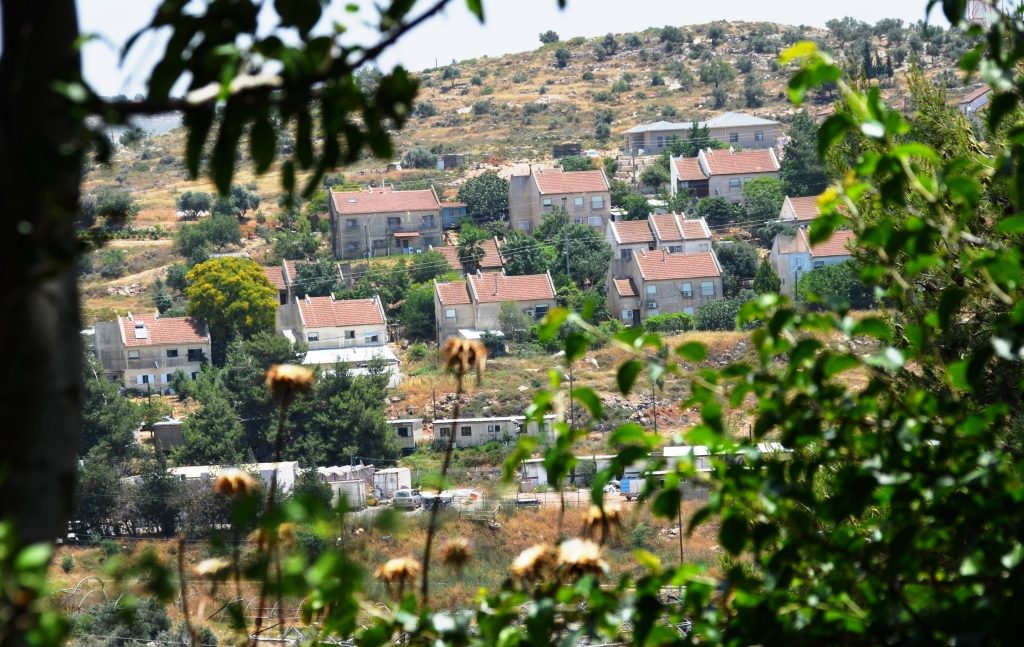
Shomron, Itamar houses from afar.

A few of Itamar homes in the distance, as seen from Zimerman Farm where we heard the story of Zimerman Family’s pioneering in organic farming.
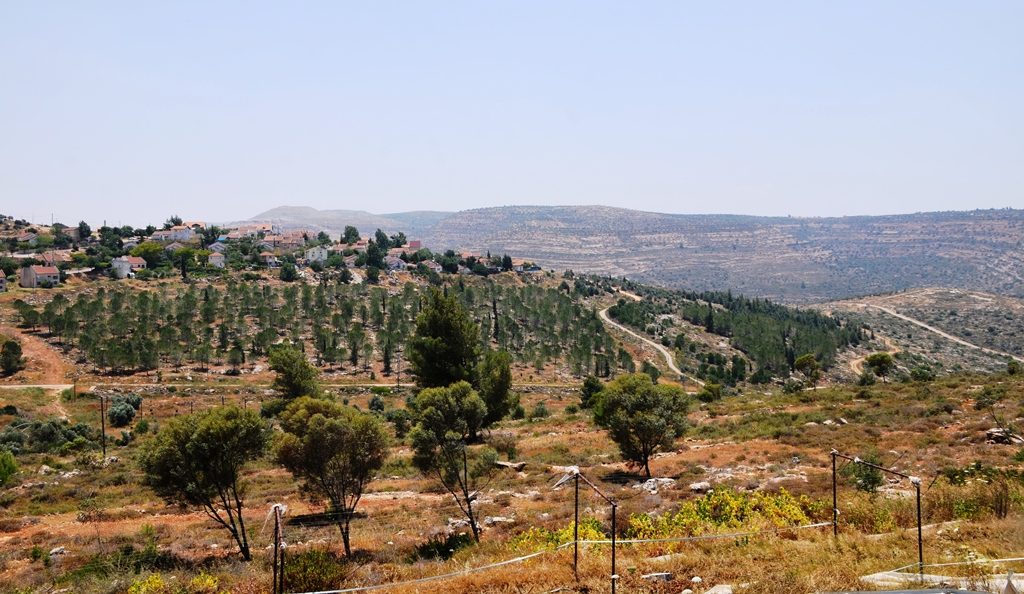
Itamar view from Zimerman Farms.

Looking out, one sees how getting into Itamar is not so easy, and requires planning. I could not help thinking of the Fogel family as I stood and stared out.
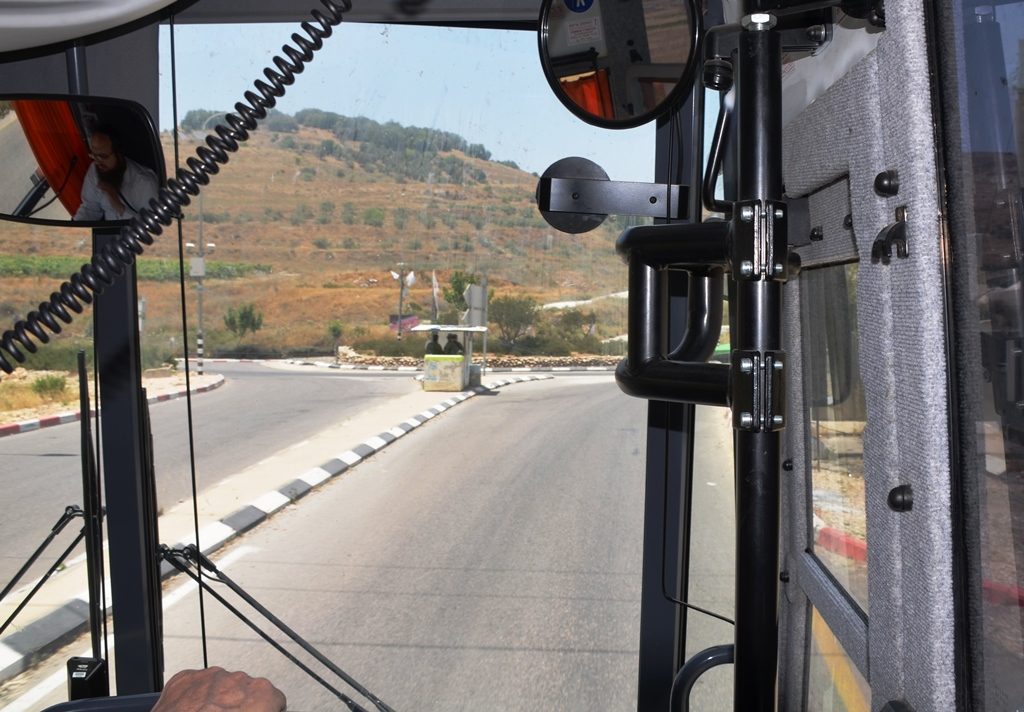
Two Israeli soldiers on watch in cement security in Shomron road

We passed Israeli soldiers standing guard on the road in a cement shelter for protection.
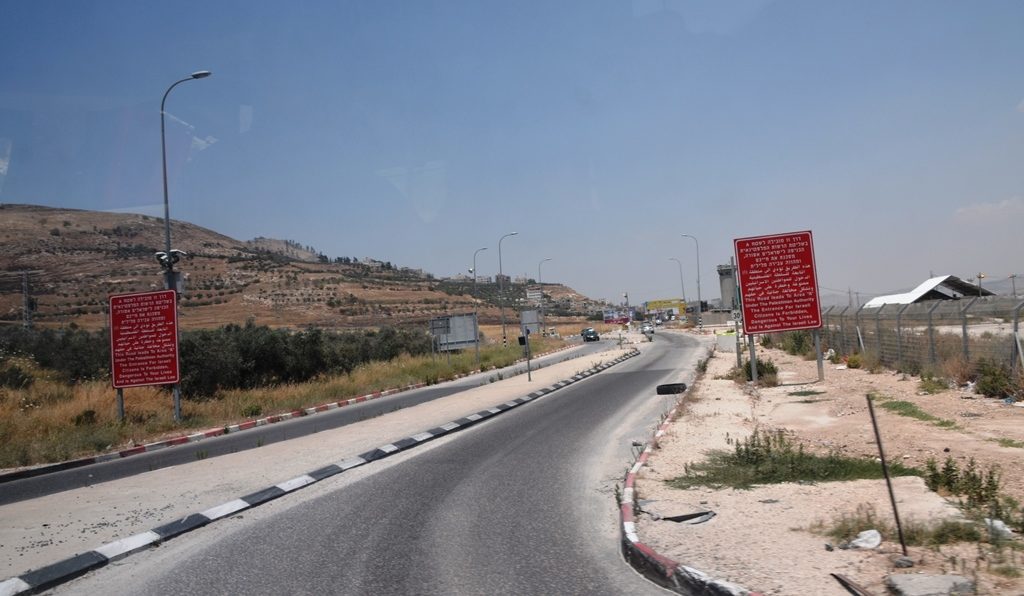
Red signs at road to Arab villages in Shomron forbidding Israelis to enter

And those red warning signs, telling Israelis not to enter PA territory, were posted at the Arab villages of Area A.
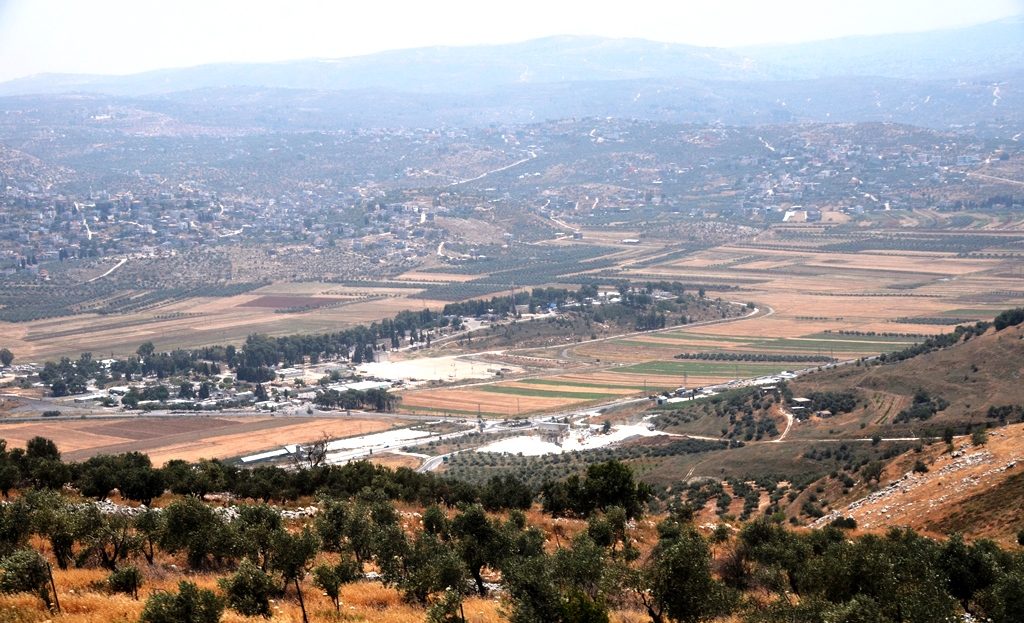
Har Bracha, Blessed Mountain, view below

The view on the way to Stop Four on Har Bracha, Blessed Mountain, is worth sharing, even if it was hazy that day.
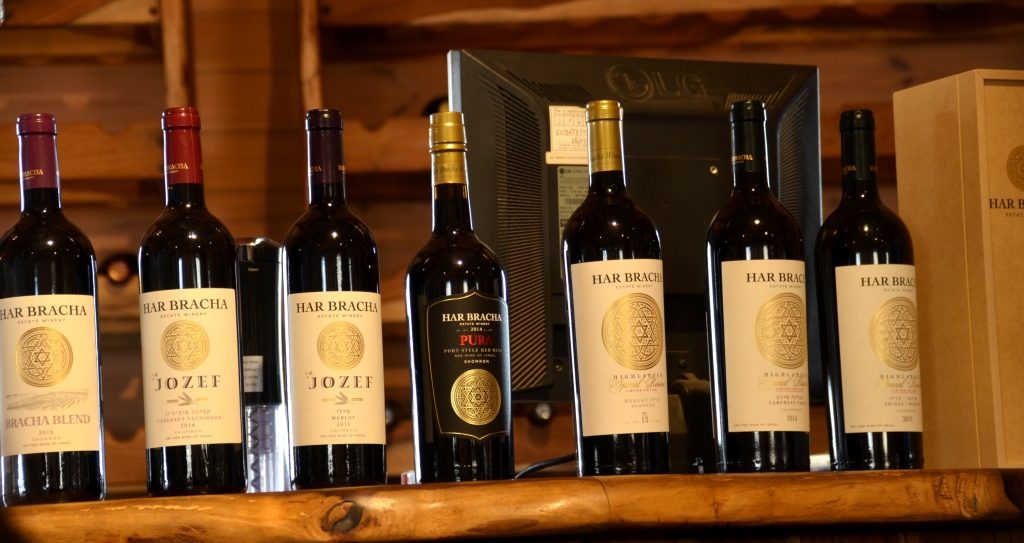
Har Bracha wine bottles on display for tasting.

Wine tasting with lunch at Har Bracha, demonstrated the quality wines coming from vineyards planted in the once barren land, now producing 50,000 bottles a year.
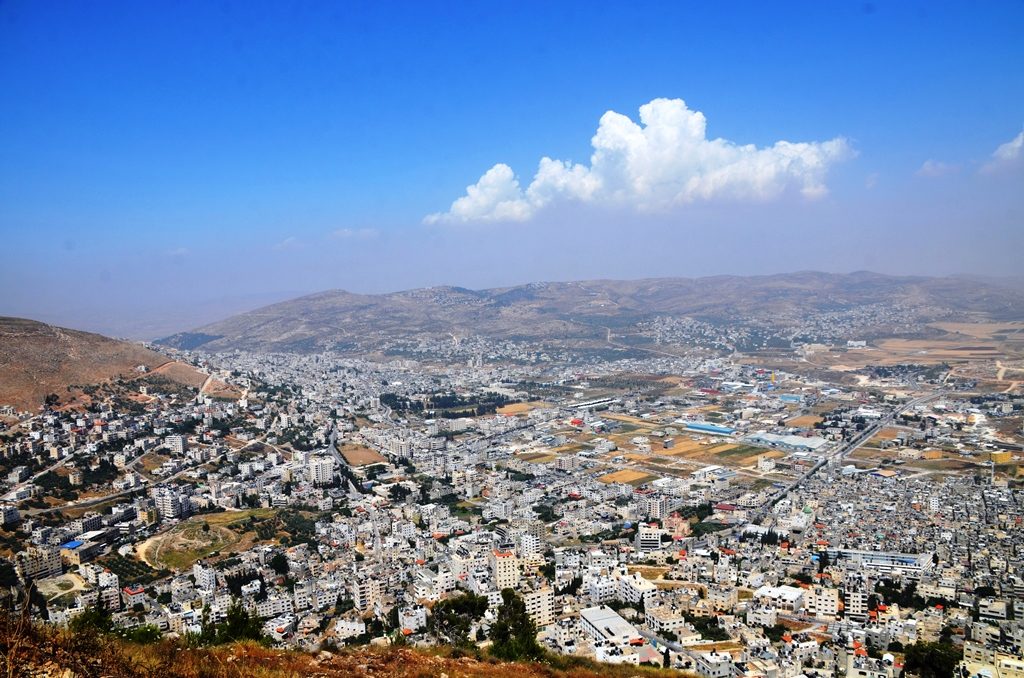
View of Nablus from lookout above Shechem

My first visit to Shehem, Nablus, inspired an Israellycool post.  Finding Yosef’s Tomb from the safety of the lookout on Mount Gerizim was harder this time.
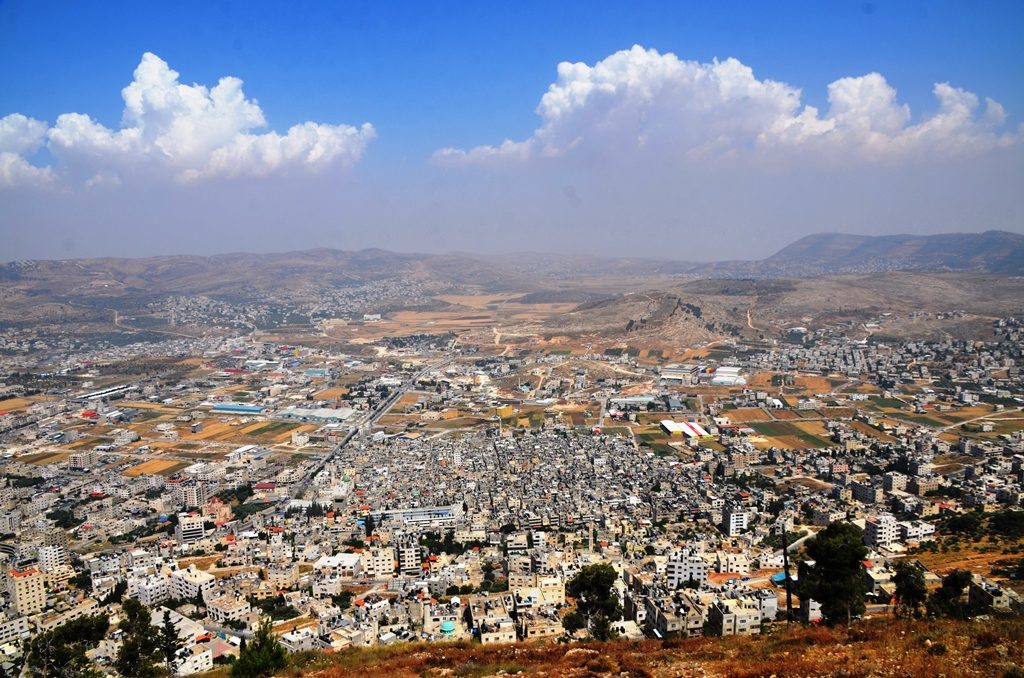
View of Nablus from lookout above, closest Israeli access to Josef's Tomb

Stop Five showed “the refugee camp” which is still the same cramped, pathetic photo op, as the areas around have grown and sprawled outward in all directions.
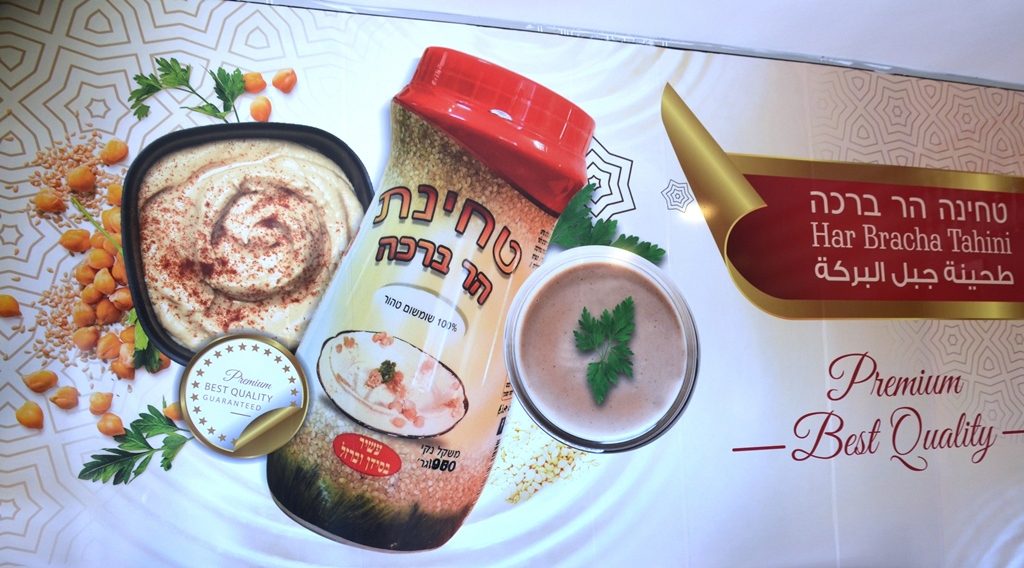
Factory owned by Samaritan family having problems selling to EU

A Tahini Factory near the overlook was Stop Six. The owner Yosef HaCohen shared his story of being a Samaritan businessman. Not Jewish. not Muslim. His children are in the school system under PA, and Har Bracha Tahini is trying to do business in Europe, not so easy for a company located in the “West Bank.”
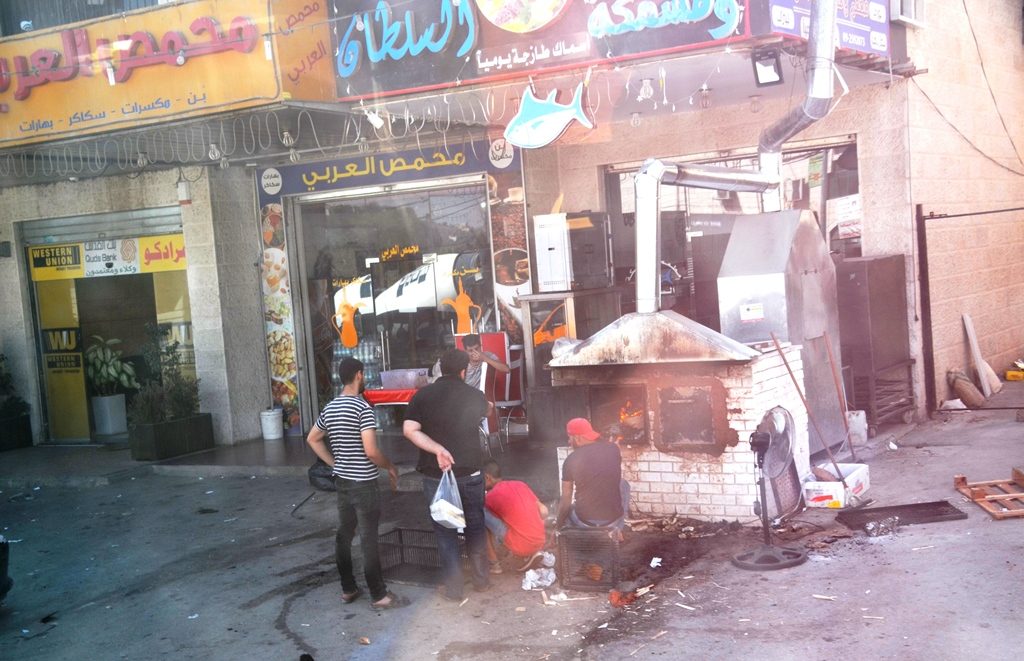
Oven on street preparing food for iftr Ramadan meal

A trip through the Shomron on Ramadan, when Muslims fast all day, and eat after dark, means food places are shut in the morning, but fires get going in late afternoon.
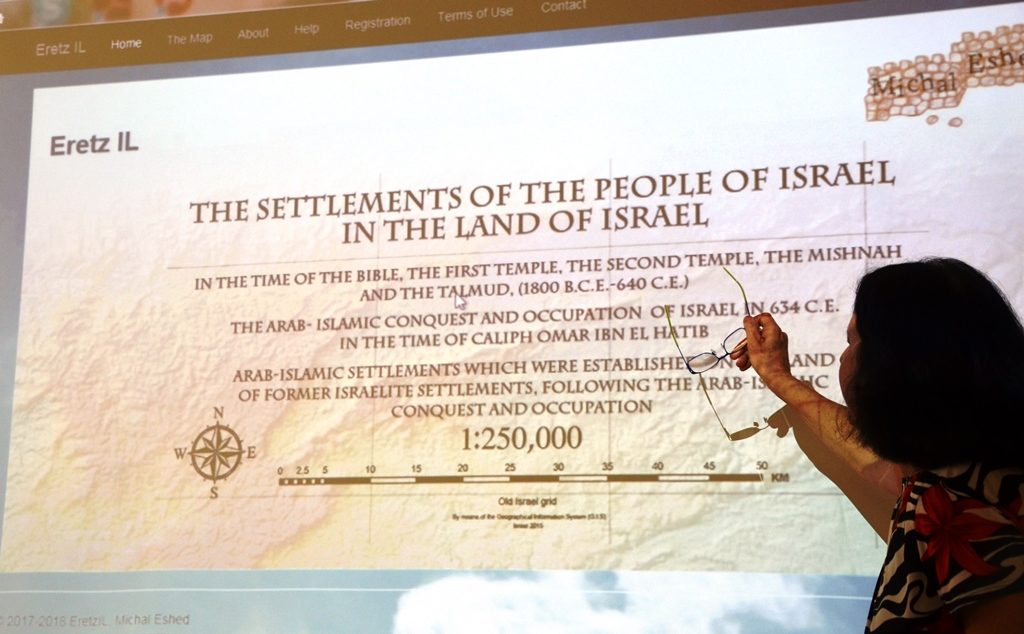
Internet project shows Arab names of towns which were Jewish, used same names

On our last stop before returning to Jerusalem, Michal Eshed shared her Eretz IL research. She has found sources for hundreds of locations with Arab names that were built on top of Jewish sites, where the Hebrew source names were used and translated to Arabic.
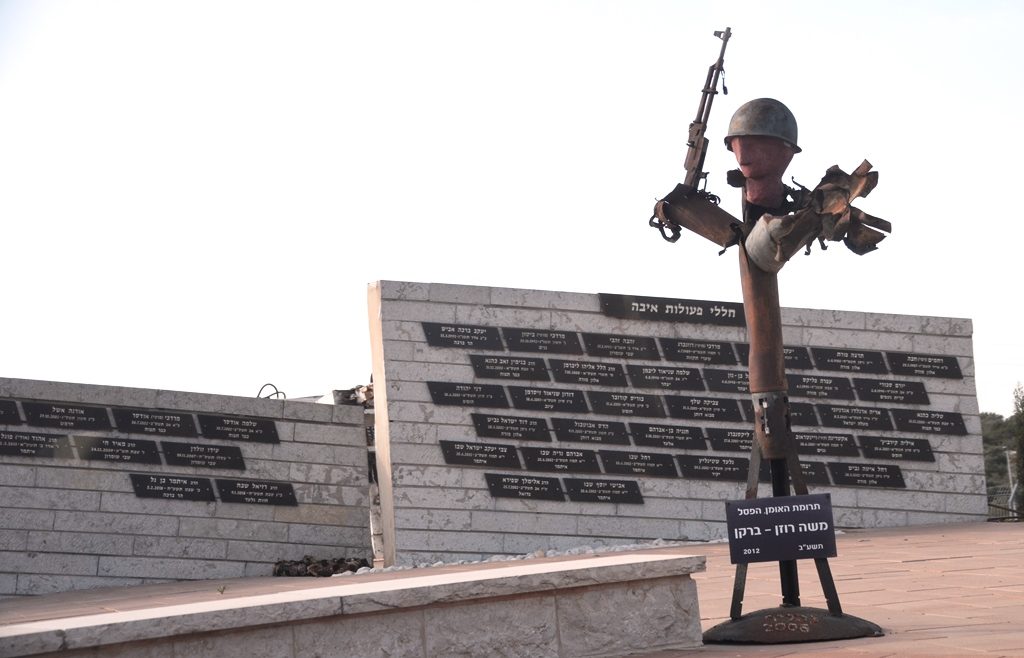
Memorial wall in Shomron for fallen

Near the Shomron Community Council building where Eshel shared her power point presentation, is this memorial plaza.
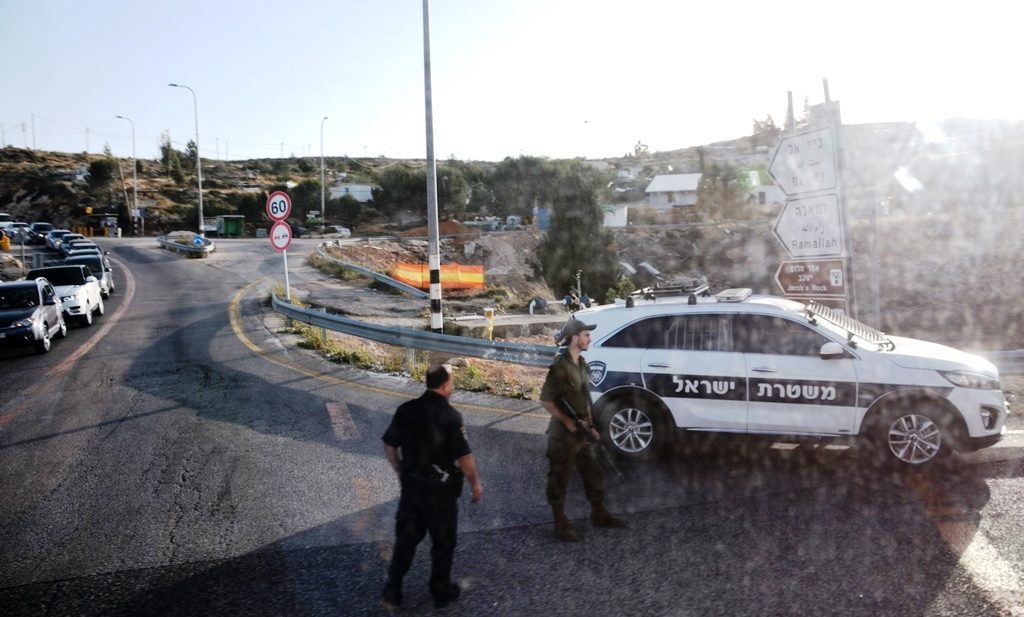
Police checking cars near Ramallah after IDF soldier was mortally wounded

Our bus was stopped by police not far from Ramallah on our return to Jerusalem. Traffic was backed up the other way. We had heard a soldier had been critically wounded.  The police were checking cars, looking for someone. Sadly the young soldier died from his head wound.

The Shomron’s “checkerboard of governance” is complicated. Seven stops on a day trip are like a drop in the bucket. One blog post only provides a small piece of the picture..
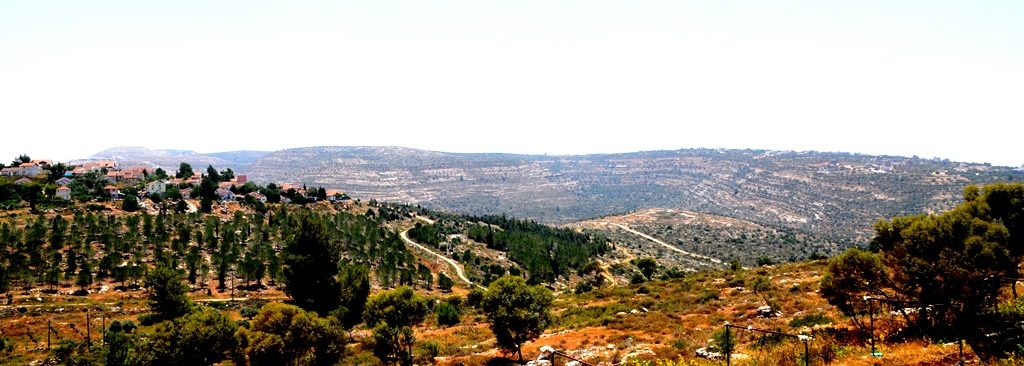
Land in Shomron seen from Itamar

I thought to close with a bit of the view overlooking Itamar in the Shomron.

More photos from day can be seen HERE

Interested ro see for yourself? Let me know and I will introduce you to those who want to share the beauty of Eretz Yisrael.
See New Old Streets – London in Jerusalem:

See New Old Streets – London in Jerusalem:

Time.

Time sometimes seems to pass so quickly and other times so slowly. This week in a heat wave every minute outside seemed longer.

The history of Jerusalem goes back millennia, and 30 years is a mere blink of an eye.

The British began their governance of Jerusalem after centuries of Ottoman rule in December of 1917, and left in 1948. However, in those 30 years, Jerusalem changed drastically.

Social and cultural exhibit at Tower of David Museum London in Jerusalem

The British brought with them a new life of culture to the Middle East, and a new exhibit at the Tower of David Museum shares it with us.

Have you ever thought about how much changed over the 30 years of the British Mandate?

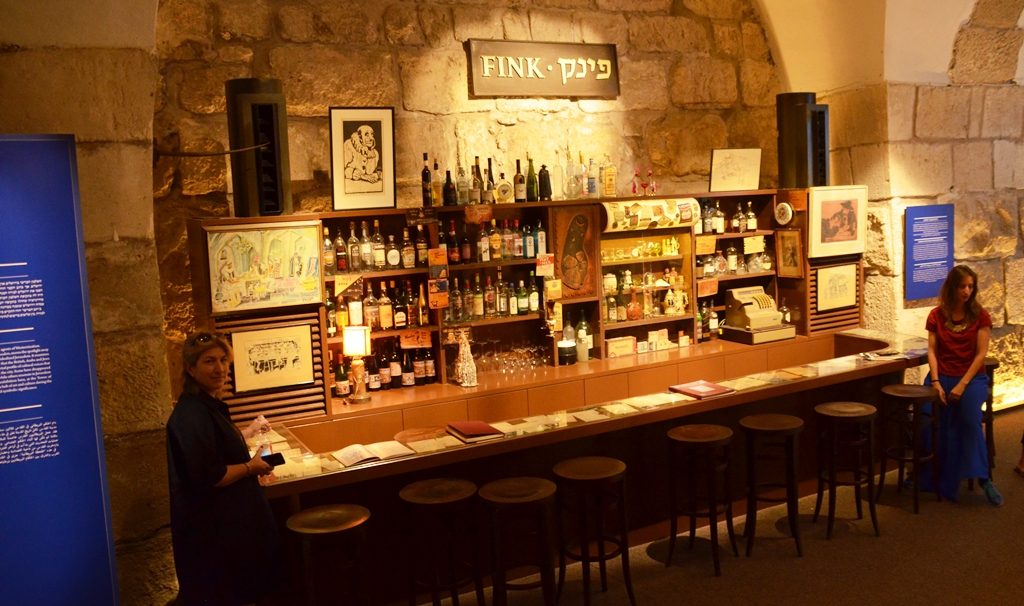
Replica of Fink's Bar in Tower of David Museum exhibit on British rule

British soldiers needed their entertainment and liquor. Cafes such as Fink’s Bar and Restaurant offered oysters and other delicacies  previously unknown.

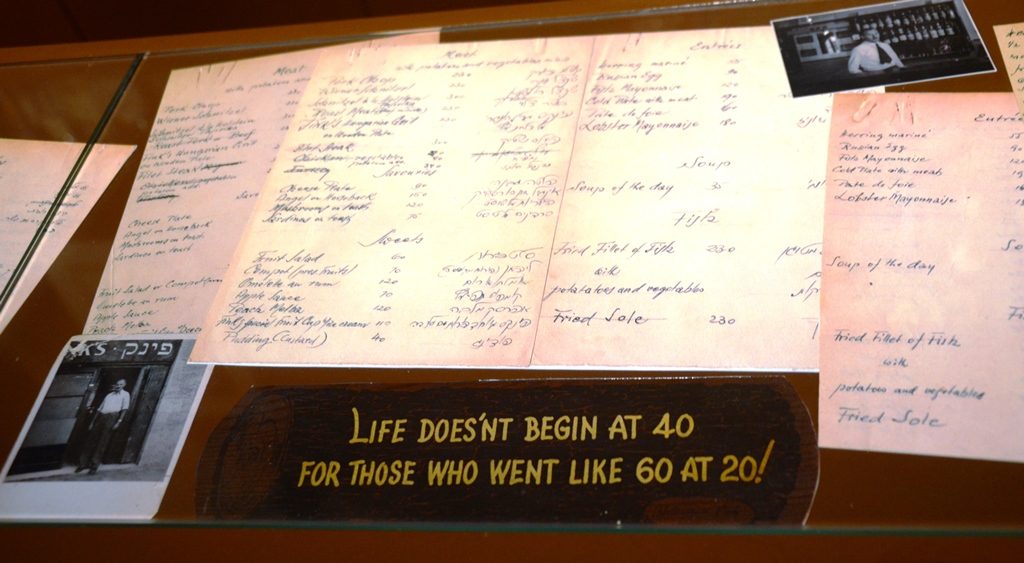
Tower of David London in Jerusalem menu from British days

The London in Jerusalem exhibit offers insights into life on the real Jerusalem streets.

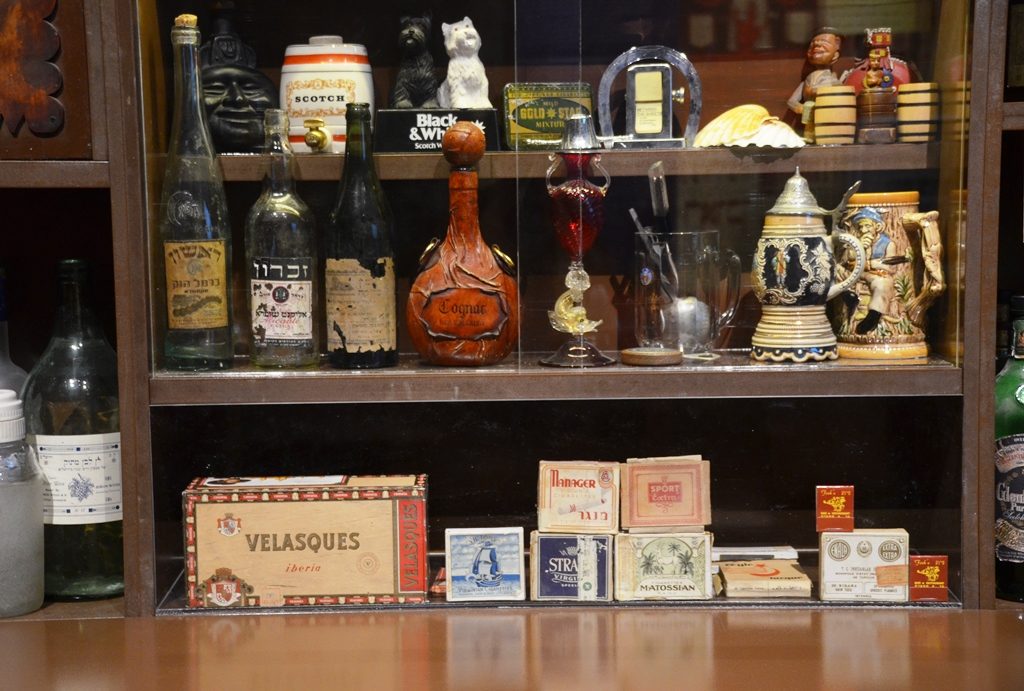
Cigarettes and liquor brought to Levant by British in first part of 20th century

Infrastructure was important, but so were cigarettes and alcoholic beverages.

Old sign in Tower of David Fink's Bar Jerusalem

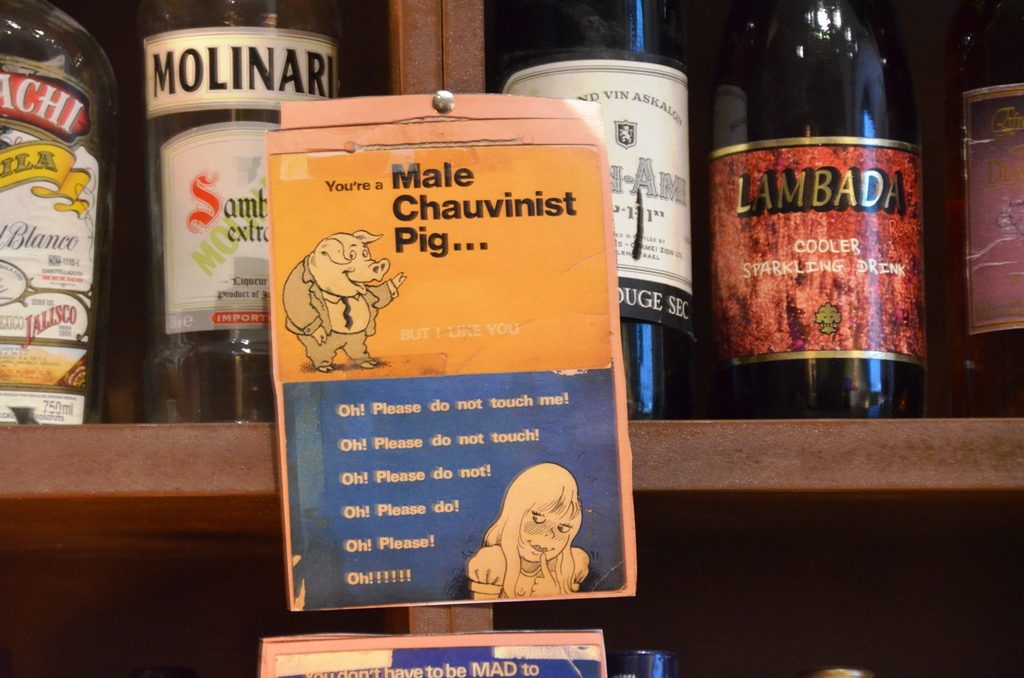
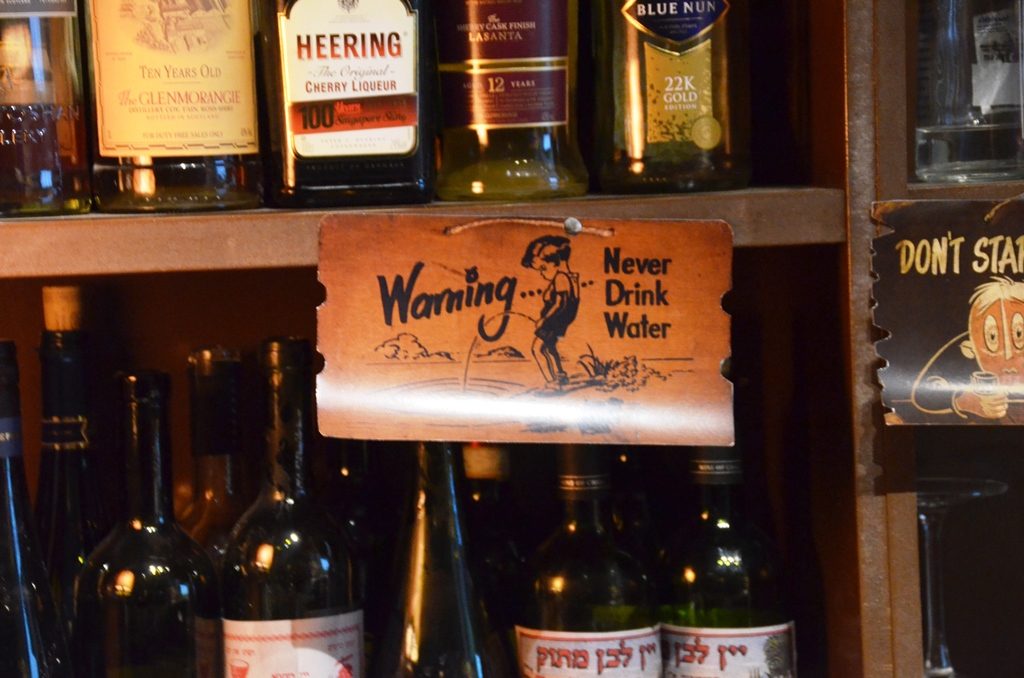
Some items in this exhibit would not be considered politically correct these days.

Jerusalem map for British Mandate soldiers

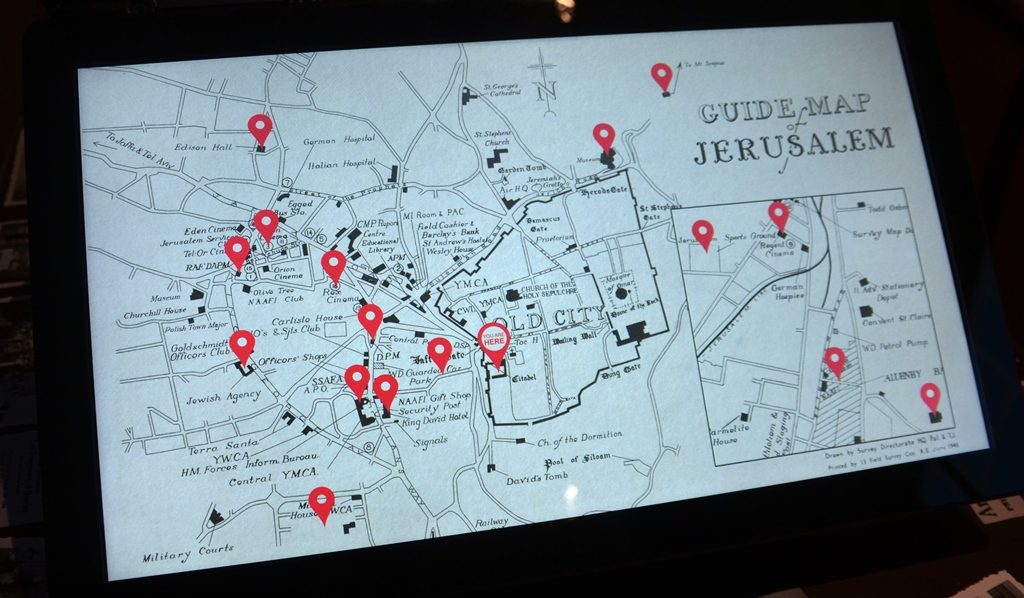
This is a map of Jerusalem given to British soldiers. The photo is one of dozens of old photos in a slide presentation.

Palestine Radio at Tower of David Museum for London in Jerusalem exhibit

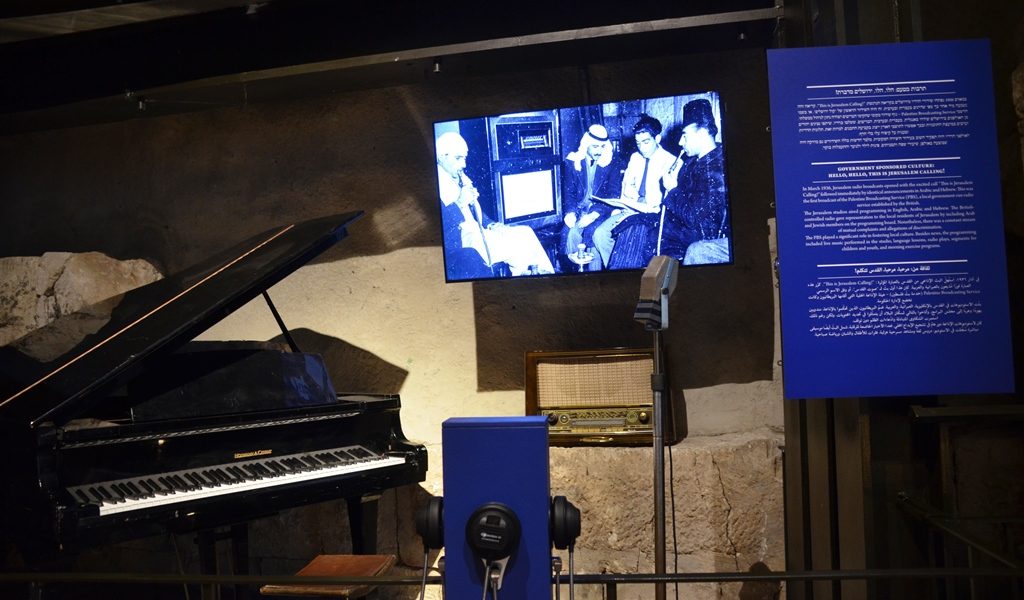
One of the five sections of the exhibit highlights the British Palestine Broadcasting Service (PBS) which opened in March 1936. “This is Jerusalem Calling!” was followed by broadcasts in Hebrew and Arabic.

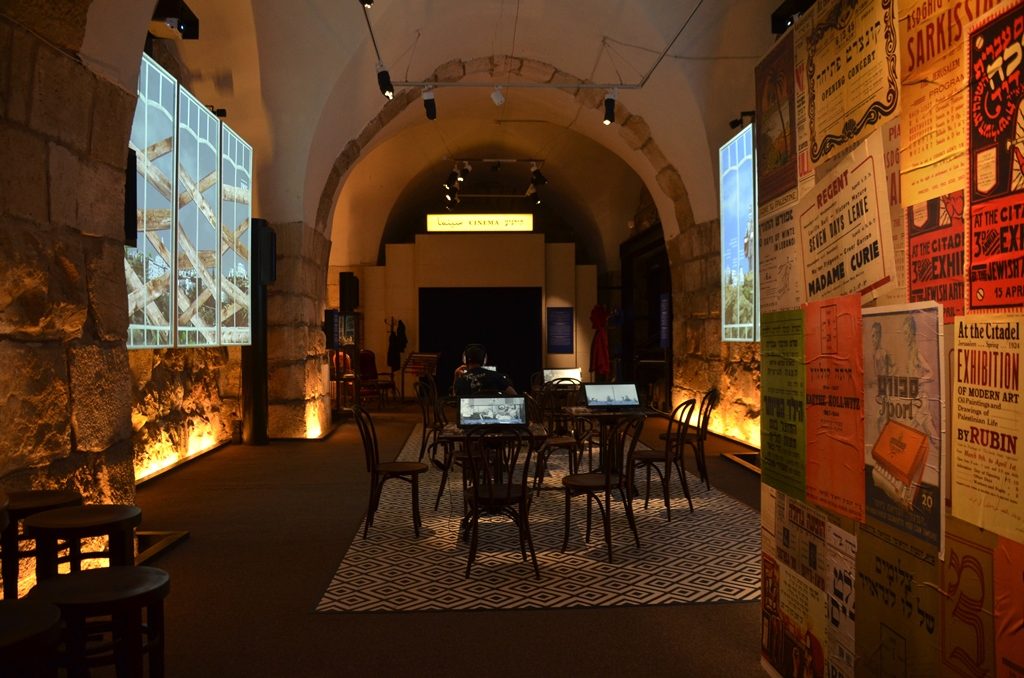
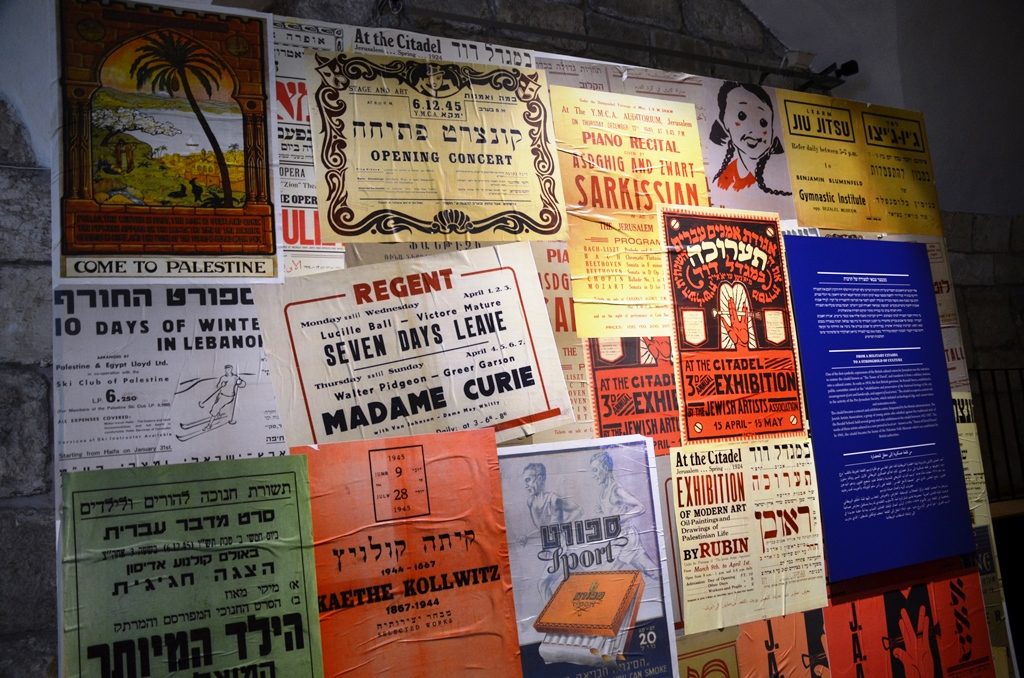
Old posters from British era in Jerusalem

Posters announced the various shows, plays and events new to Jerusalem, including flower shows with trophies presented to the winners.

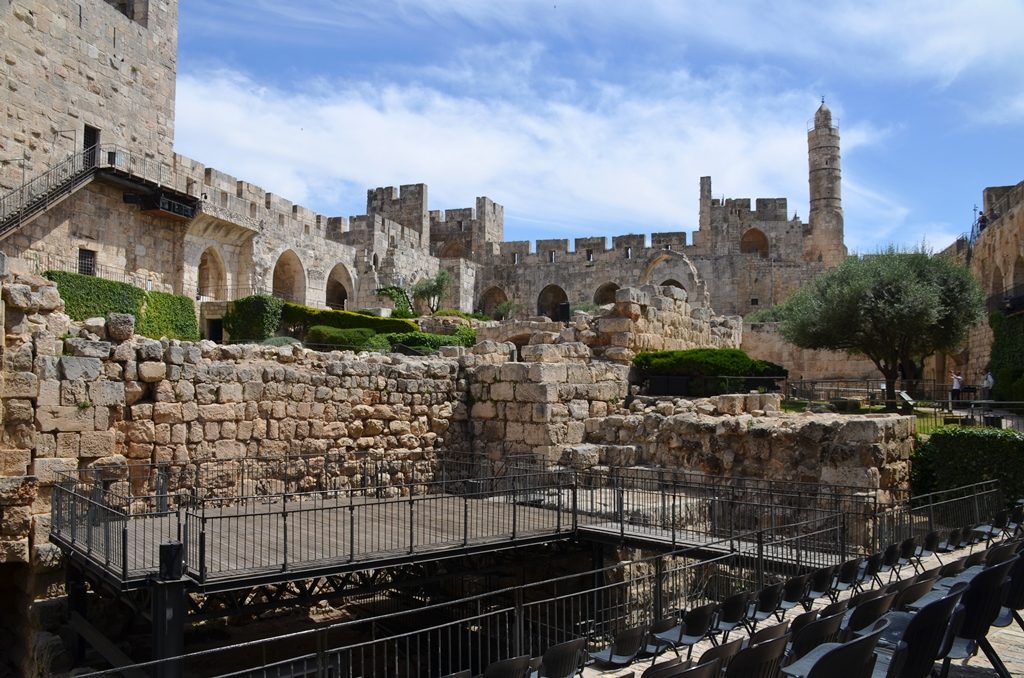
Tower of David set for performance

The Tower of David today hosts numerous events on this stage and can seat over 300 people.

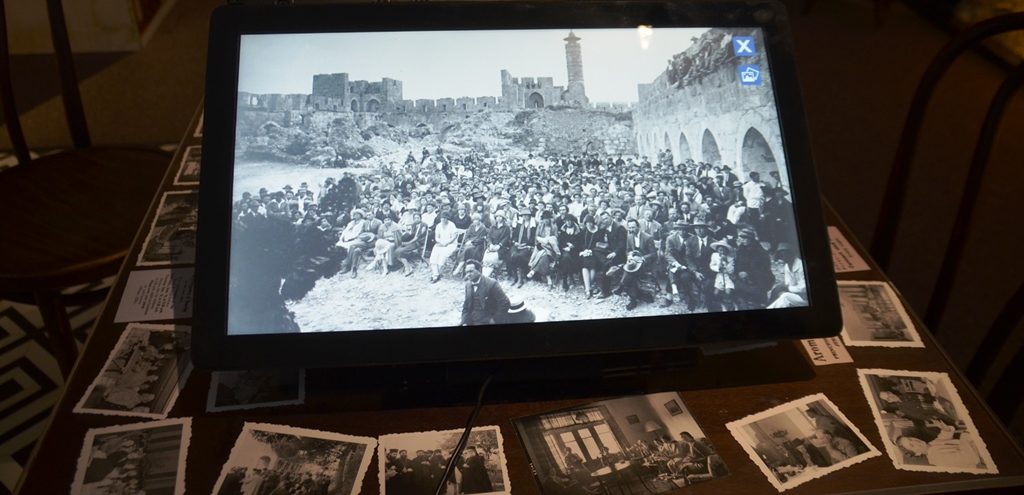
Tower of David London in Jerusalem, photos from early British years

In this old photo we can see how the space looked before it was excavated in the 1980’s.

Over the centuries the Tower of David was used for military purposes. It was the first British Governor Sir Ronald Storrs who envisioned it as a cultural venue.

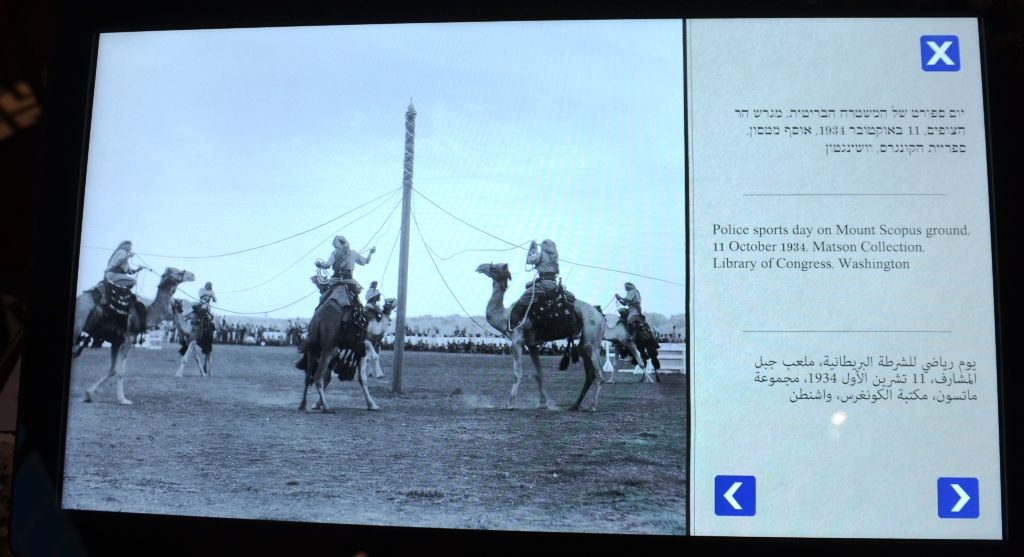
Sports day in Jerusalem with men on camels old photo

The British also brought sports.  A military sports day was held on Mount Scopus in 1934.  I am not sure what the sport was on these camels. Perhaps polo?

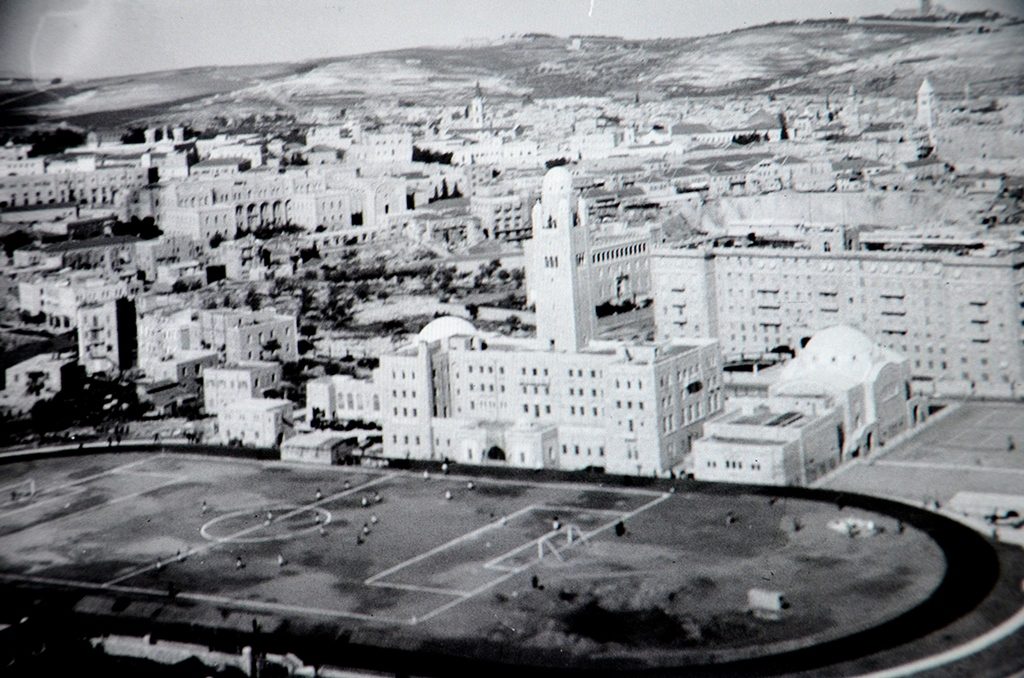
Jerusalem YMCA photo in Tower of David Museum

There is a  photo of the sports field behind the YMCA.

Notice those barren hills in the distance.

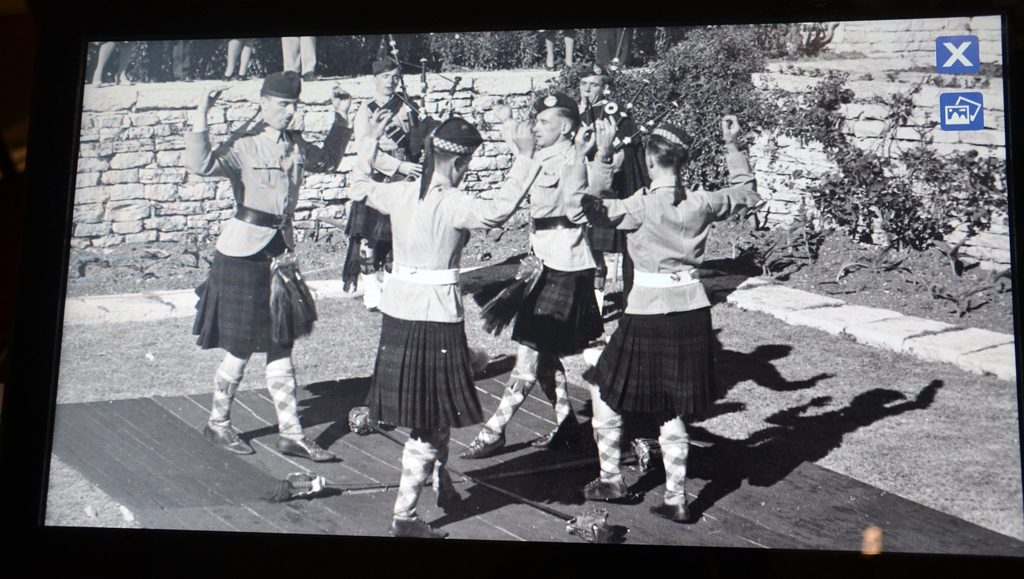
Tower of David photo men dancing in kilts London in Jerusalem

With the culture and music, the British brought new dances too.

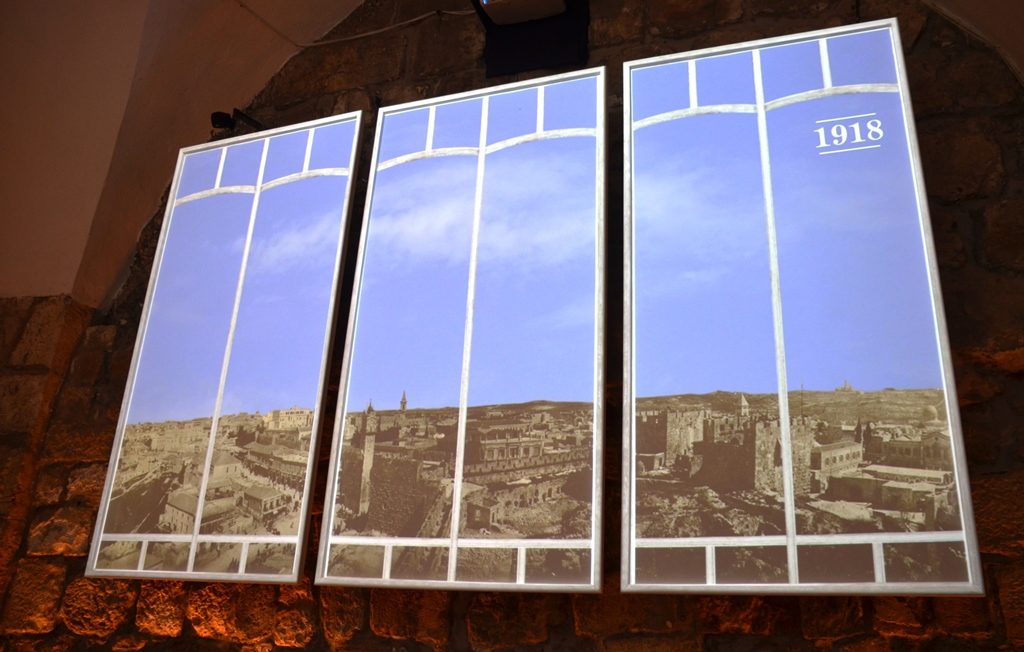
Early scene of Jerusalem 1918 at Tower of David London in Jerusalem

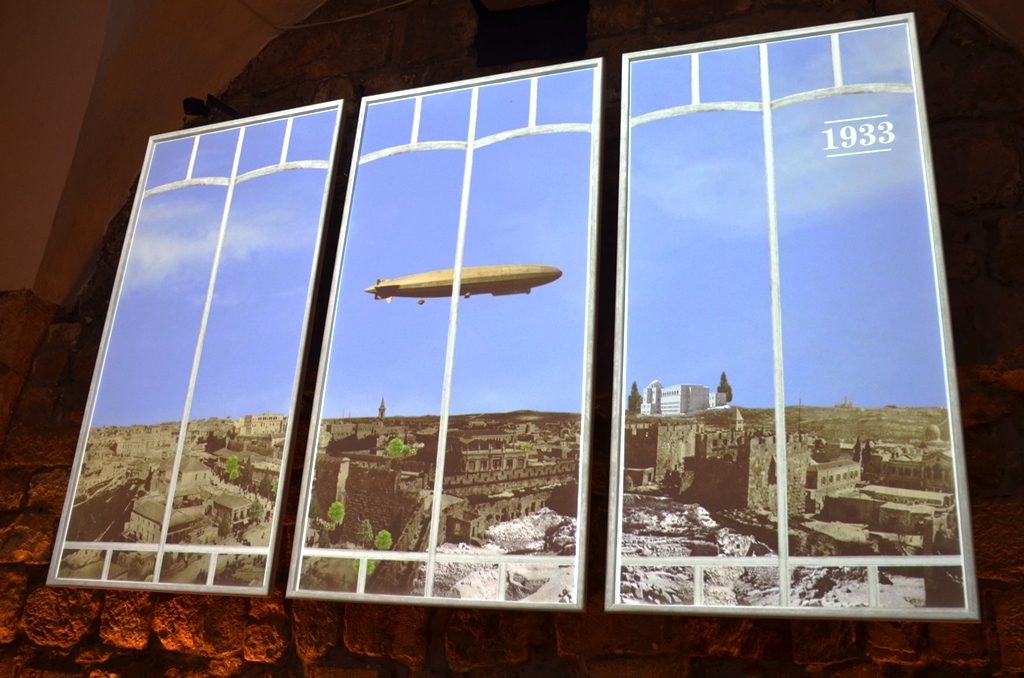
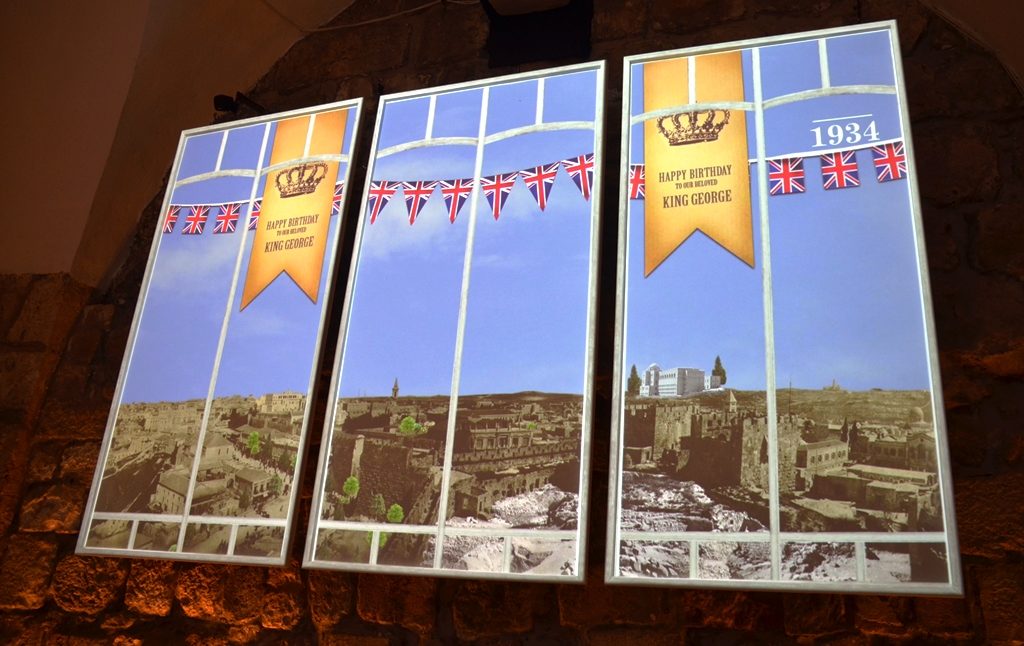
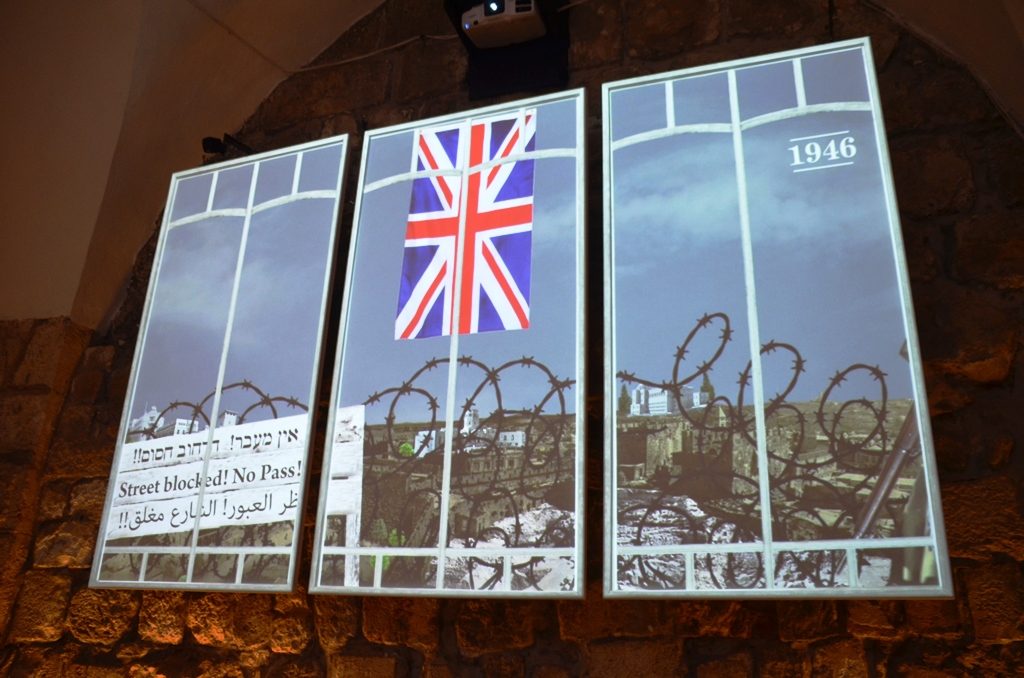
On each side of the exhibition room, there are three panels over the thick stone walls, which change to show the passage of time.

If you could look out, in 1918, you would have seen the scene above

Tower of David Museum photo of blimp in Jerusalem

and in 1933, in the distance was the Hebrew University on Mount Scopus.

London in Jerusalem at Tower of David Museum

Ah, 1934 was a good year, Happy Birthday King George.

Tower of David 1946 Jerusalem streets blocked in Tower of David show

But by 1946, streets were blocked, and barbed wire was up, Jerusalem streets were dangerous.

Parlour from British influence in London in Jerusalem exhibit at Tower of David Museum

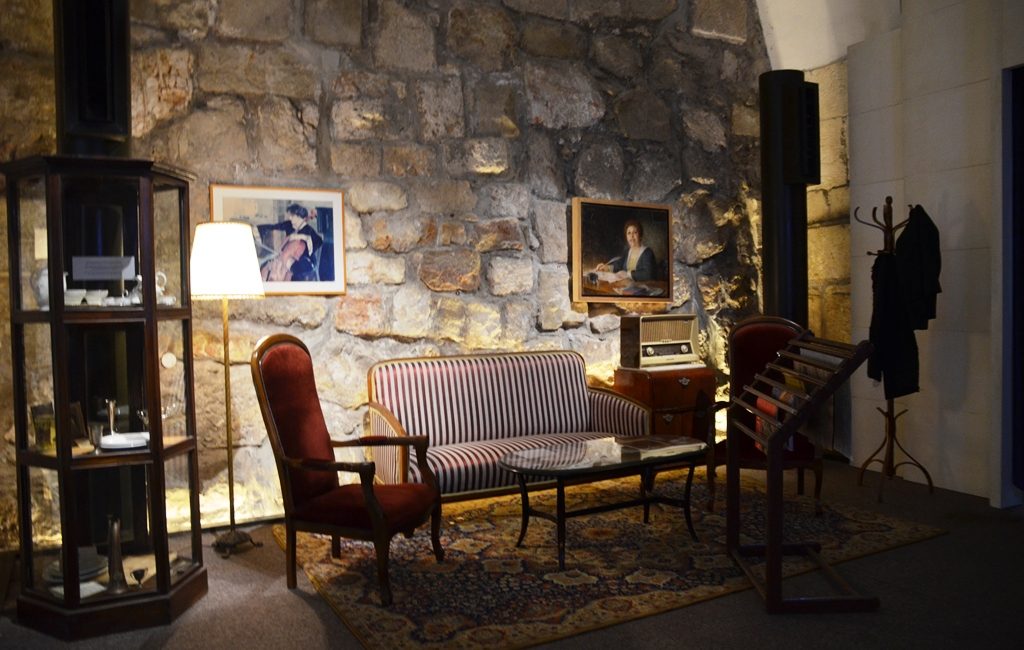
This salon is reconstructed as it would have been in Rechavia, and has original artifacts on display.

Ad for Lipton Tea in Tower of David London in Jerusalem exhibit

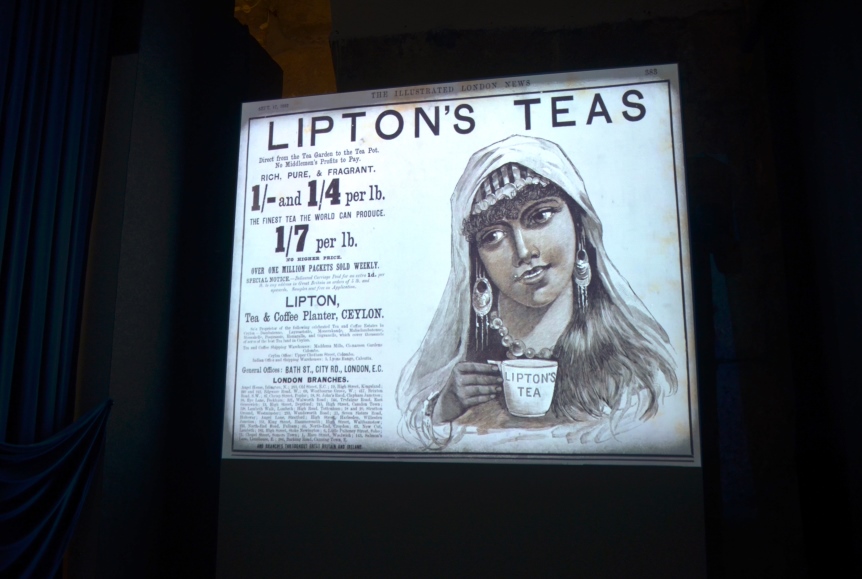
Oh, and the British brought tea and grand tea parties, too.

Tower of David London in Jerusalem bat

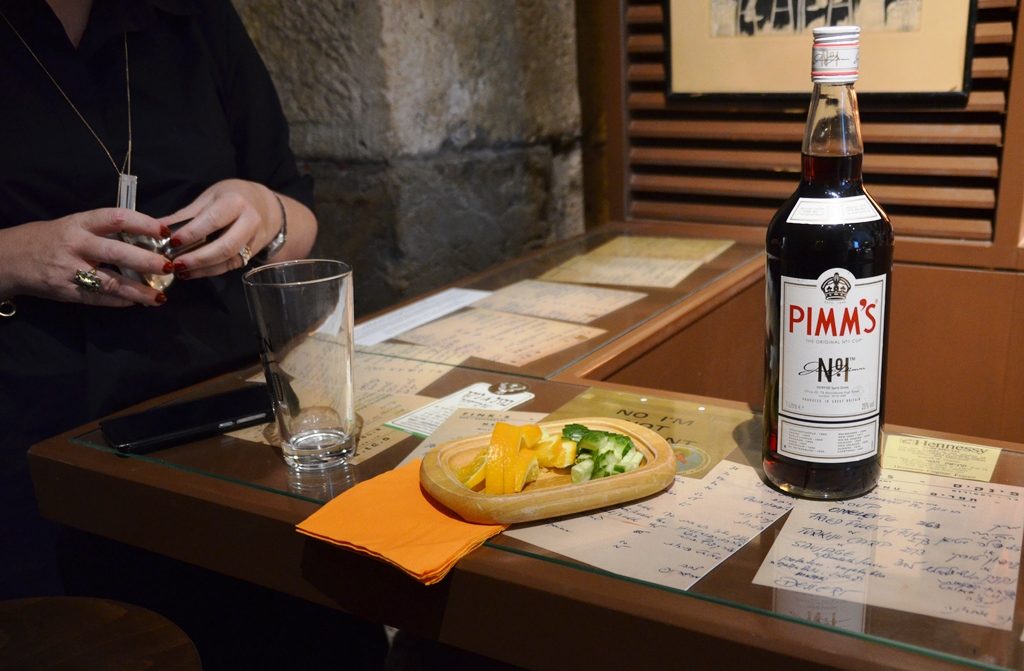
And Pimm’s for summer afternoon cocktails at parties on the lawn.

London in Jerusalem bar sign Tower of David

Besides bars and cafes, ten cinemas were opened in Jerusalem.

London in Jerusalem offers visitors also, a small theater recreated with wooden benches, to watch vintage footage from the 1930’s and 1940’s.

While Allenby at the Gates of Jeruslaem featured the military history of the time, London in Jerusalem is a walk down memory lane of the real streets.

Both exhibits are to run until December 2018.

I think older visitors will appreciate this exhibit more than younger ones, even with the modern technology included. Therefore, I was especially pleased to see that this exhibit is disabled and wheel chair accessible.

At night, you can come back to Tower of David for the new King David Night Spectacular 

So much happens on the Jerusalem streets these days, however, it was interesting to see what was happening at the beginning of the century also.