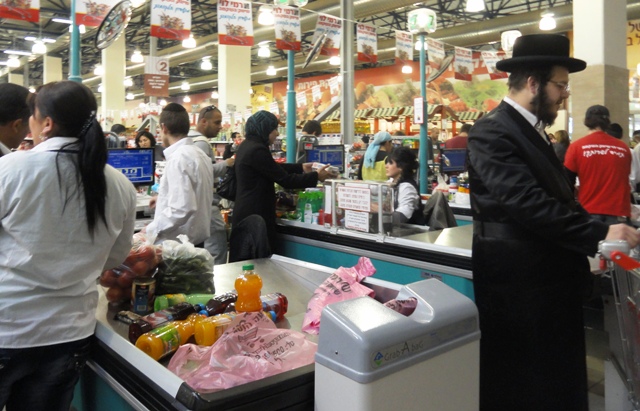
Tel Aviv was recently rated by the Lonely Planet tour guide
as the third “hottest” city in the world
with “more bars than synagogues.”
Jerusalem might find it hard to compete in that category.

However, at the end of the ALYN Wheels of Love charity bike ride,
it was so darn hot that most of the bikes
came into Jerusalem in the back of a truck

with only some of the riders on the back of their bikes.

The entertainer dressed in the monkey costume,
certainly had to be too darn hot.
The weather is not the only thing in Jerusalem that has been hot of late.

The route of the security fence
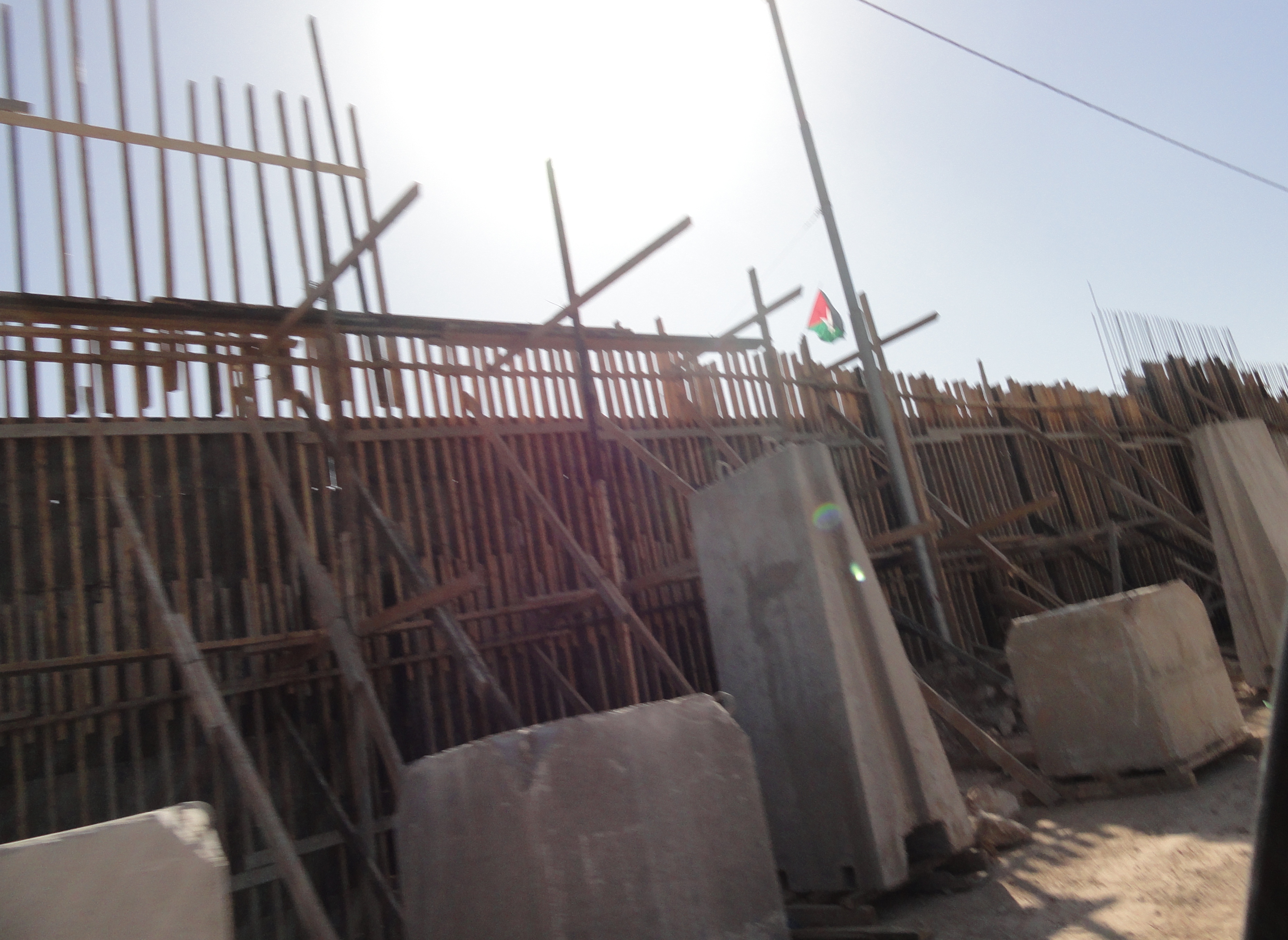
and the construction of a fence near the village
of al-Walejeh, Walaja, has been hot news.
Everyone has heard the expression “land for peace”,
even though it was so darn hot, the Real Jerusalem Streets
went to see what some of the “land” really looked like.

A large group met our guide in the new train station at Malcha,
which was very quiet on Friday morning.

Although some t-shirts displayed political statements,
we were a diverse group,

with plenty of cameras.

After parking our cars along the road,
the climb began up in the Nachal Refaim, Refaim Creek area.

Several times we stopped for lectures on the nature of the area.

Archaeology and antiquities of the area were also stressed.

The car ride had been only a few minutes long, after a brief walk,
Malcha and Jerusalem were in full view.

A military jeep on patrol arrived as soon as we reached the flattened area.

A man from the village walked to us along the proposed fence route.

He led us to an old olive tree for shade– finally a cool spot.
We were told among other things,
how a fence will make it hard for him to visit family graves.

These were the only signs of people living in this area,
other than a couple of boys who wandered
around while we were sitting under the olive tree.

From the road the land looks like most of the land of the West Bank,

but from above, as a train passed, it was hard not to think
of how much damage terrorists could do from such a strategic spot.

Finally we drove toward the village.

Al-Walaja sits on a mountain top.


Some beautiful new homes are constructed along the fence route,

but collecting the garbage would vastly improve the site.

As it was too darn hot and too darn late,
by this time the group had dwindled to a few cars.
We did not follow this woman to hear more about the fence.
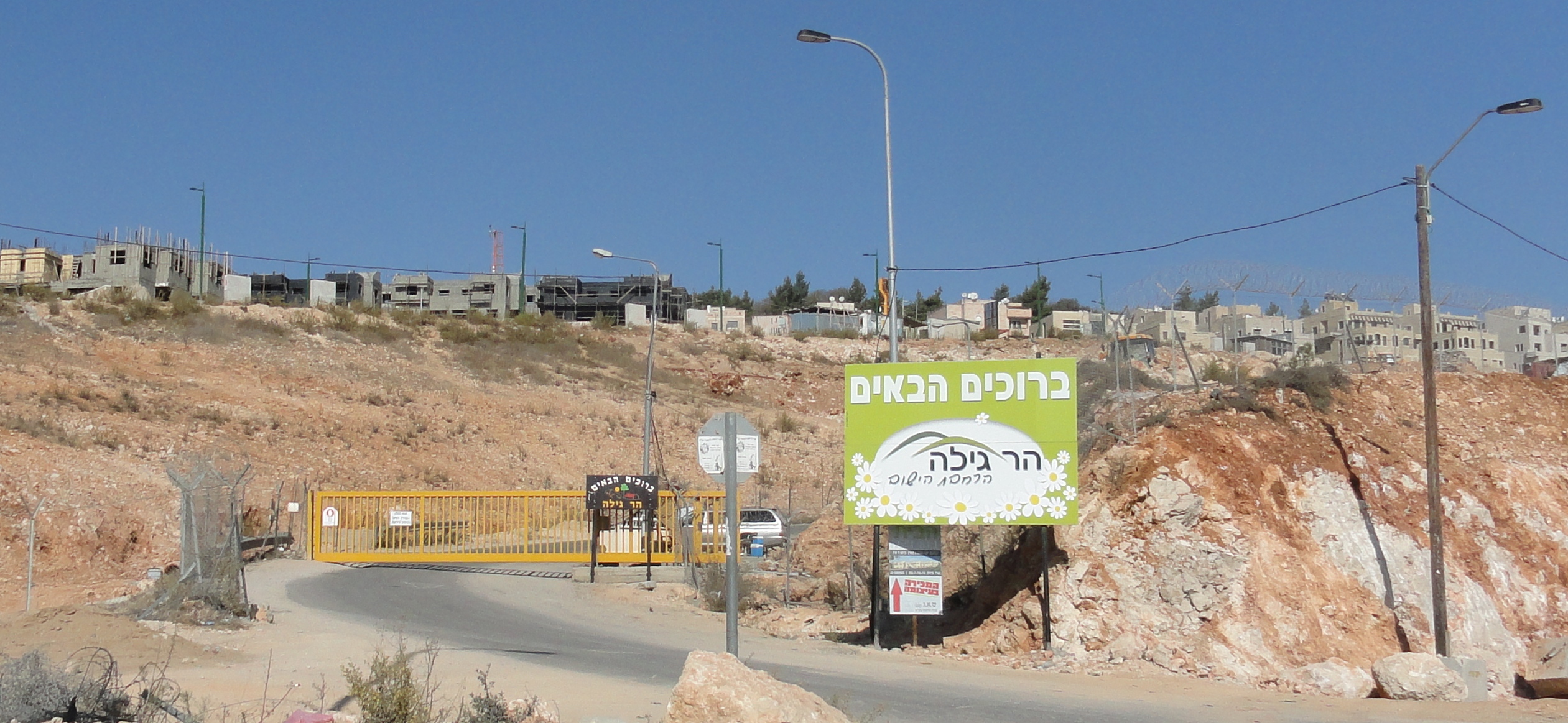
Near al-Walaja is Har Gilo,
where Israelis live behind barbed wire with an electronic security gate.

Near the top of the mountain there were some beautiful views.

The village wants the fence route to go along the road,
not on the top of the hill.
This tour was intended to encourage people to demonstrate
at the Israeli Supreme Court on Monday
in support of the villagers of al-Walaja against the fence route,
which was first approved in 2006.

On Monday morning there were big banners,
but by 9:25 am only ten people were in the protest.
Too darn hot?
The court postponed a final decision for another 40 days.

On Monday, as on most days in Jerusalem,
the really “hot” spot was the Kotel, the Western Wall.
There were thousands representing many religions from the around the world.
Tel Aviv may have lots of bars,
Jerusalem has The Wall.