Mazel Tov

After almost ten years and countless delays, the Jerusalem light-rail system

opened to the public on Friday, August 19, 2011.

Since August 2008 Jaffa Street has been closed to traffic.

On Friday morning, Yehuda the shoemaker was smiling,

his greeting was not good morning, but “mazel tov!”

There were lines to get the RavKav fare cards, but all rides are free for two weeks.

 In the city center trains were often very crowded

and there were still more passengers who were ready to try to push in.

“Zeh lo New York”, this is not New York, said one woman,

but at times it felt like the New York City subway… only with air conditioning.

Special staff was busy trying to keep people off the tracks,

but accidents seem bound to happen in the open spaces.

Passing the walls of the Old City,

the train was not as crowded and you could hear the cell phone conversations.

On many of the trains children sat on the floor,

 for thousands of families the train ride was the day’s entertainment.

Cameras of all types were out to document the day.

Slowly the train went through the Shuafat and Beit Hanina neighborhoods,

some boys hopped on to ride for only one stop.

It took 45 minutes to reach the end of the line, then a long wait to come back.

The train ahead had trouble in the Pisgat Zev station,

providing  plenty of time to look over our driver’s shoulder.

Announcements had warned of possible delays,

people got on and then immediately got off, not sure how long the wait would be.

It was afternoon prayer time as the train passed the mosque on the return trip.

If you really had to be somewhere,

 the bus was the preferred way to go, as regular traffic was light.

Travel through the Machane Yehuda Market, the shuk, area seemed to take forever.

Then, the view from the bridge was impressive,

impressive enough to get some people up from their seats.

The ride over the bridge seemed very quick compared to the rest of the route.

Thousands of people came out Friday for the havaya, the experience…

like an amusement park ride.

More time was needed to complete the entire route,

but I was satisfied to get my shoes fixed and get home before Shabbat.

Mazel tov!

How many passengers will pay to use the light-rail?

Was it worth all the time and cost?

The saga of the Jerusalem light-rail continues…

Disengagement, Six Years Later

In 1976 Yitzhak Rabin’s government initiated the establishment of Gush Katif.

From 10 original families, Netzer Hazani became an Israeli town in 1977.

For 30 years, thousands of hard-working Israelis made the desert bloom.

Gush Katif grew to 23 communities…until August 15, 2005,

 when they became homeless and had to leave their fields behind:

 everything in Gush Katif was destroyed.

And today where are they?

Travel the highway from Jerusalem towards Ashkelon

and there is a new sign directing you to Netzer Hazani.

On the left side of the road is a welcome sign to Yesodot, a moshav founded in 1948.

On the right there is a gas station which is closed for the holy Sabbath.

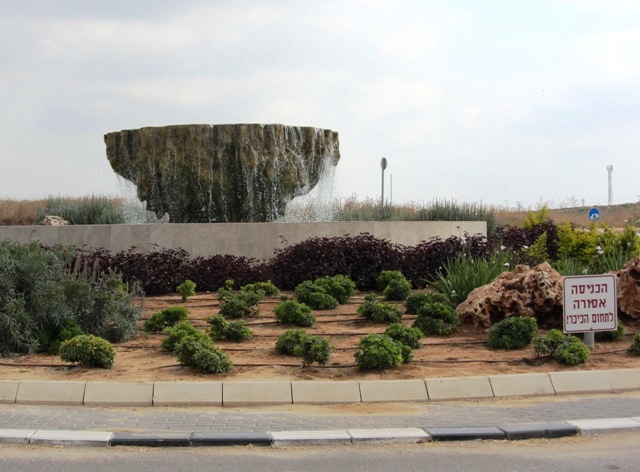
A beautifully landscaped fountain greets visitors;

 the sign warns to look, but not to enter.

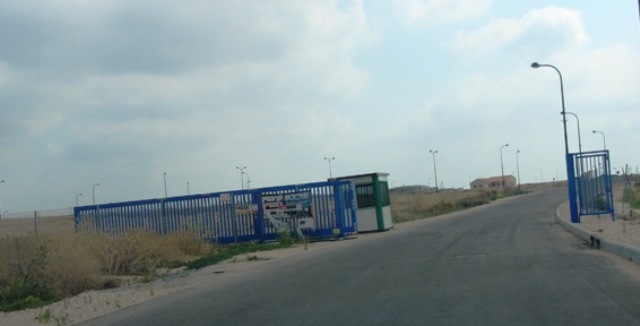
A blue security gate opens


  to the new

 Netzer Hazani.

Six years after being forced from their homes in Gush Katif,

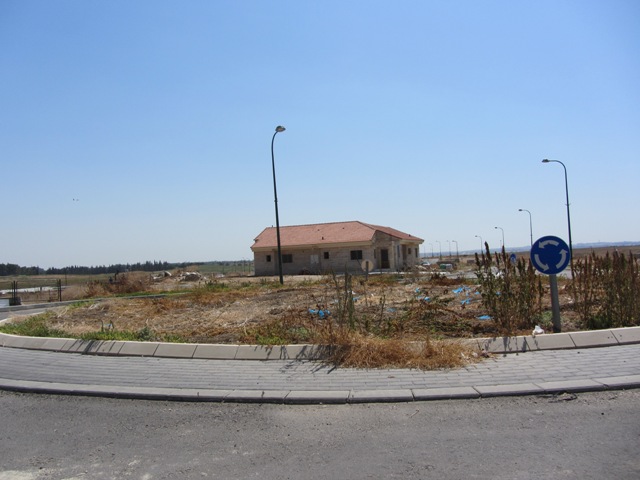
one house is near completion, while many others are still being held up by red tape.

For many reasons, most home plans are much smaller than the original ones.

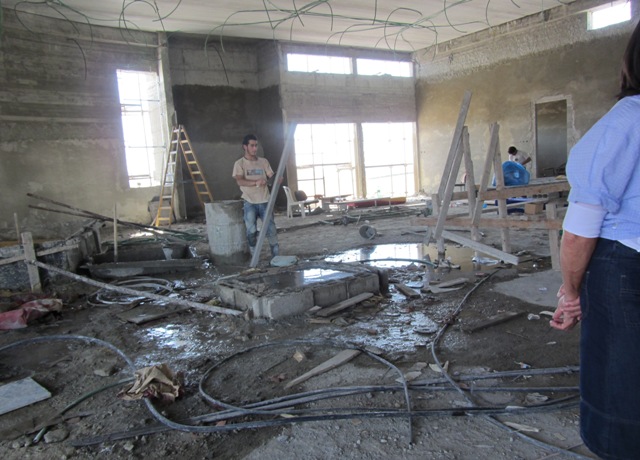
The main hall of the community center

is under construction.

This is its new kitchen.

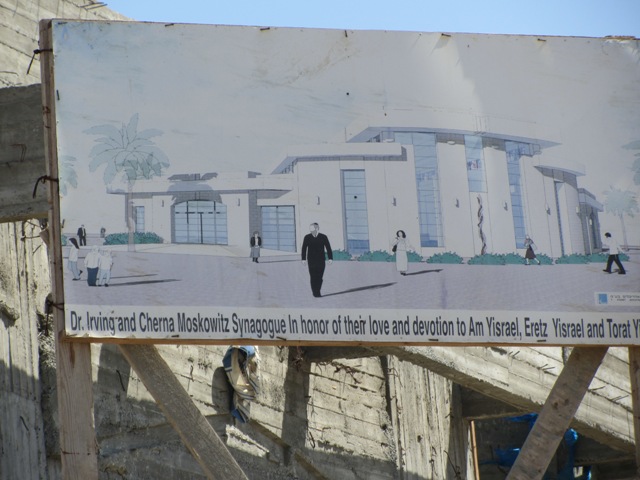
Meanwhile, construction of the synagogue

has been stopped due to lack of money.

Afternoon tea hosted by Anita Tucker in her new home is quite a treat….

well… on the site of their new home.

Today these formerly productive people are still trying to re-establish,

some on the land bought from the religious Moshav Yesodot.

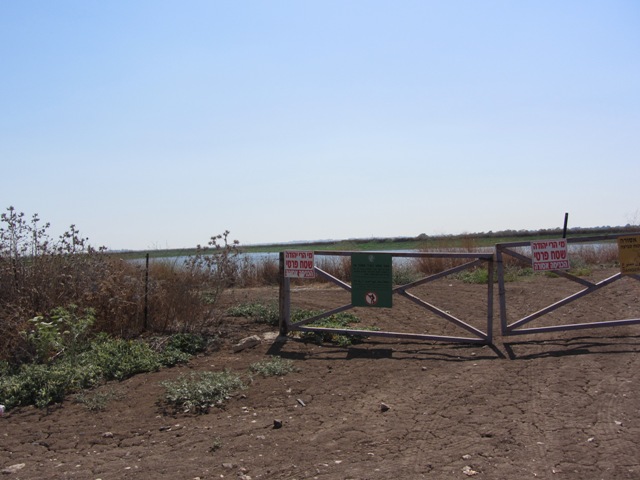
 Nahal Sorek, does not look like a river in summer, but if you follow the road

you will find a recycled water pond, which serves as a haven for migrating birds. 

The irrigation ditches for the new Netzer Hazani fields are in place

and the fields are being prepared for organic produce and new hot houses.

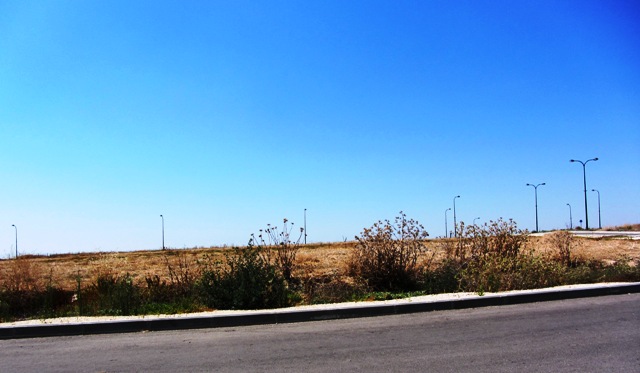
The infrastructure is ready,

with plans set for the first stage of 130 families to move in by August 2012.

This sign hangs at the entrance of the new Netzer Hazani,

it is a reproduction of one made and hung by their children in Gush Katif.

The sign proclaims a full belief in God.

After the ordeal of the last six years…that is an accomplishment.

Disengagement was supposed to bring peace…land for peace.

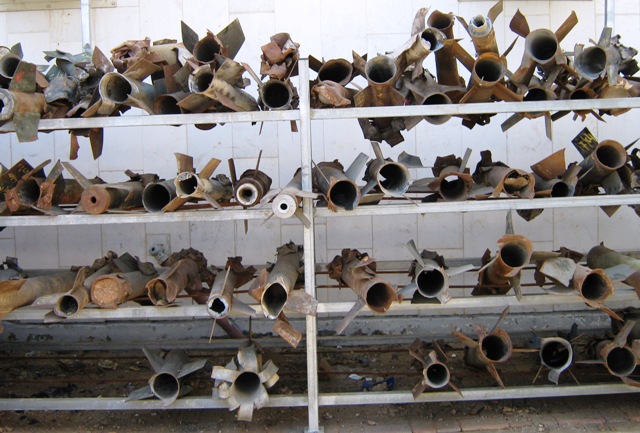
Instead, Israel has been bombarded by

 thousands and thousands of missiles and rockets from Gaza.

The “tent city” protest which began in Tel Aviv is entering its fourth week

with ‘”building crisis” and “social justice” as its headlines.

Bus loads of people are trying to spread the protest to the “periphery”.

How many think of the 9000 people left homeless by the disengagement?

How many of the tent protesters have even heard of Yamit?


For more information  see:   www.netzerhazani.org


After the Fasts

Not eating or drinking is called a “fast,”

but without water and morning coffee…”slow” would be more accurate for me.

 The Tisha B’Av fast started on Monday, August 8, 2011 at nightfall,

this post should have been out on Tuesday, but even after the fast…sorry–still slow.

 Mourning the destruction of Jerusalem in the reunified Jerusalem

is a unique experience.

 Tens of thousands of people gather at the Kotel, the Western Wall,

and sit on low chairs or on the stones to recite the sad verses of Eicha and Kinot.

For so many centuries,  The Book of Lamentations asks…Alas, how could it be?

Some opt to sit

 alone,

while others prefer to sit in small groups.  Many stay all night.

As the Jewish Quarter closed for the fast day,

 much of the Muslim Quarter was open

with colorful displays of food to break the Ramadan fast.

Colored lights lined the way of most

but not all the alleyways.

For the seventeenth year in a row,

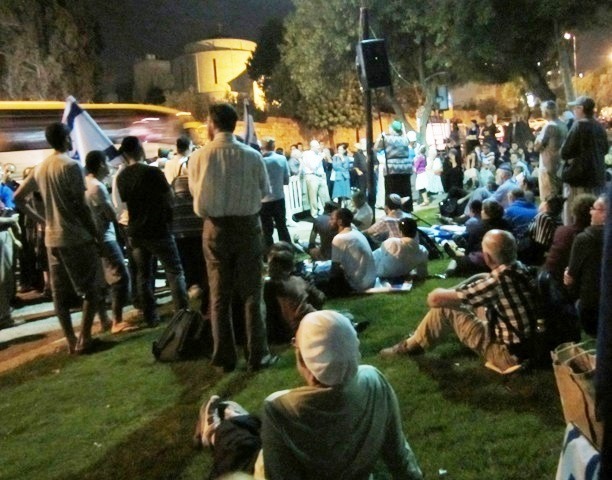
  Women in Green assembled a large group in Gan Ha’atzmaut, Independence Park

 for prayers and speeches, followed by a walk around the walls of the Old City.

This year they shared the park with the “tent city” protesters

and the night with Ramadan celebrations.

 The march was to begin at 11 pm, much later than usual because of Ramadan.

 For the first time the marchers had to watch out for an empty light rail train.

  It was well after midnight when the group arrived at

Sha’ar Shechem,  the Damascus Gate.

Street vendors and Israeli flags filled the sidewalk and on to the street

 and families and more vendors kept coming.

 Security personnel watched the quiet scene.

After passing Herod’s and Lion’s Gates


the end of the route was in sight.

Dozens of idle buses lined the road ready to transport

 the hundreds of people still coming and going after 1:00am.

The Kotel entrance plaza was a busy place all night.

Near Jaffa Gate a new table was set up to sell photos of the Baba Elazar z”l.

While tens of thousands of people were out on Tisha B’Av in the Old City,

a few minutes away this normally busy intersection was deserted.

This year, Ramadan coincides with the month of August,

so devout Muslims will fast all day and at night crowds will gather to eat and shop.

Abu Sharif, a member of the PLO and former advisor to Arafat,

has called for “Friday intifadas during Ramadan”.

Walking around the Walls on Tisha B’Av concluded peacefully.

Last year thousands of Muslims prayed in Jerusalem every Friday of Ramadan.

It is possible to share the streets of Jerusalem peacefully.

 After the fast, as Israelis head to the airport and up north on vacation

…at least the streets should be a little less crowded.


More photos of  Walking around the Walls on The Real Jerusalem Facebook Page.