The Saga of Jaffa Road and the Light Rail

United States special envoy George Mitchell came and went,

Earth Day and an hour of “lights out” came and went,

a day of April showers came and went,

protesters in Silwan came and went,

and the 1400th day of captivity for Gilad Shalit came and went.

   But, the construction on the Jerusalem Light Rail Project goes on and on.

August 5, 2008

The King George Street and Jaffa Road area,

once a popular and busy part of the city was closed to traffic.

Jaffa Road      May 6, 2009

Walking around the constantly changing barriers

is a challenge for most people,

but this lone workman in a safety vest has no problem

walking up the middle of empty Jaffa Road.


September 22, 2009

 On Jaffa Road, after part of the tracks were finished,

November 11, 2009

they were covered over.


December 9, 2009


Not all tracks are covered over.

January 7, 2010

Nearby, on Herzl Boulevard,

they are blocked by cement barriers and used for parking, and a bus detour.

January 17, 2010

Workman on Jaffa Road

 February 17, 2010

 and no workman on Jaffa Road.

April 26, 2010

Construction continues.

There are some signs of progress,

but most signs inform people of changing traffic patterns.

The newest completion date is set for next April 2011.

Until then the light rail train and crowds of happy people

exist only on the building mural high above

 the intersection of Jaffa Road and King George Street.

Hurva…No Longer

When Jordan attacked Jerusalem during the War of Independence and captured the Old City in 1948, the Jordanian Legion destroyed many synagogues, including the largest one in the Jewish Quarter.

In 1967, the Jewish Quarter came under Israeli control. In 1977, an arch was built to remember the Hurva or the Ruined Synagogue, on the spot where synagogues have been successively built and destroyed since the second century.

September 2009


After years of delay and debate, a week before the March 15, 2010 dedication date, the construction was nearing completion, but there was still plenty of work left to do.


However, as the sun was setting on March 14, 2010,

 the synagogue was ready.

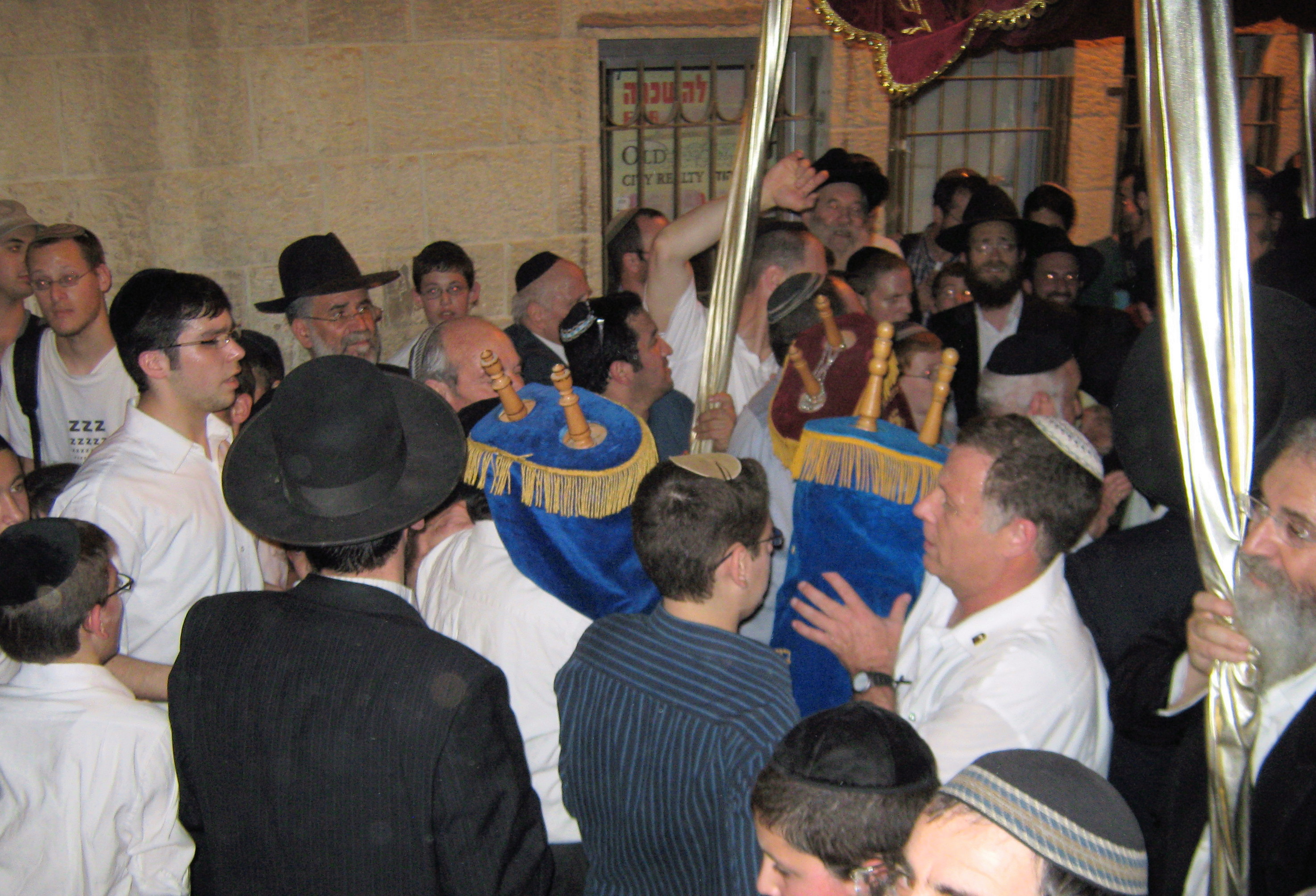
 Torah scrolls were brought up from the Kotel, the Western Wall, under a chupah, a special canopy.


Hundreds of men danced in front of the procession.

Thousands of people along the route sang, clapped and took photos.


A huge crowd filled the central square of the  Jewish Quarter as people enjoyed the live music.

The restored synagogue will not be exactly the same, however,

as this time the building is air conditioned.

The official dedication ceremony marks an historical end and a new beginning;

may this site become a place of prayer and study and see no more destruction.

What a Difference a Day Makes!

At first it seemed that no one even noticed,

 United States Vice-President Joe Biden was visiting  Jerusalem.

There is a difference when you are not number one,

but only number two.

As Vice-President Biden was to arrive, it was quiet around the Citadel Hotel.

 Biden arrived for breakfast at Beit HaNasi, the President’s Residence, 

on the first day of his visit. 

No United States flag was flying to greet a Vice-President. 

The temperature was already rising, 

the dirty air was not good for clear photos.

There were no paparazzi around Beit HaNasi,

  just a few big vans, some red police tape and one ambulance.

Security was very light, a real contrast to the bus blocking this intersection

and many streets being closed for hours before President Bush’s visit. 

At least the US Vice-President rated a security helicopter circling overhead

when he was arriving and leaving from meetings.

No complaints were heard from the residents of Jerusalem,

who were able to get around both by car and on foot. 

Unless you were stuck in traffic when his entourage was on the move,

you would not have known that Joe Biden was here.

Then, an announcement about new housing plans in the northern

Jerusalem neighborhood of  Ramat Shlomo 

and reports of his visit made headlines around the world.


A little perspective on housing:

to get anything built in Jerusalem takes time, a lot of time.

Something as simple as the addition of a small porch,

that all the neighbors agree on, can take ten years to be done legally.

One of Jerusalem’s biggest problems is the lack of housing,

especially affordable housing.

After the Safdie Plan failed to pass due to environmental concerns

there simply are not enough places for the people to live.

The real shame is that media coverage and world’s outrage

at this badly-timed announcement seems to have left no time

and space to cover the really disturbing news

of the massacres going on in Nigeria,

including  the slaughter of many young children…

When Vice-President Joe Biden left for Tel Aviv today,

the entire world was aware of his every move.

What a difference one day makes in Jerusalem!