SNOW in Jerusalem – photos!

Snow.

Snow in Jerusalem is big news.

It is international news. People seem to love Jerusalem covered in white.

The last significant snow accumulation was in 2015, large enough for an individual post. Fascinating some of the latest photos from Elpis (that is the official name of this storm) are very much the same as the big snow in 2013.

The weather has been wet and cold so when the sun came out I walked to the Old City. It felt almost normal seeing people again was exciting.

There was an international tour group! Smaller groups also were on the Kotel, Western Wall Plaza on Tuesday afternoon.

Snow was predicted in Jerusalem and other higher elevations.

First came heavy rain, and then the snow started after dark.

Coming down heavily, trees were bending under the weight.

The white stuff was piling up all night long. You could hear the excited voices of children (of all ages) who ran out to play in the snow, some seeing it for the first time.

This image has an empty alt attribute; its file name is Snow-001-2-1024x644.jpg

Very few people were out after the earlier snowball fights and fun.

Looking out at 3:00 am, it was interesting to see other lights on!

This image has an empty alt attribute; its file name is Snow-084-2-1024x617.jpg

By dawn, the sky was clearing and snow covered the Jerusalem streets.

This image has an empty alt attribute; its file name is Snow-109-2-1024x620.jpg

Jerusalem was again appearing as a winter wonderland.

My finger was too cold taking photos, to avoid frostbite I went back inside.

This image has an empty alt attribute; its file name is Snow-152-3-1024x620.jpg

But clearing in the morning sun, the fog was hovering over the new taller buildings in town.

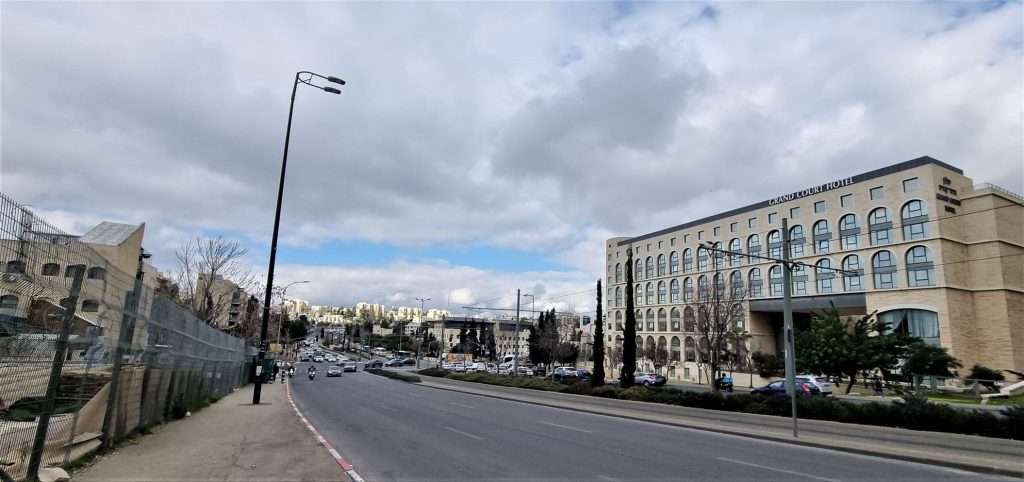
The grounds near the Knesset were covered. You can tell the new snow photos from old ones, as here with a new hotel in the image.

This image has an empty alt attribute; its file name is Snow-119-2-1024x573.jpg

The Israel Museum had the heat on with smoke rising after the cold night.

This image has an empty alt attribute; its file name is Snow-208-3-1024x492.jpg

What a lovely morning in Jerusalem, with blue sky, white clouds, and snow covering the ground.

This image has an empty alt attribute; its file name is Snow-172-2-1024x552.jpg

The cactus plants were still visible in their pots.

And the inches of snow were similar to the serious snowfalls of the past.

This image has an empty alt attribute; its file name is Snow-210-2-1024x571.jpg

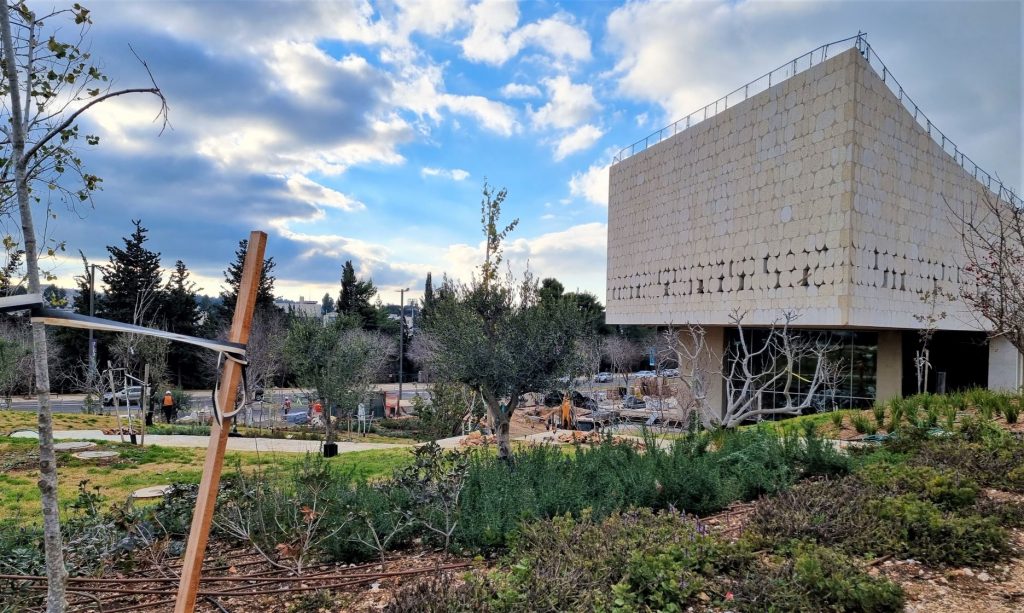
Not in the past was the roof of the new Israel National Library.

During the day the Kotel had snow and slush, and not as many visitors as the day before. The afternoon turned cold and wet, and I had missed the moment, since being up too much at night made for a late start.

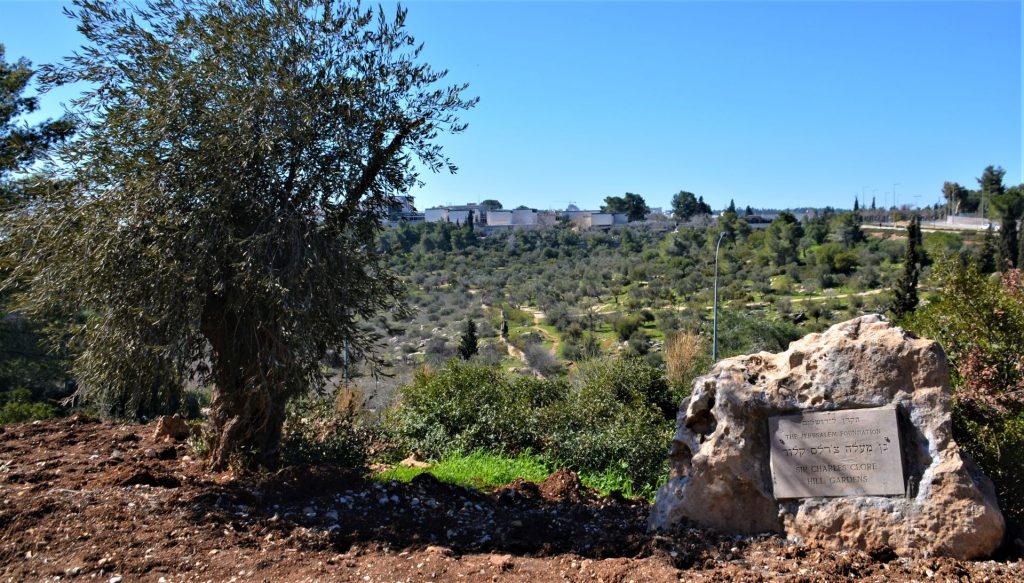
So Friday morning I was determined no matter what to get to Gan Sacher, Sacher Park. Tree branches were down in many locations.

Besides branches blocking the sidewalks piles of plowed snow blocked crosswalks.

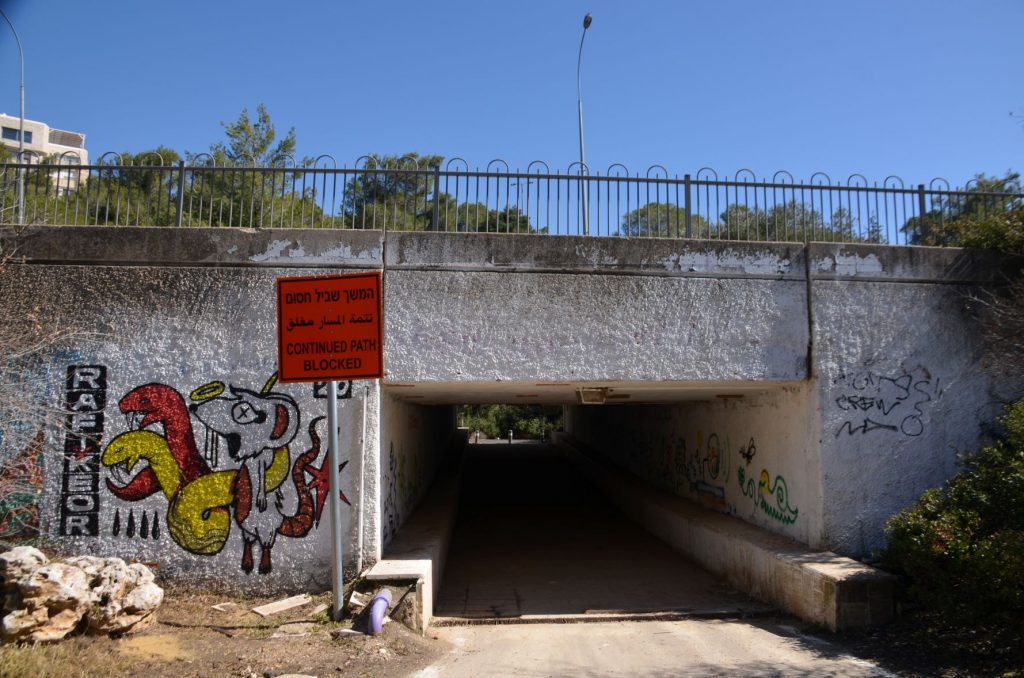
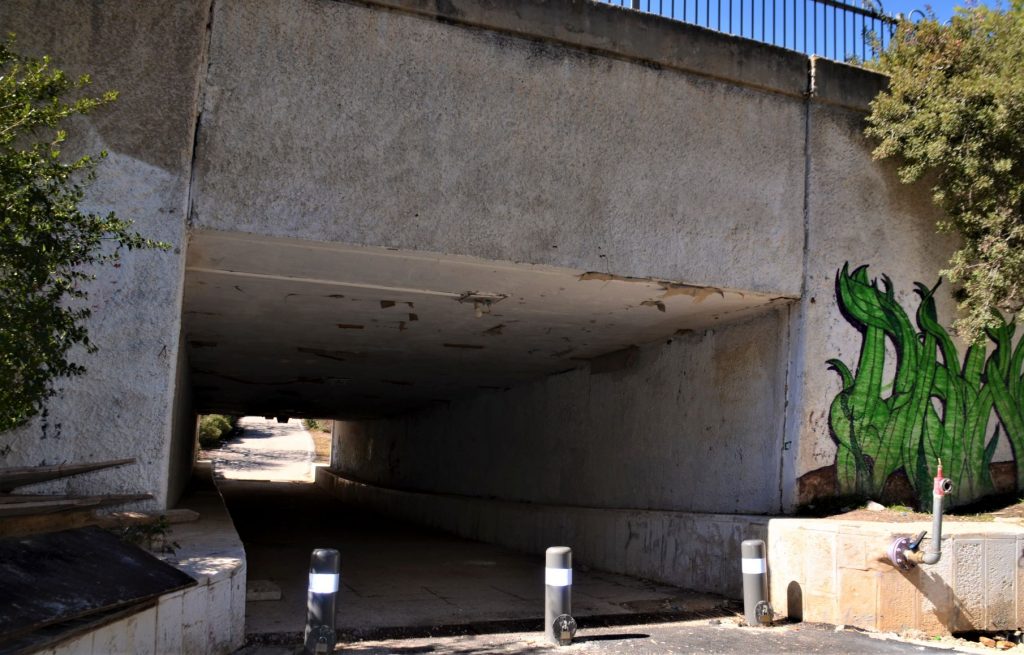
This tunnel was filled with people partying Wednesday night as it snowed, but Friday morning it was wet with water leaking from above. Serious runners were also out in spite of the weather.

While snow is big news in Jerusalem, two years ago we had a different kind of white stuff covering Jerusalem streets and many streets were closed.

I had wanted to get Gan Sacher not only for the snow, but also the Candle Memorial on January 27th, but it had started to rain.

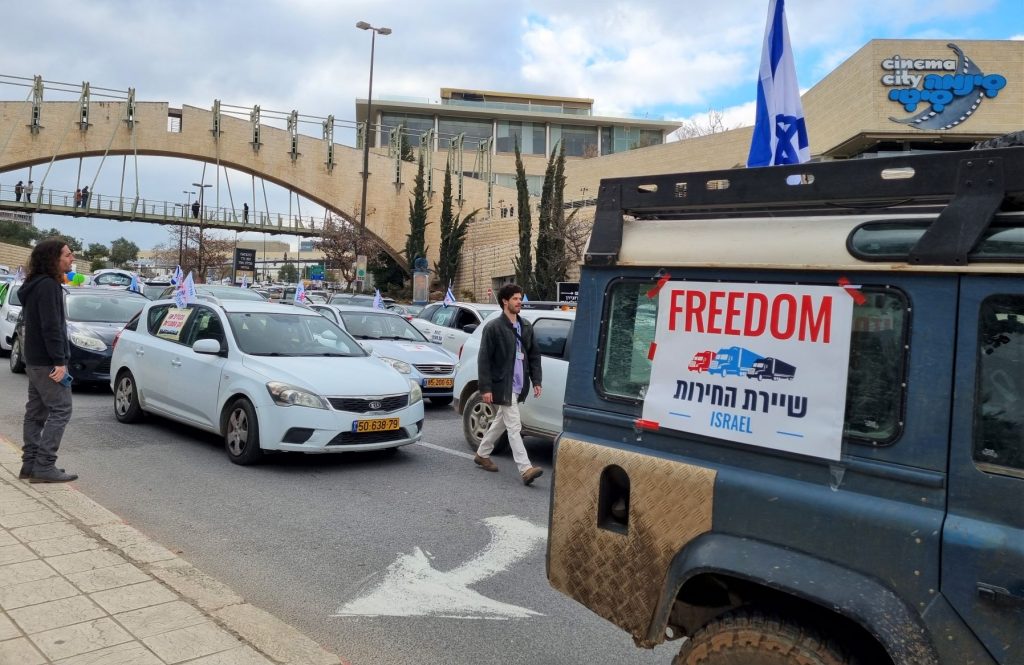
On Friday, again the rain started. It was wet and tree branches blocked the path. Oh the top right, you can see that hotel which is next to Cinema City.

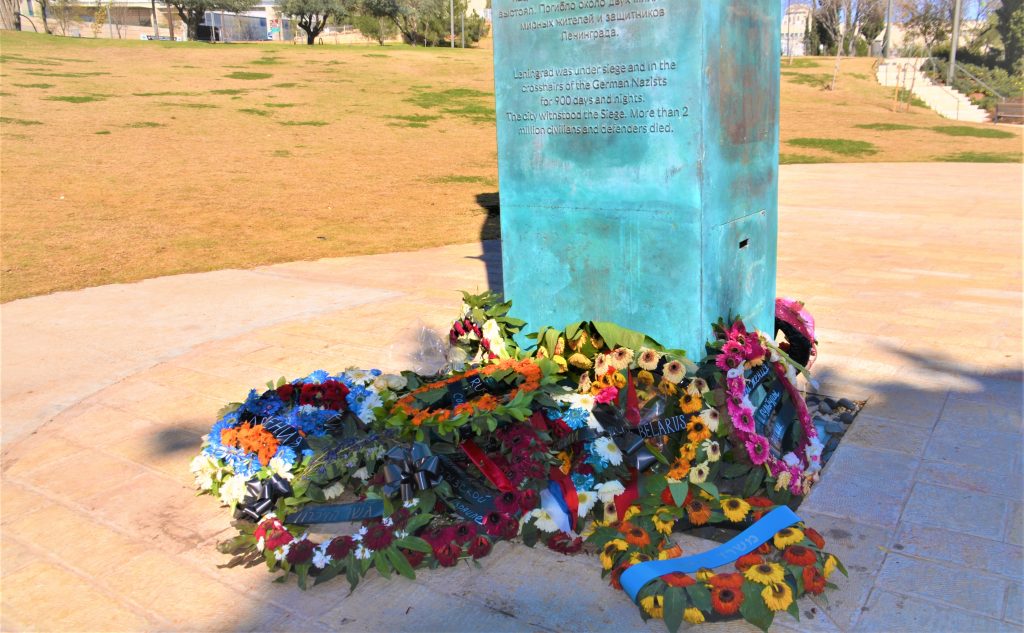
Jerusalem Candle Monument

So I headed home and decided to reuse these previous images,

text Candle Memorial

of the monument dedicated two years ago on January 27th when world leaders including Putin were in Jerusalem for the Holocaust Memorial.

Top of Candle Memorial in Jerusalem

I wrote about the Candle Memorial last year remembering the liberation of Leningrad from the Nazi occupation.

Israeli families were out in the rain and cold and in the new play area.

The lower areas of Gan Sacher were a soggy mess of melted snow with branches down on the wet paths.

But there was still enough snow on the higher parts of the park for attempts at sledding, and one lone large snowman built the day before was still photo-worthy.

This should have a masterpiece on the pedestal the day before the rain.

So one serious snow day with no school in Jerusalem was enough for me.

I decided instead of looking for more photos to share to head home and make a pot of chicken soup before Shabbat.

Snow in Jerusalem.

Most everyone loves it.

There was plenty of snow for great creations and lots of snow angels.

Plus mountains of broken branches to clean up now.

I am looking forward to warmer weather.

Hope to see you soon on the Jerusalem streets.

Jerusalem Security and Safety

When I worked in a biochemistry lab, I carefully did research dealing in fractions of a millimeter. However, my unscientific observation of the Jerusalem streets at present is that there are more people sick now than in the past two years.

A bit more scientific, the newest stats published for last week, we see in Israel 709 cases per day for 100,000 people, with a +467% increase, which is the highest in the world. Israel was also testing – a lot.

The borders are open. But the crowds of tourists are nowhere to be seen even near Jaffa Gate at the entrance to the Old City. Flights are still being canceled abruptly leaving passengers to scramble to make new travel plans.

The snow predicted did not last more than a few minutes one night. I love getting white snow pictures and ran to check outside often, but the best I could do was grey fog in the morning. Fog so thick the Vert Hotel was not to be seen.

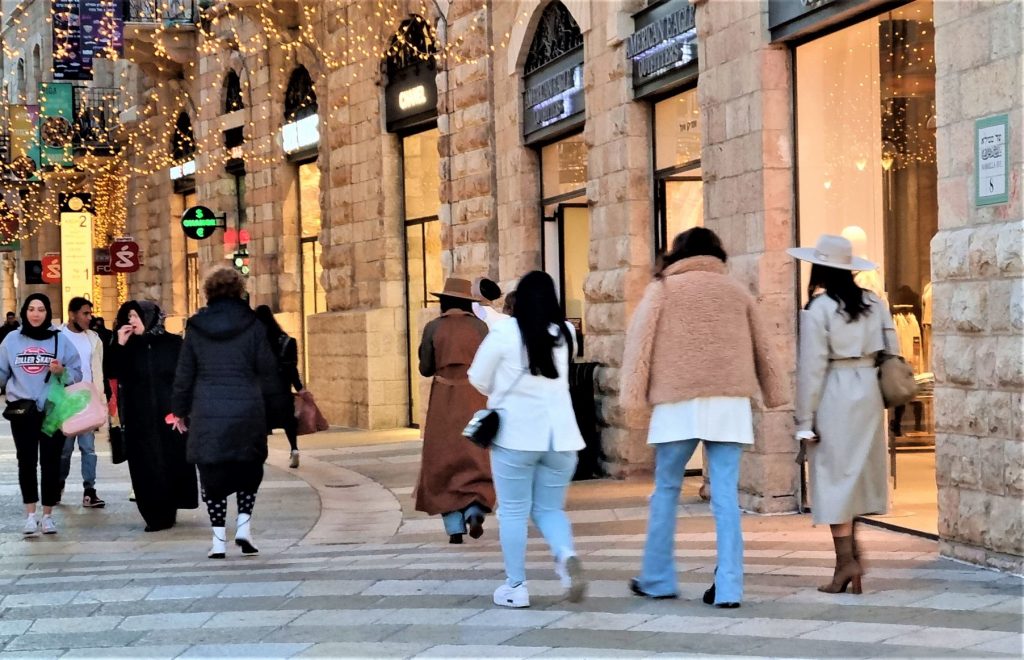
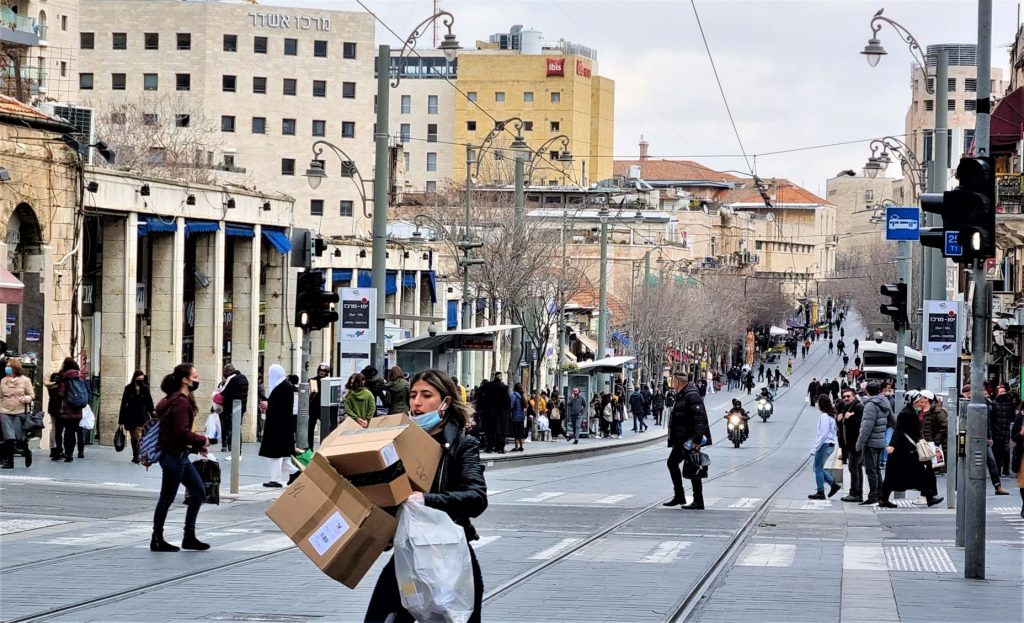
Mostly we had a week of cold rain. Umbrellas were out in Mamilla Mall, but not crowds of returning tourists. Notice what else is missing?

The art and pedestals that lined Mamilla Mall last year have been removed.

It seems they wrote more numbers on the stones, so perhaps a renovation project is planned? In Jerusalem, every stone removed outside of a historical building is numbered and is replaced like a giant puzzle.

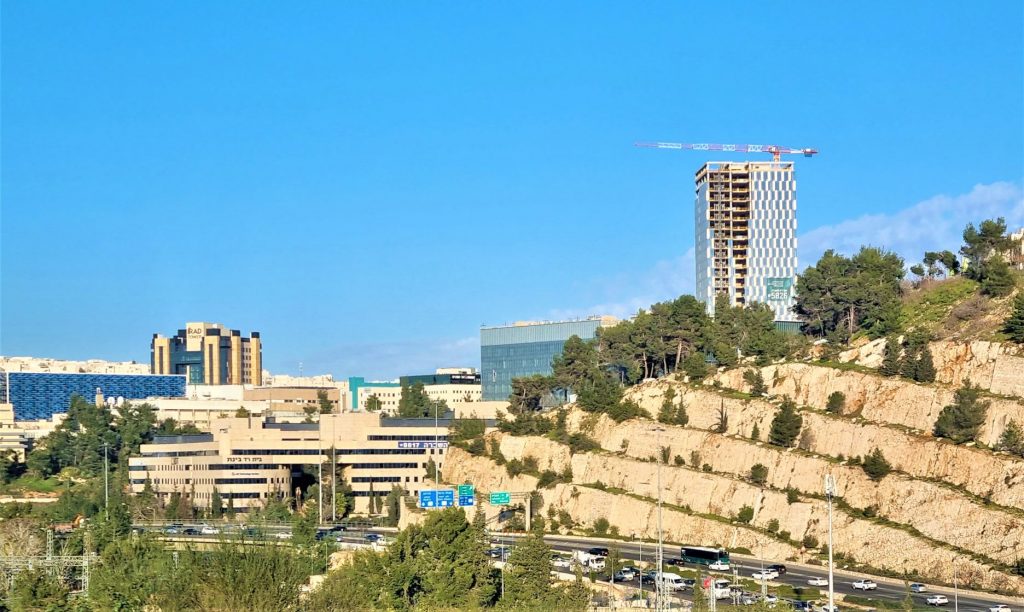
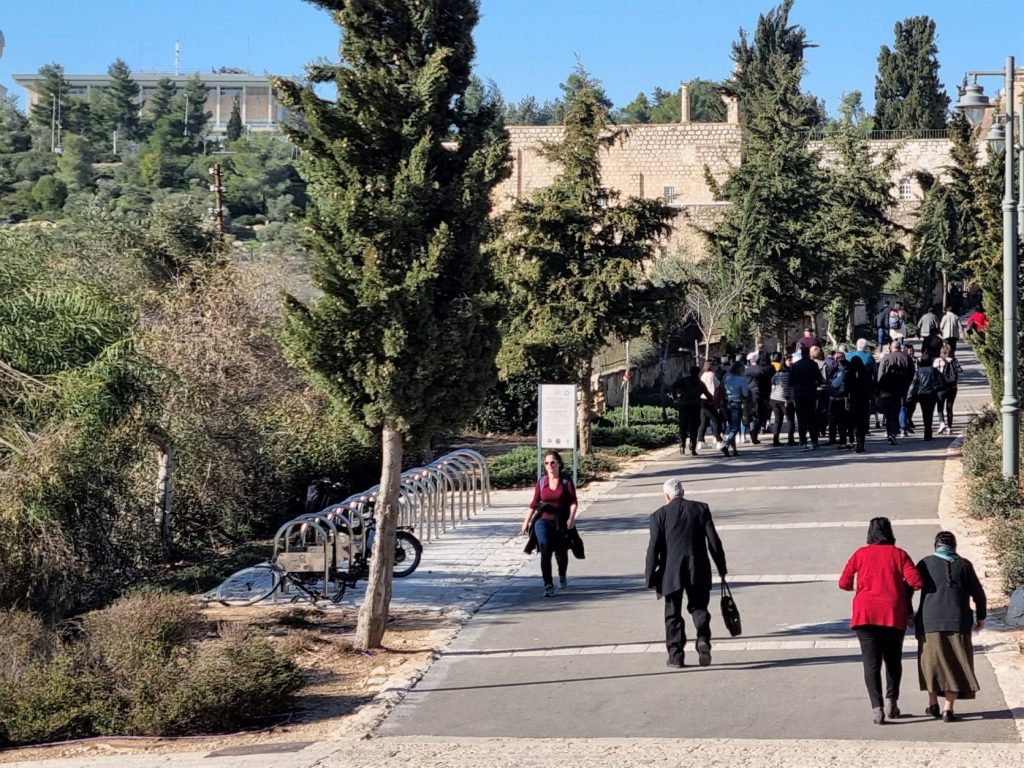
When the sun finally came out a few times this past week for a short while, I walked around trying to decide what to share. A military helicopter flew past as the clouds were breaking over Jerusalem’s changing skyline.

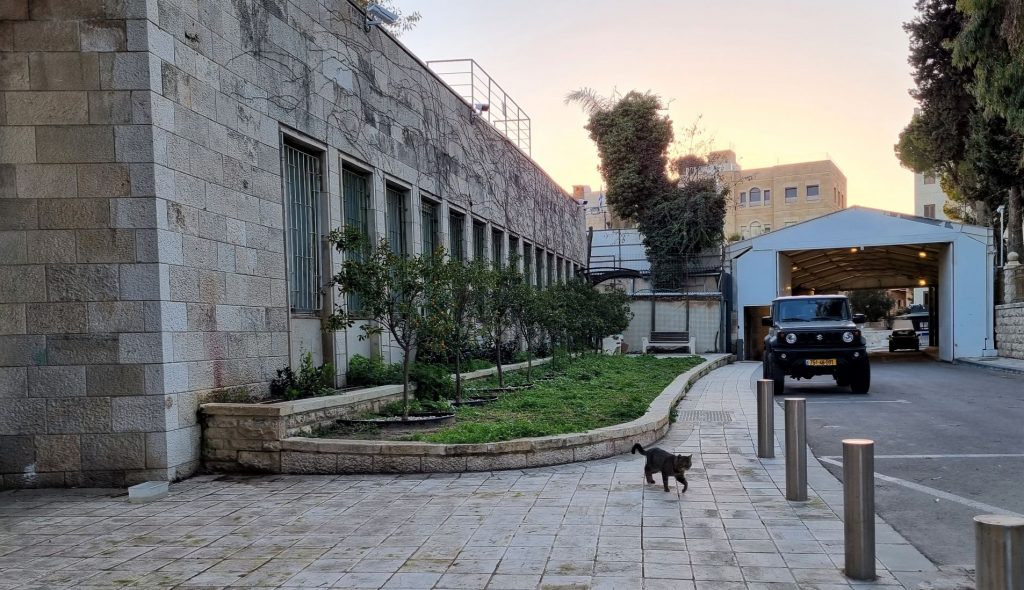
Thanks to the US Consulate installing new bollards – no photos allowed there! I got my inspiration, of course, what else, but security and safety!

The original security “Dragon Teeth” display is starting to grow green moss.

The new security bollards at Jerusalem bus stops have grown taller.

Remember the security at the entrance to Balfour Street last year? At least five levels were visible at times blocking the view to the Prime Minister’s residence with a black curtain and four rows of barricades blocking the gate on the public street side.

Now there is simpler security with bollards blocking cars, but people can walk thru again. I have done it a few times, just because I can and to see if there is anything happening there.

And this past week there was action! Two cats were up on the roof. Oh, the jokes I was thinking of as I walked by in the sunny warmth of the day.

However, security and safety on building sites is no joke,

Construction and building renovations are everywhere.

There was a danger warning,

but now people have moved into the renovated building.

How cool to paint new crosswalk lines that look like old ones.

And then there are the safety signs not to use the crosswalk,

but walk around the fenced-in holes in the pavement.

Getting tired of it all? These chairs are ready for you to sit and rock awhile.

This bench on a busy Jerusalem street near a new coffee shop has flowers secured to it in memory of a deceased relative.

This has to be one of my favorite discoveries in the ‘walking the Jerusalem streets and what will you find next category.’ I may even go out when it rains to see the water come out of this drain pipe mouth.

Some people are so clever!

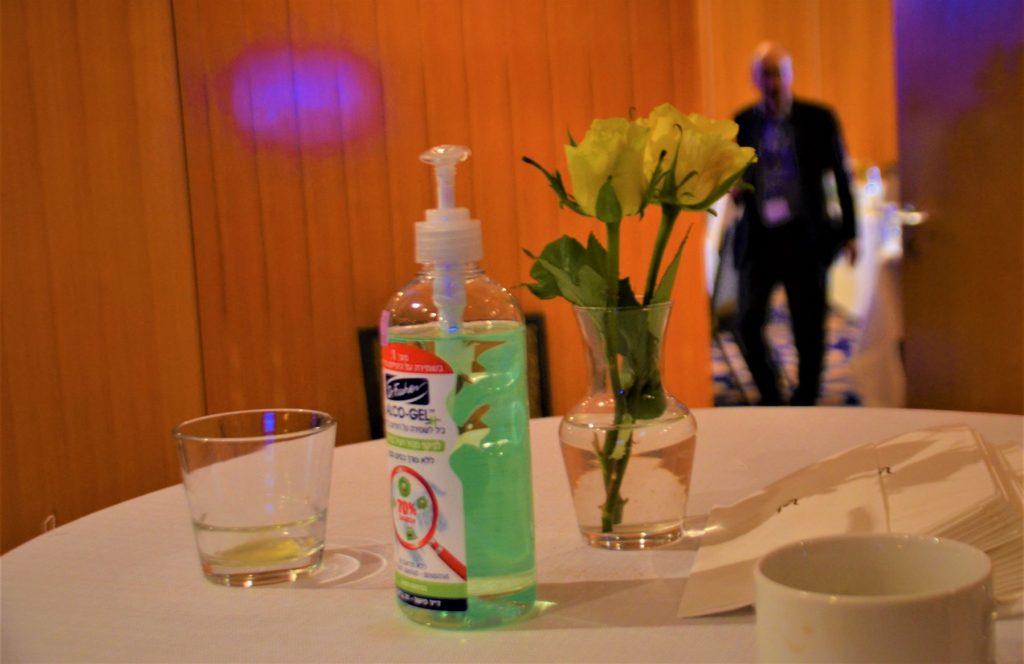
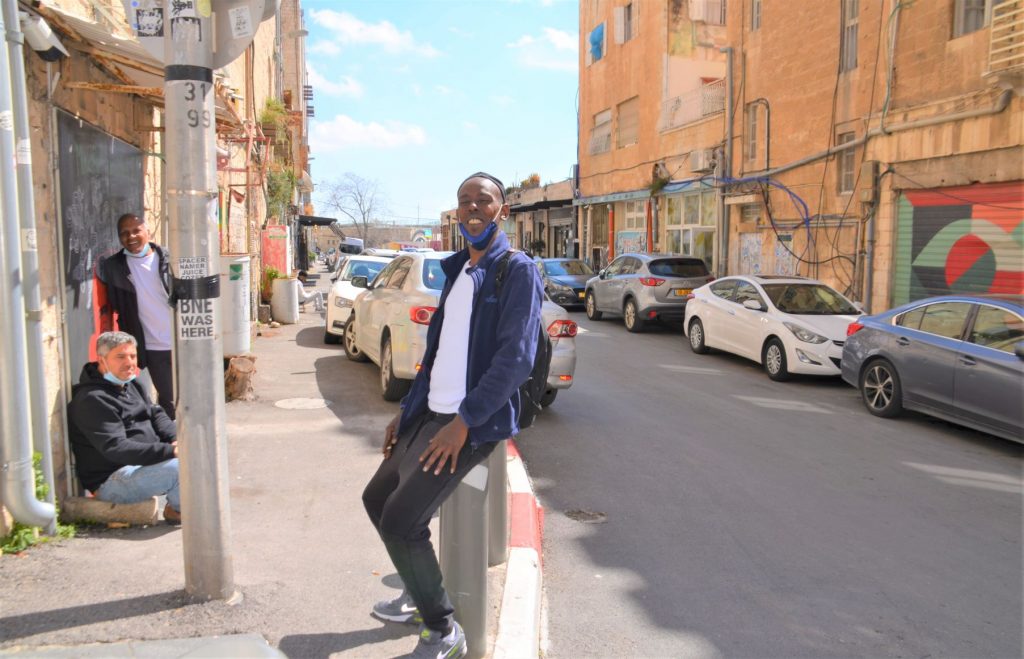
And those masks, worn and not, and discarded near a bus stop, remind us of the newest tiny variant to beware of in order to stay safe and secure in our damp dwellings.

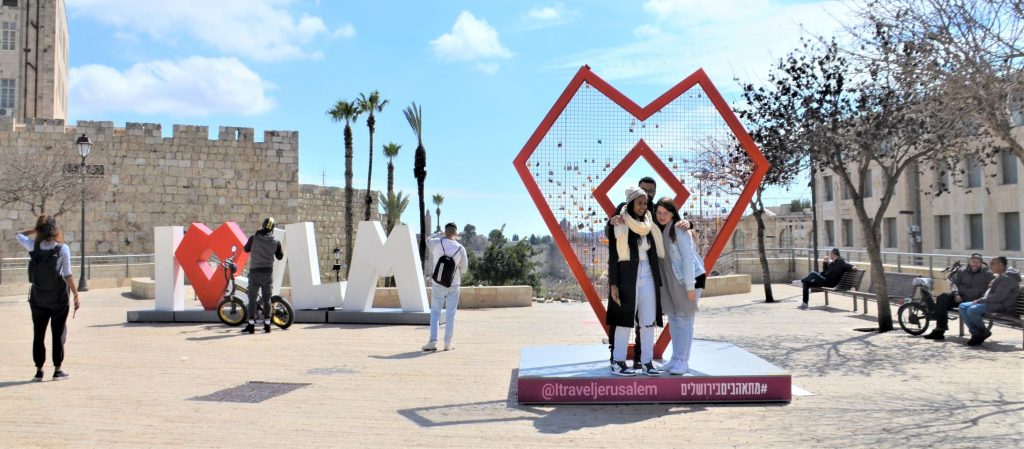
The sun did peek thru the clouds, and ‘I love Jerusalem’ was picture perfect.

Hopefully, the sign and plazas will be filled with people again, day and night, and soon.

Two years is too long, but take care and stay well.

Hope to see you soon, back again on the Jerusalem streets!
10 Facts for Tu Bishvat: All About Almonds:

The blossoming almond tree is the symbol of ט”ו בשבט -Tu Bishvat, the “New Year of Trees.” I love seeing the almond flowers appear to burst, literally overnight, into full bloom. The delicate and majestic flowers of the common almond, in shades of white or delicate pink, gradually envelop the exposed stems and can be observed in cultivated orchards and abandoned open areas.

Love the flowers, but the almond trees? The date of flowering is not always exact and often depends on the weather. This has been a relatively warm winter, and the weather caused this Jerusalem almond tree to bloom early.

  1. The spectacular flowers cover the tree in white or pink. They are fragrant and thus stand out in the landscape, becoming a symbol of Tu Bishvat. The almond is called shaked in Hebrew, which means the fastest or most diligent because it blooms first before all other wild and fruit trees in the country.

2. The common almond tree belongs to the rose family, this large family includes about 120 genera and 3200 species. It is common in most areas of the world, especially in temperate zones. Other members of the family are the fruit trees, plum, peach, cherry, and also rose bushes.

3. Four species of almond trees grow in the wild: Arabian almond, harem almond, small-leaved almond, and common almond. It is difficult to distinguish between them.

4. Although the almond is not included among the seven species in the Bible, it has a respectable place in our sources, mentioned many times in the Bible and the Talmud, as one of the five species of zimrat ha’Aretz, considered “the best produce of the Land,” included in the gifts that Jacob told his sons to take to the ruler in Egypt. (Genesis 43:11)

5. The fruit is wrapped in a green peel and changes its color to brown over time. When the fruit ripens, the peel splits in two and usually falls off. The almond seed remains on the tree wrapped in another extremely hard bark that is cracked only by pressure. Another bark envelops the seed cocoons. This shell is thin and brown in color. The part eaten is the seed. Almond fruits are also eaten whole before ripening when the seed coat is still green.

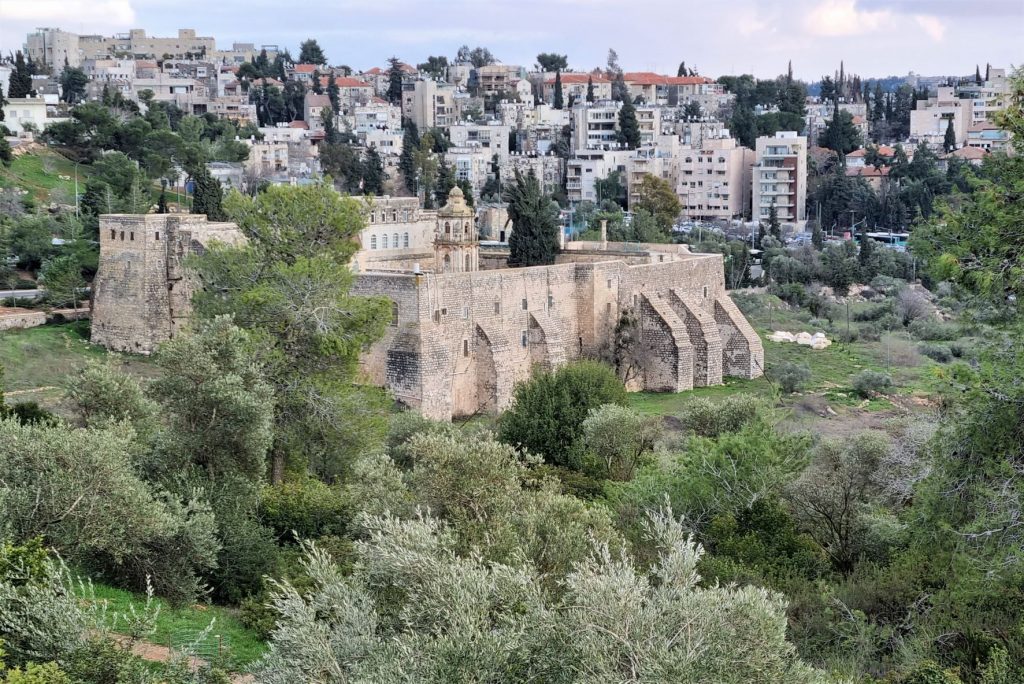
New almond trees blooming near the old Monastery in Jerusalem

6. But, BEWARE! In abandoned areas and orchards, bitter almond trees usually grow. They are used as a cultivar for the cultivated almond. Bitter almond seeds are dangerous to eat. They contain a substance called amygdalin from which the toxin cyanide is released.
7. However, almonds have long been considered a fine fruit for food and medicine. Maimonides praised them: “Almonds are the finest in fruits.” They have great nutritional value and contain, among other things, fat, protein, and calcium. The almond is considered the healthiest food out of 100 tested foods, including avocado and olive oil, (according to the FDA). It has been recommended to eat 7-12 almonds a day.

8. Do cultivated almonds grow in an orchard or vineyard? Planted almond trees grow in a kerem, “vineyard.” The term kerem “vineyard” usually refers to grapes, olive, and almond crops.

9. The Israeli almond industry is in development. In Israel, over 62,000 dunams of almond groves stretch from the south to the Golan Heights. Some of the new varieties have been developed at the Volcani Center.

Almond growing in Israel takes the environment into account, including low water consumption, and sophisticated and focused mechanization. Israel consumes about 10,000 tons every year. Most of the consumption comes from local crops and the rest will come from the United States.

10. Fast then slow? Almond ripening is very slow, in contrast to its agile flowering, it lasts about six months.

Only 5-10% of all almond flowers bear fruit.

I store almonds in the freezer to keep fresh and to keep them out of the way so as to not grab too many to eat at a time.

Almonds, nuts, and dried fruit have been piled high in the shuk, Machane Yehudah Market, and in supermarket displays and stores throughout Jerusalem, Israel over these past weeks.

The present Israeli Knesset building was opened on Tu Bishvat, but no big celebrations this year like 6 years ago for the 50th.

It was 2 years ago for Tu Bishvat, multiple large events were celebrated. The last event I attended at Beit Hanasi before the coronavirus closed the doors of the Israeli President’s Residence was the JNF-KKL Tu Bishvat celebration.

Here’s hoping next year we can celebrate Tu Bishvat together again!

Tu Bishvat Sameach!

My thanks, as every year, to a wonderful friend Sara for providing the information for all things almond and her amazing website with everything you would want to know about the Wildflowers of Israel.